
Floor Installation Cost Guide 2026
*5 min read · Last updated June 4, 2026*
In this article
– Cost Range by Flooring Type – What Drives the Price Up or Down – How to Read a Flooring Quote – Your Estimate May Vary – Hire a Pro vs. DIY – FAQ
Elena budgeted $6,000 to replace the carpet in her 1,200-square-foot home with engineered hardwood. The first contractor quoted $5,900. The second quoted $11,200 for the same square footage. She assumed the second was gouging until she read both estimates. The $5,900 quote covered installation only, excluded subfloor prep, and required her to arrange carpet demo separately. The $11,200 quote included demo, subfloor moisture testing and leveling, and a five-year workmanship warranty. Different scopes, different prices.
Cost Range by Flooring Type
The ranges below include materials and standard installation labor. They exclude demo, disposal, and subfloor prep, which are addressed in the cost factors section.
| Flooring Type | Installed Cost (per sq ft) | Notes |
|---|---|---|
| Laminate | $3-$8 | Most affordable; not suitable for wet areas; 20-25 year lifespan at quality grades |
| Luxury Vinyl Plank (LVP) | $4-$9 | Waterproof; works in kitchens and basements; wear layer thickness matters (12 mil+ for heavy traffic) |
| Engineered Hardwood | $5-$10 | Works over concrete and radiant heat; real wood veneer; can be refinished 2-3 times |
| Solid Hardwood | $8-$14 | Longest lifespan; can be refinished repeatedly; requires wood subfloor; not for below-grade installs |
| Carpet | $3-$8 | Lowest materials cost; fastest install; shorter lifespan at 10-15 years vs. hard flooring |
On a 1,500-square-foot job, these ranges translate to: laminate at $4,500 to $12,000; engineered hardwood at $7,500 to $15,000; solid hardwood at $12,000 to $21,000 before any prep or demo add-ons.
What Drives the Price Up or Down
Material grade is the most obvious lever, but not the only one. These are the line items that move the number most on a real job.
| Cost Factor | Typical Impact |
|---|---|
| Subfloor condition | Add $1-$3/sq ft if leveling, moisture barrier, or board replacement needed. Most common hidden add-on in older homes. |
| Demo and disposal | Add $1-$2/sq ft for carpet; $2-$4/sq ft for tile removal (more labor and debris) |
| Stair installation | $50-$150 per step depending on material. A 13-step staircase adds $650-$1,950. |
| Room geometry | Diagonal installs and rooms with many angles add 10-20% to labor for additional cuts and waste. |
| Pattern type | Herringbone or chevron adds 15-25% to labor vs. straight lay. |
| Regional labor | Northeast and Pacific Northwest run 10-25% above national average. Southeast and Midwest run 15-20% below. |
How to Read a Flooring Quote
A flooring quote should be a line-item document, not a single number. Every reputable installer will provide at minimum: materials cost, labor cost, and a list of what is excluded.
Match the square footage on the estimate to your own measurement. A discrepancy of more than 5 percent warrants a direct question.
Look for these specific items – and ask about any that are missing. Materials should be listed with product name and specification, not just “engineered hardwood.” Subfloor prep should be named and scoped. If prep is not listed, ask for the per-square-foot upcharge rate before work starts. Demo and disposal should specify whether haul-away is included.
Labor and materials separated from each other let you see where the value is. Two quotes at the same all-in price with different material grades mean very different jobs.
Your Estimate May Vary
National averages describe the middle of the market. Your number will likely differ based on location, subfloor condition, and how the home was built.
A 2,000-square-foot floor in the Southeast runs 15 to 20 percent below the national average for the same scope. The same job in the Northeast or Pacific Northwest runs 10 to 25 percent above. Urban markets in New York, San Francisco, and Boston can run 30 to 40 percent above national average.
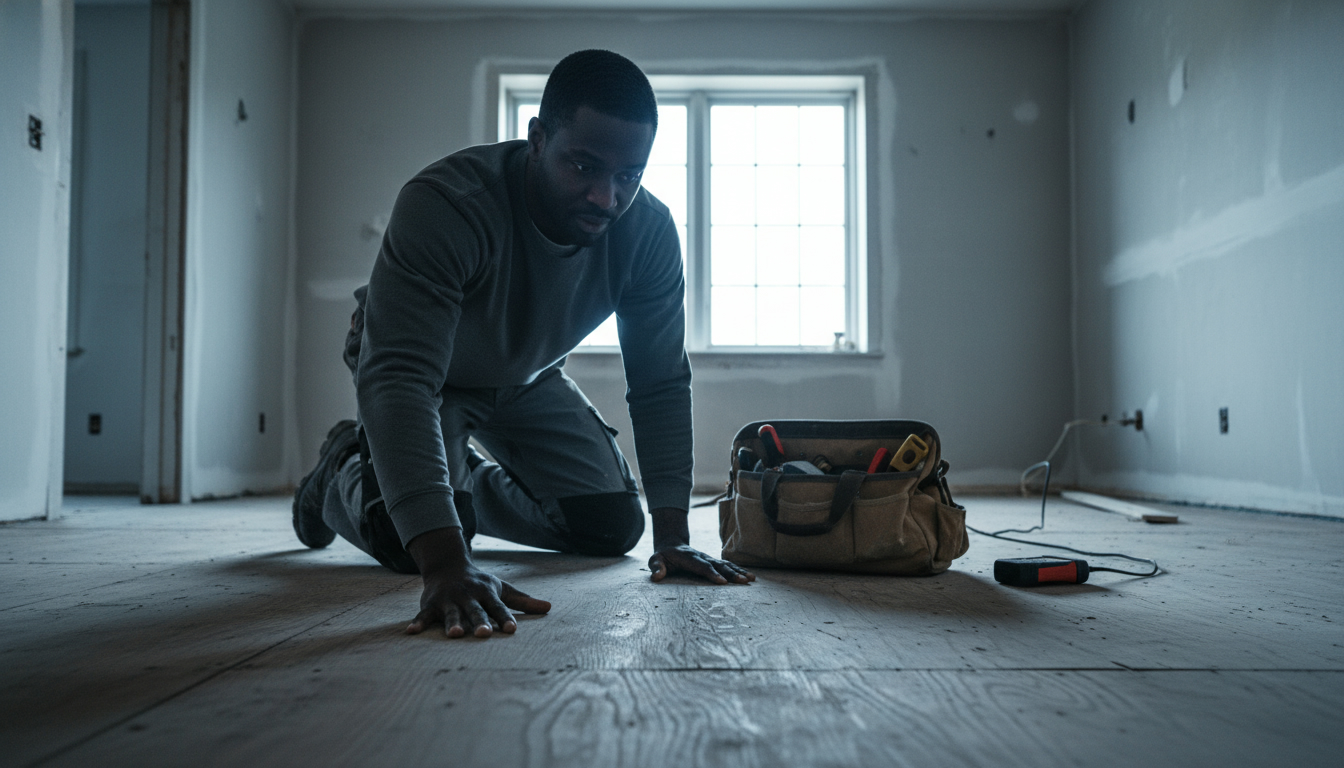
Older homes (pre-1970) frequently have subfloor issues that newer construction does not: moisture damage, uneven settling, or asbestos-containing vinyl tile that requires abatement protocols rather than standard demo. Budget an additional 15 to 20 percent on top of base quotes when working in an older home without knowing the subfloor condition.
Hire a Pro vs. DIY
Floating laminate and LVP are genuinely DIY-friendly for experienced home improvers. These products click together without adhesive or nails, tolerate minor subfloor imperfections, and can be completed with basic tools and research.
Solid hardwood nail-down installation is not a beginner project. It requires a flooring nailer, precise moisture testing, and correct acclimation timing. An improperly installed solid hardwood floor will buckle or gap within one to two seasons. The cost of replacement is the full installation cost.
The line: if you are installing floating laminate in a straightforward rectangular room, DIY is a reasonable option. For solid hardwood, engineered over concrete, tile, or anything involving subfloor repair, hire a pro. The economics of redoing a failed DIY hardwood install do not work out.
Ready to compare local flooring installer quotes? Find a vetted flooring installer near you via Thumbtack and get free quotes from background-checked pros.
FAQ
What is the average cost to install hardwood floors? Solid hardwood floor installation averages $8 to $14 per square foot installed in 2026, including materials and labor. On a 1,000-square-foot project, that runs $8,000 to $14,000 before demo and subfloor prep. Engineered hardwood runs $5 to $10 per square foot installed. Regional labor rates affect both ranges significantly.
Does floor installation cost include removing old flooring? Not by default. Demo and disposal of existing flooring is a separate line item. Expect to add $1 to $2 per square foot for carpet removal and $2 to $4 per square foot for tile removal. Ask explicitly whether demo is included or excluded in every quote you receive.
How long does floor installation take? A professional crew on a 1,200-square-foot home typically takes two to four days depending on material and subfloor condition. Solid hardwood jobs take longer due to acclimation requirements. Floating laminate and LVP installs are fastest – a two-person crew covers 800 square feet per day on a straightforward layout.
Is it worth paying more for premium flooring materials? For flooring staying in place 15 to 25 years, the per-year cost difference between mid-grade and premium materials is smaller than it looks upfront. Premium solid hardwood can be refinished repeatedly; mid-grade laminate cannot and shows wear sooner in heavy-traffic areas. The economics favor premium materials in rooms where longevity matters.
What should I ask a flooring installer before hiring them? Ask for a line-item estimate covering materials, labor, subfloor prep, demo, and disposal separately. Ask for workmanship warranty terms. Ask for a certificate of insurance and two recent references. Get the per-square-foot subfloor upcharge rate in writing before signing.