
How to Hire a Contractor Without Getting Burned
6 min read · Last updated July 20, 2026
- Never pay more than a 10 to 33 percent deposit up front. A contractor who wants half or more before starting is the single biggest red flag the FTC warns about.
- Get at least three written, line-item estimates so you are comparing scope, not just a bottom-line number.
- Verify the license with your state board and ask for a certificate of insurance before signing. On homes built before 1978, confirm EPA Lead-Safe certification.
- The lowest bid is the right choice less than half the time. A quote far below the others usually signals missing scope, not a better deal.
In this article
- Start with license and insurance
- Get three written, line-item estimates
- Read the payment schedule like a contract
- Questions to ask before you sign
- FAQ
Marcus in Columbus signed with a contractor who asked for $18,000 up front on a $34,000 basement remodel. The crew tore out one wall, cashed the check, and stopped answering the phone. Getting the money back took a small-claims filing and eight months. The mistake was not the price he agreed to. It was handing over more than half the job before a single square foot of finished work existed.
The pros who disappear and the pros who finish clean behave differently from the first phone call. If you know what to check, and in what order, you can screen out most of the risk before you owe anyone a dollar.
Start with license and insurance
Before you talk about price, confirm the contractor can legally and safely do the work. Two documents matter.
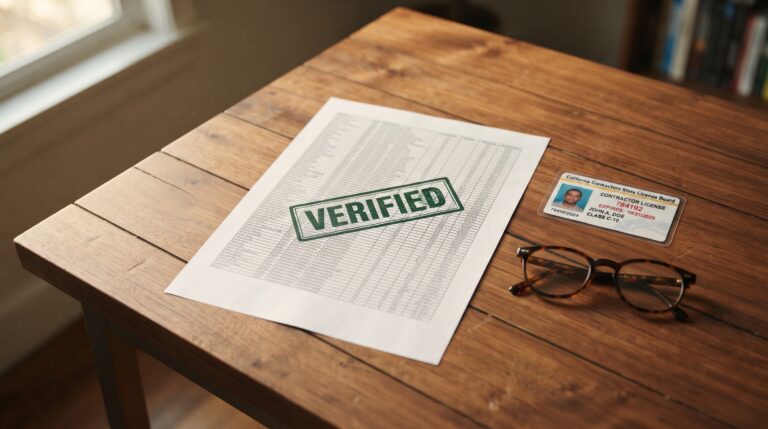
First, the license. Most states license general contractors and specialty trades through a state board. Ask for the license number and look it up on the board’s website. An active license tells you the contractor met a bonding and testing requirement and has a record you can check for complaints. An expired or missing license is a reason to walk.
Second, insurance. Ask for a certificate of insurance showing general liability and, if the contractor has employees, workers’ compensation. This is not paperwork for its own sake. If an uninsured worker is injured on your property, you can be the one holding the bill. Call the insurer listed on the certificate to confirm the policy is current.
One more check applies to older homes. If your house was built before 1978, any project that disturbs painted surfaces, including siding, window, and trim work, falls under the EPA Renovation, Repair, and Painting rule. The firm doing the work must be EPA Lead-Safe certified. Ask for that certification number the same way you ask for the license.
Get three written, line-item estimates
One quote tells you nothing. Three quotes tell you the market rate and expose the outliers. Insist that each estimate be written and broken into line items: materials, labor, permits, and a timeline. A single lump-sum number is impossible to compare and easy to pad.
When the three come back, resist the urge to grab the lowest one. The lowest bid is the right choice less than half the time. A number far below the others almost always means the contractor left something out, will hit you with change orders later, or plans to cut a corner you will pay for down the road. Line up the estimates side by side and check that all three cover the same scope. If one skips debris haul-away or wall repair, it is not actually cheaper.
Match the contractor to the size of the job, too. A handyman who does great fence work is not the right hire for a structural addition. Ask for photos and addresses of similar projects, and call at least one past client.
Read the payment schedule like a contract
The payment terms tell you more about a contractor than the sales pitch does. Legitimate pros tie payments to progress. Scammers want cash up front.
Several states cap how much a contractor can collect before work begins. California, for example, limits the deposit on a home-improvement contract to 10 percent of the price or $1,000, whichever is less. Even where no cap exists, a deposit above roughly one third of the job is a warning sign. Structure the rest as progress payments tied to milestones you can see, and never make the final payment until the work is done, inspected, and you are satisfied. If the crew did good work and you want to tip on top of that final payment, treat it as a separate courtesy rather than part of the contract balance; our guide on who to tip and how much for home service pros breaks down typical amounts by trade.
| Payment or contract term | Red flag | What a legitimate contractor does |
|---|---|---|
| Deposit | Wants 50% or more before starting | Asks for 10 to 33%, or a materials deposit backed by a receipt |
| Payment method | Cash only, or check made out to a personal name | Accepts check or card and invoices from the business |
| Estimate | One lump-sum number with no breakdown | Line-item scope, materials, labor, and timeline in writing |
| Permits | Tells you to pull the permit yourself | Pulls the permit under the company license |
| Final payment | Wants it before the job passes inspection | Collects the balance after completion and sign-off |
The Federal Trade Commission flags the same tells: a contractor who pressures you for an immediate decision, wants full payment before work starts, only takes cash, or asks you to pull the permits yourself. Any one of those is reason to slow down.
Questions to ask before you sign
By the time you are ready to sign, you should already have the license number, the insurance certificate, and three written estimates. Use these questions to close the gap:
– Who will actually be on site, and are they employees or subcontractors? If subs, are they insured? – What is the payment schedule, and what milestone does each payment unlock? – Who pulls the permits, and is inspection built into the timeline? – What is the written warranty on labor, and how long does it run? – If we hit a surprise behind the wall, how are change orders priced and approved? – Can you provide lien waivers as payments are made, so a subcontractor cannot come after me for money you already collected?
A pro answers these without flinching because they run this way every day. Hesitation, vague answers, or pressure to skip the paperwork is the loudest signal you will get.
For big-ticket projects where the risk is highest, know the going rate before the estimates arrive. See our Kitchen Remodel Cost Guide and Roof Replacement Cost Guide, or start with a vetted kitchen remodeler if that is your project.
Frequently asked questions
How do I verify a contractor’s license? Ask for the license number and look it up on your state’s contractor licensing board website. Most boards let you confirm the license is active and check for complaints or disciplinary actions. If the contractor cannot give you a number, treat that as a decline.
How much deposit is normal for a contractor? A deposit of 10 to 33 percent of the job is typical, and some states cap it lower. Anything approaching half the total before work begins is a red flag. Tie the rest of the payments to visible milestones and hold the final payment until the work passes inspection.
Should I always hire the lowest bidder? No. Compare the three quotes line by line first. A bid far below the others usually means missing scope or corners that will cost you later through change orders. Choose the bid that covers the full scope from a licensed, insured pro, not just the smallest number.
What insurance should a contractor carry? General liability at a minimum, plus workers’ compensation if they have employees. Ask for a certificate of insurance and call the insurer to confirm the policy is current, so you are not liable if a worker is injured on your property.
What happens if a contractor takes my deposit and disappears? File a complaint with your state licensing board and, if the contractor is bonded, make a claim against the bond. For smaller amounts, small-claims court is an option, though recovery can take months. Paying a small deposit and using milestone payments limits the loss in the first place.
Ready to compare local remodeling quotes from vetted pros? Find a vetted contractor near you via Thumbtack and get free quotes from background-checked pros.