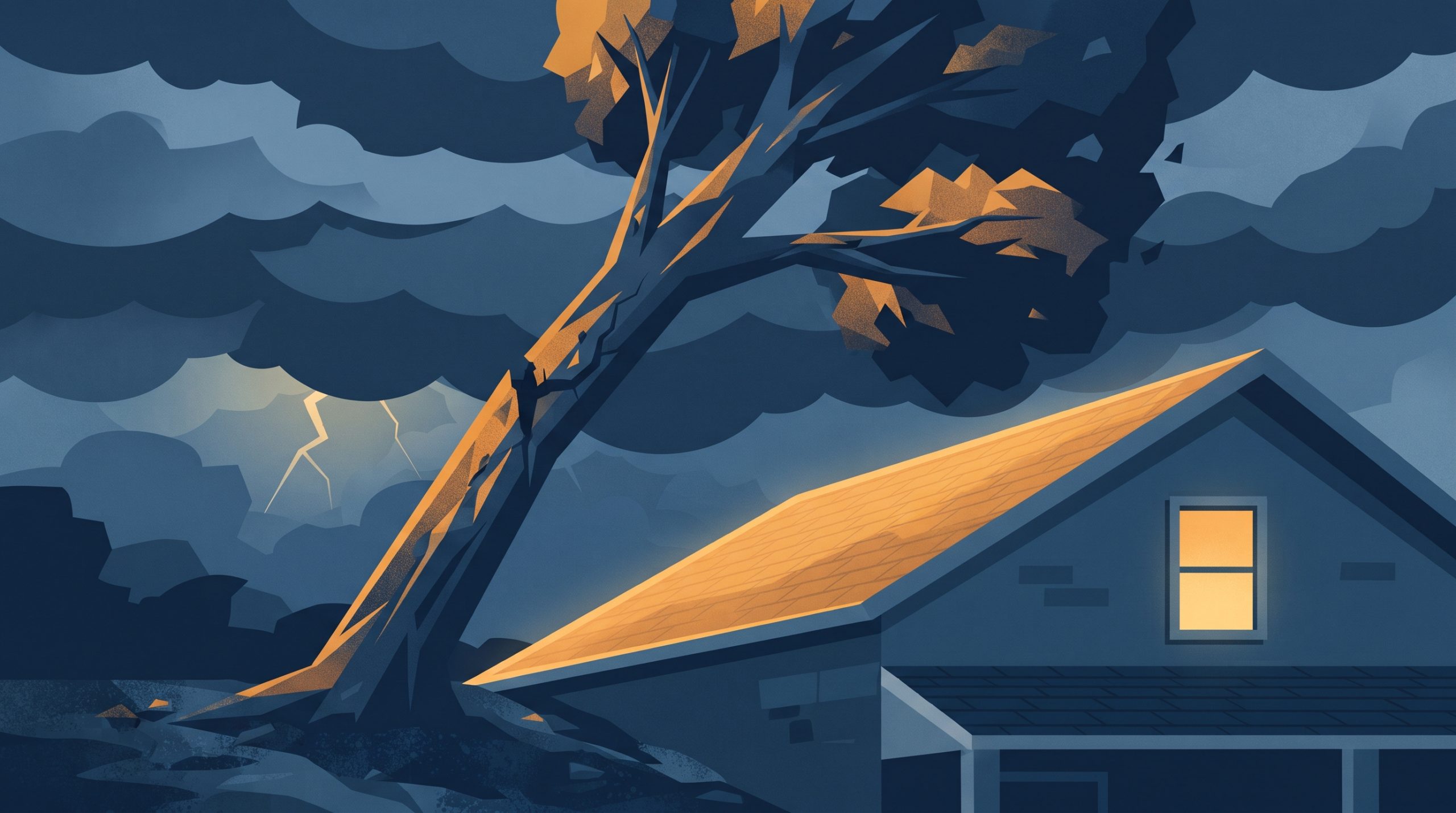
How to Spot a Hazard Tree Before the Next Storm Takes It Down
8 min read · Last updated November 2, 2026
- A scheduled canopy trim on a mid-size tree typically runs $215 to $790, while emergency removal of a storm-damaged or leaning tree can run up to $5,000 once crane access and after-hours labor are added.
- Dead or dying limbs, a trunk that leans or cracks, cavities, fungal growth at the base, and soil fissures near the roots are the warning signs a certified arborist checks for, per the University of California’s Statewide Integrated Pest Management Program.
- The Occupational Safety and Health Administration lists overhead power lines as one of the top fatality hazards in tree care, which is why a hazard tree near utility lines is never a homeowner job.
- A written quote should separately itemize crane or bucket-truck access, stump grinding, and debris haul-away. A bid that bundles all three into one number is the one most likely to grow once work starts.
In this article
- Signs of a Hazard Tree Before a Storm Hits
- Why Hazard Removal Costs So Much More Than a Routine Trim
- What a Tree Service Quote Should Itemize
- What to Have Ready Before You Call for a Quote
- Frequently asked questions
A scheduled trim on a healthy tree runs $215 to $790, but a hazard tree with a new lean, a cracked trunk, or dead limbs over the roofline can cost up to $5,000 to remove safely once a storm forces an emergency call, so the signs below are worth checking before the weather checks them for you.
Say a homeowner named Lauren Mackey in Louisville, Kentucky, who watched her silver maple’s lean worsen after a wind advisory last winter. She called a tree service that same week. The quote to take the tree down safely, before an ice storm could finish what the wind had started, came back at $2,850.
Signs of a Hazard Tree Before a Storm Hits
Most hazard trees give warning before they fail. The University of California’s Statewide Integrated Pest Management Program lists the signs worth checking for: dead or dying limbs, cracks in the trunk or where limbs fork, cavities at the base or along the trunk, fungal conks or mushrooms growing on the bark or near the roots, and trunks that lean or tilt rather than growing upright. Soil fissures near the base, where the ground has started to pull away from the roots, are another sign the program flags, since they can point to root failure that is invisible from above.
A long-standing lean a tree has carried for years is a different situation than a lean that is new or visibly worsening. The same goes for canopy density over the roofline. A full, heavy crown hanging directly over a roof is not automatically a problem, but it raises the stakes if any of the other signs show up alongside it, since more weight means more damage if a limb or the whole tree comes down.
None of this is a verdict you make yourself. These are the signs that mean it is time for a certified arborist’s assessment, not a reason to climb up and look closer or start cutting anything back on your own.
Why Hazard Removal Costs So Much More Than a Routine Trim
Lauren’s $2,850 quote is not what a healthy tree costs to maintain. Our tree trimming cost guide puts the national range for a scheduled canopy trim on a mid-size tree at $215 to $790, priced from a bucket truck with no access complications.
Full removal of a healthy, easy-access tree runs higher. This Old House puts the range mainly by height and trunk size: smaller trees under 30 feet run $150 to $450, while trees over 80 feet run $1,000 to $2,000.
The same source notes that emergency removal, the kind that happens after a storm has already damaged or dropped a tree, can run up to $5,000. Crane access, after-hours scheduling, and utility-line clearance are what close that gap, not a different tree.
| Scenario | Typical Range | Notes |
|---|---|---|
| Scheduled canopy trim, mid-size tree | $215-$790 | Routine maintenance, no access or safety complications |
| Full removal, healthy tree, easy access | $150-$2,000 | Varies mainly by height and trunk diameter, not urgency |
| Hazard or emergency removal, storm-damaged or leaning tree | Up to $5,000 | Adds crane access, utility-line clearance, and after-hours labor |
| Stump grinding and debris haul-away | Billed separately | Ask every bidder to itemize both rather than bundle them into one number |
What a Tree Service Quote Should Itemize
A quote that only lists one lump sum is hiding the real cost drivers. Ask for crane or bucket-truck access as its own line, stump grinding as its own line, and debris haul-away as its own line.
The lowest bid is not automatically the best one. It is often just the bid that left one of those three off the page, which is a cost that shows up later, not a cost that disappeared.
Insurance is the other line item that matters before anyone climbs. The Tree Care Industry Association tells homeowners to ask for current certificates of liability and workers’ compensation insurance at the first meeting, get every estimate in writing, and insist on a signed contract naming the cost, the dates, and exactly what work will be done.
Get at least three quotes before you commit to one, the same rule that applies to any contractor. If the red flags in one bid look familiar, our guide to reading a contractor’s quote covers the same allowances and exclusions tricks that show up in tree work.
Match the size of the company to the size of the job, too. A routine trim does not need a crew with a crane on standby, but a leaning tree over a roofline, or one tangled in a utility line, does, and a company that only trims hedges is not who you want for that call.
What to Have Ready Before You Call for a Quote
A few minutes of prep before you pick up the phone gets you a faster, more accurate quote. Take photos of the tree from several angles: the base and root area, the direction of the lean, and the canopy where it overhangs the house. Note roughly how far the trunk sits from your property line and from the house itself, since access and fall radius both drive price.
Check for utility lines running through or near the canopy before anyone shows up. The Occupational Safety and Health Administration names overhead power lines as one of the top hazards in the tree care industry, alongside falling branches and faulty safety equipment, and work near a line requires a certified line-clearance crew, not a general tree service. If a limb has already grown into a utility line, call your utility company first; many will clear it at no charge.
Last, confirm the company’s license and insurance before you sign anything, the same check our guide to hiring a tree service walks through in more detail. A little paperwork up front is a lot cheaper than finding out after the job starts that nobody carried coverage for the crew on your roof.
Ready to compare local tree service quotes? Find a vetted arborist near you via Thumbtack and get free quotes from background-checked pros.
Frequently asked questions
How much does emergency tree removal cost compared to a scheduled trim?
A scheduled canopy trim on a mid-size tree typically runs $215 to $790. Emergency removal of a storm-damaged or leaning tree can run up to $5,000, since crane access, utility-line clearance, and after-hours labor all add to the base cost. The tree does not have to be larger to cost more; the urgency and access usually are what change.
What’s the difference between a certified arborist and a general tree service?
A certified arborist has passed an exam, typically through the International Society of Arboriculture, that tests tree biology, risk assessment, and safe pruning practices. A general tree service can still do quality work, but for a genuine hazard call, ask specifically whether the person assessing the tree holds that certification, not just whether the company owns a chainsaw.
What should I check before hiring a tree company for a hazard removal?
Ask for current certificates of liability and workers’ compensation insurance, get the estimate in writing with crane access, stump grinding, and haul-away listed separately, and get at least three quotes. A company that cannot produce proof of insurance on request is not one to hire, regardless of price.
Is it safe to wait until after a storm to get quotes?
Waiting means you are calling during the highest-demand, highest-price window, and a tree that was already leaning has had less time to fail safely rather than more. Getting an assessment before a forecasted storm gives you time to compare quotes instead of taking whichever crew can show up first.
Do I need a permit to remove a hazard tree?
Permit rules vary by city and county, and some protect certain species or sizes even on private property. Ask the tree service you are vetting whether a permit applies in your area; a company that works there regularly should already know the local rule.