Hire a Mold Remediation Specialist Near You
6 min read · Last updated June 04, 2026
- Certified mold remediation typically costs $1,500 to $4,500 for a standard bathroom or basement job; whole-house projects can exceed $10,000.
- Three credentials to require before hiring: IICRC AMRT certification, general liability insurance ($1M minimum), and a written containment plan.
- Always get at least three quotes – the spread between the lowest and highest bid often exceeds $2,000 for the same scope.
- A legitimate remediator will never recommend tearing out materials before confirming the moisture source is fixed. If they skip that step, walk away.
In this article
- What to do before calling a pro
- Questions to ask every contractor
- Red flags during the quote visit
- What mold remediation costs
- FAQ
After pulling back the vanity in her Seattle bathroom, Teresa found a 3-by-4-foot section of black-speckled drywall that had been wet for months. She called four contractors. Quotes came back at $980, $1,850, $2,400, and $4,600 for the same apparent scope. The $980 contractor couldn’t explain his containment protocol. The $4,600 contractor wanted a deposit before producing a written scope. Teresa hired the $1,850 contractor – the one who showed up with a moisture meter, named his IICRC certification, and handed her a line-item estimate on the spot.
What to do before calling a pro
Before you dial a single number, do two things. First, locate the moisture source. Mold is a symptom. If a slow pipe leak or inadequate bathroom ventilation is feeding the growth, any remediation work will fail within 12 to 18 months if the source isn’t fixed first. A competent remediator will insist on this – but it’s still your responsibility to have a plumber or general contractor address the source, which is typically a separate contract.
Second, photograph the affected area before touching anything. Do not attempt to scrub or bleach the mold yourself. Disturbing a colony without proper containment spreads spores through HVAC and adjacent spaces, which can expand an otherwise simple job into a whole-house project. Take photos from multiple angles and note any visible water staining, discoloration, or odor on adjacent materials.
Questions to ask every contractor
Line these up before you call. A contractor who can’t answer them clearly is not the right hire.
What certifications does your crew hold? The gold standard is the IICRC’s Applied Microbial Remediation Technician (AMRT) credential. Some states also have their own mold contractor licensing – verify with your state’s licensing board before hiring anyone.
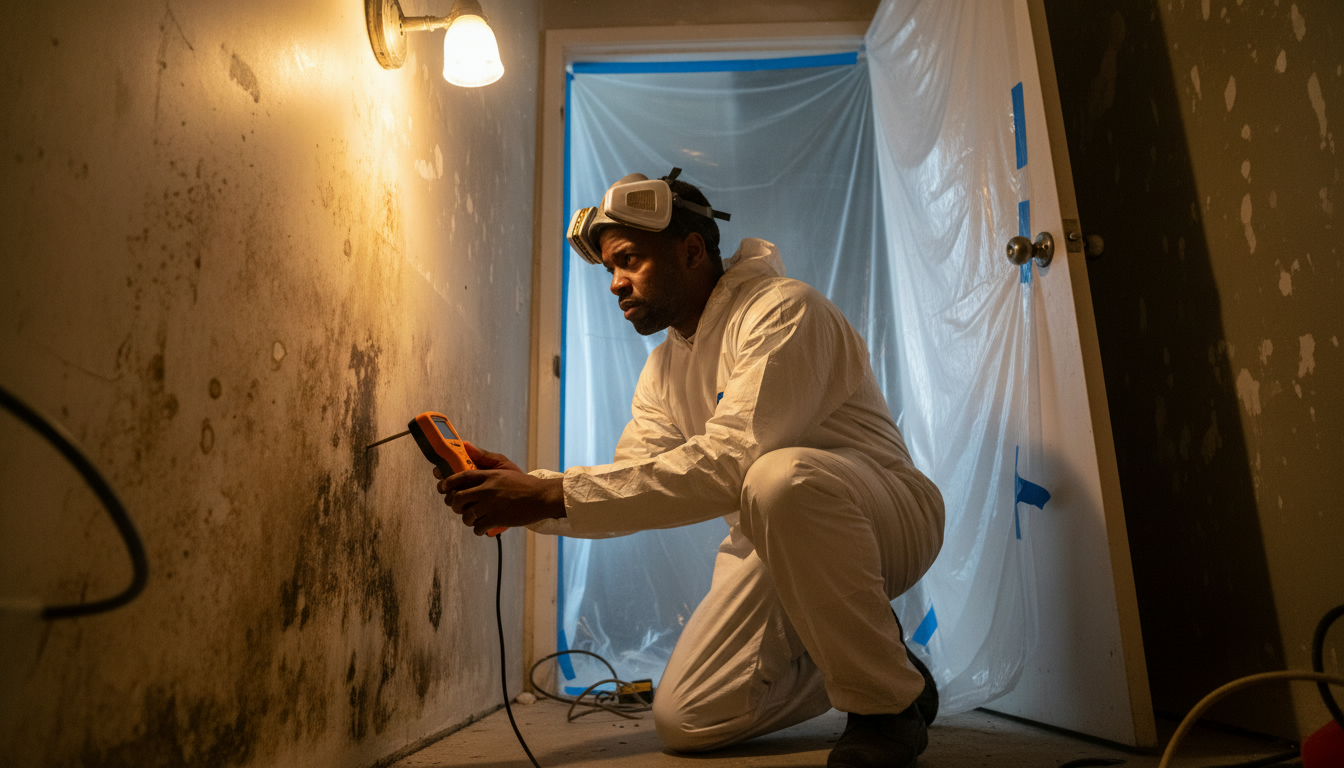
What does your containment protocol look like? Proper remediation uses negative-air pressure, poly sheeting, and sealed disposal bags. The contractor should describe this before you sign – and match their verbal description to what appears on the written estimate.
Will you fix the moisture source? Most remediators don’t do plumbing – that’s a separate contractor. But a good remediator will require you to address the source before or concurrent with their work. If they don’t ask about the source, they’re setting you up for a failed job.
Do you carry general liability and worker’s comp? Ask for a certificate of insurance. Minimum: $1 million general liability. Worker’s comp is essential for work in tight spaces.
What is your post-remediation verification process? A clearance inspection – visual check plus air or tape sampling – confirms the mold count is acceptable. Ask whether this is included or priced separately.
Red flags during the quote visit
A contractor who skips a moisture reading. Every site visit should include a moisture meter. If the pro doesn’t pull one out, they’re guessing at scope.
A lump-sum quote with no line items. You need separate lines for containment, demo and disposal, antimicrobial application, drying equipment, and clearance testing. A lump sum gives you no recourse if something is skipped.
Pressure to decide immediately. Mold grows slowly. You have time to get three quotes.
Offering to skip the clearance test to save money. The clearance test is how you verify the job was done correctly. Skipping it means no accountability for the result.
Ready to compare local mold remediation specialists quotes? Find a vetted mold remediation pro near you via Thumbtack and get free quotes from background-checked specialists.
What mold remediation costs

| Scope | Typical Range | Notes |
|---|---|---|
| Small area (under 10 sq ft) | $500 – $1,500 | Single bathroom, closet, or cabinet – often classified as DIY-eligible by IICRC in some markets, but a pro is still safer for black mold strains |
| Medium area (10-100 sq ft) | $1,500 – $4,500 | Most common residential job – bathroom, partial basement wall, crawl space section |
| Large area (100-300 sq ft) | $4,500 – $8,000 | Full basement, attic, or multiple rooms – often requires more drying equipment and extended containment |
| Whole-house / HVAC contamination | $8,000 – $15,000+ | Rare; usually follows a major flood or prolonged leak. Requires full system testing and often duct cleaning |
| Factor | Impact on Price | Notes |
|---|---|---|
| Mold species (black mold vs. common molds) | High – adds 20-40% | Stachybotrys (black mold) requires stricter protocols and full PPE; not all contractors are certified to handle it |
| Material type (drywall vs. concrete vs. wood framing) | Medium | Porous materials like drywall almost always require demo; concrete and tile can sometimes be cleaned in place |
| HVAC involvement | High – adds $500-$2,000 | If spores entered the duct system, duct cleaning is a separate line item and often a separate contractor |
| Clearance testing | Medium – adds $200-$500 | Often quoted separately; always worth it as your proof the job was completed correctly |
| Post-remediation repairs (drywall, paint) | Variable | Most remediators do not do reconstruction – budget separately for patch, drywall, and paint |
Your estimate may vary. A medium-scope basement job in Dallas might come in at $3,200; the same job in Seattle or Boston runs $4,800 or higher due to regional labor costs. Get quotes from at least three IICRC-certified contractors before committing to any scope – our mold remediation cost guide breaks the full pricing down by project size and mold species if you want to sanity-check a bid before signing.
If the mold traces back to a basement that keeps taking on water, our basement waterproofing cost guide covers which method actually stops the water instead of just treating what already grew.
FAQ
How do I know if I need a mold remediation specialist or can clean it myself?
The IICRC’s widely-referenced guideline uses 10 square feet as a rough threshold. Under 10 square feet of surface mold with no HVAC involvement and no structural material affected, some homeowners clean it themselves using EPA-approved fungicides. Above that threshold – or any time you smell mold but can’t see it, or if the mold is on wood framing or in an HVAC system – hire a certified pro. Black mold (Stachybotrys) should never be DIY-cleaned regardless of size; it requires full containment and PPE.
Should I get three quotes or five?
Three qualified quotes is the practical standard. A fourth and fifth quote add diminishing returns unless the first three show unusual spread ($2,000 or more between highest and lowest for the same scope). More important than the number of quotes is making sure each contractor visits the site in person, measures the affected area, and provides a written scope. Phone quotes without a site visit are not comparable.
Does homeowners insurance cover mold remediation?
It depends on the cause. Most policies cover mold that is a direct result of a covered peril – a burst pipe, for example. They typically exclude mold from slow leaks, flooding (flood insurance is separate), or humidity over time. Check your policy’s mold endorsement, if any, and contact your adjuster before paying out of pocket if a recent covered event might be the source.
How long does mold remediation take?
A standard bathroom or small basement job typically takes one to three days. Larger projects with structural materials and drying equipment can take a week or more. The drying phase cannot be rushed – a contractor who promises to finish a large job in a day is skipping the drying protocol.
Can I stay in my home during mold remediation?
For small, contained jobs in a bathroom or closed room – yes, usually. For larger jobs affecting living spaces, the contractor’s containment setup should keep spores isolated, but many families choose to stay elsewhere during active demo. Ask your contractor specifically whether their setup is adequate for occupancy during the project, and get that answer in writing.