Deck Construction Cost Guide 2026
6 min read · Last updated August 10, 2026
- Pressure-treated pine decking installed typically runs $15 to $28 per square foot; composite runs $35 to $50, roughly twice the material cost of pine.
- A 320-square-foot deck with railing, stairs, and six footings totals $10,015 in pressure-treated pine versus $20,515 in composite for the identical footprint.
- The Bureau of Labor Statistics’ producer price index for lumber and wood products rose 5.1 percent year over year through June 2026, pushing pressure-treated and cedar costs up regardless of your contractor.
- Deck height, railing length, stairs, and site conditions like a sloped lot move the total as much as the decking material itself.
In this article
- Cost by material: pressure-treated pine, cedar, and composite
- What moves the price beyond the material
- The worked math: a 320-square-foot deck, two ways
- Reading a deck quote so you don’t get burned on the parts that aren’t decking
- FAQ
Renee wanted a 320-square-foot deck off her kitchen in Columbus and got three quotes: $9,800 in pressure-treated pine, $14,600 in cedar, and $19,100 in composite, a spread of $9,300 for the same footprint. The difference wasn’t the contractor. It was the material, the railing length, and six footings her lot’s slope required that a flat yard wouldn’t have needed.
Cost by material: pressure-treated pine, cedar, and composite
| Material | Installed cost per sq ft | Notes |
|---|---|---|
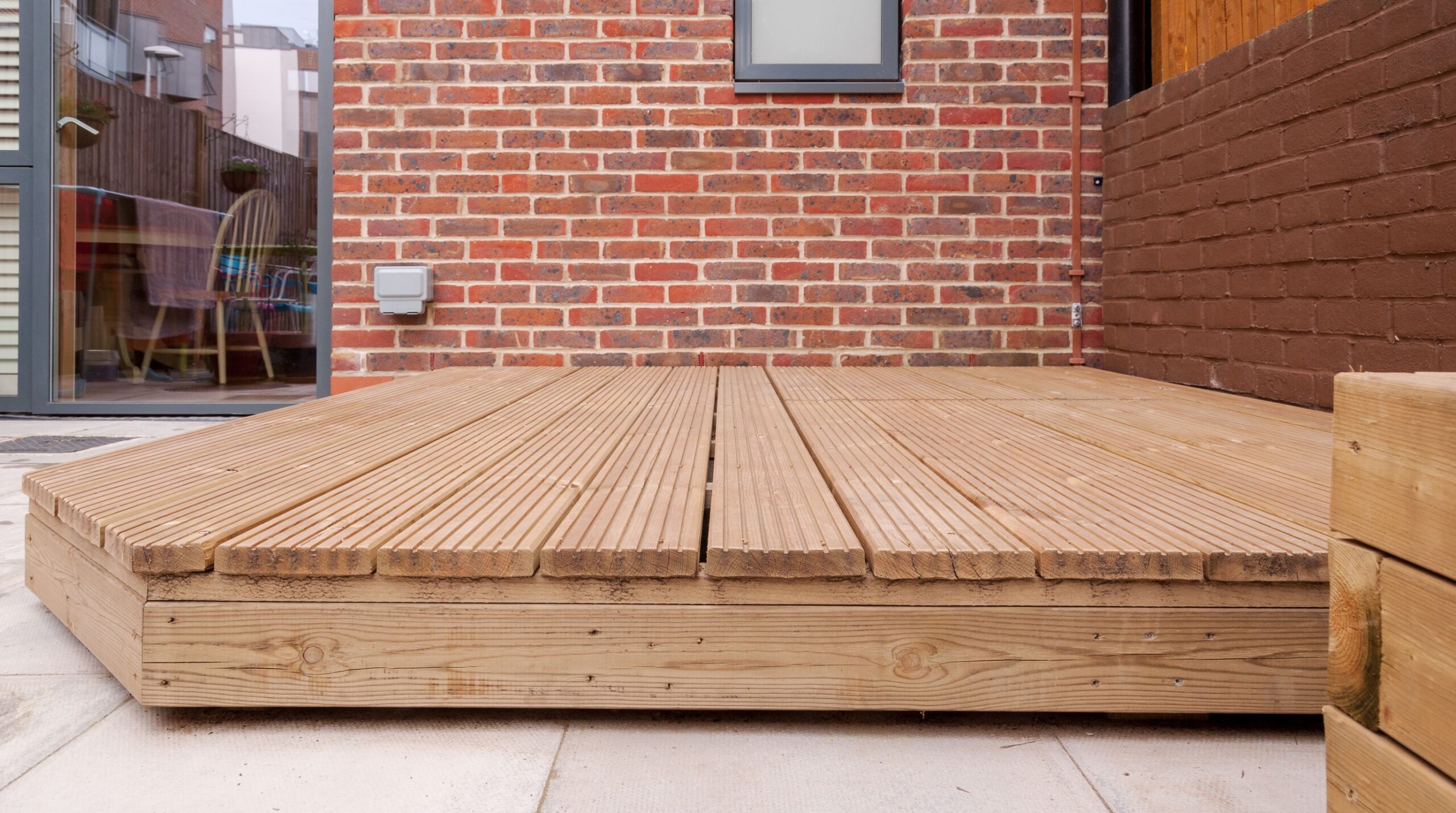
| Pressure-treated pine | $15-$28 | Least expensive upfront; needs restaining or sealing every 1-2 years |
| Cedar | $25-$38 | Natural insect and rot resistance; fades to gray without yearly oil treatment |
| Composite | $35-$50 | Highest upfront cost; minimal yearly upkeep, 25 to 30-year expected lifespan |
The Bureau of Labor Statistics’ producer price index for lumber and wood products rose 5.1 percent year over year through June 2026. That increase lands directly on pressure-treated pine and cedar, since both are milled lumber products tracked in that index. Composite decking is made mostly from recycled plastic and wood fiber, so it moves with a different set of input costs and has stayed comparatively more stable over the same period, part of why the price gap between pine and composite has narrowed slightly even as pine itself gets more expensive.
What moves the price beyond the material
| Factor | Impact on total cost |
|---|---|
| Deck height and elevation | Decks roughly 30 inches or higher need code-required railing and often deeper, more numerous footings |
| Railing material | Composite or cable railing commonly runs double the cost of basic pressure-treated railing per linear foot |
| Stairs | Each built, railed step typically adds $150 to $300 depending on material |
| Permit and inspection | Most municipalities require a permit for any deck attached to the house, with fees commonly running $150 to $500 |
| Site conditions | A sloped lot or soil requiring deeper footings adds cost a flat yard would not need |
Footings add up faster than most homeowners expect on a sloped lot, and the concrete that goes into them has its own cost trend separate from the decking above it. The Bureau of Labor Statistics’ producer price index for ready-mix concrete rose 3.8 percent year over year through June 2026, so a deck needing eight footings instead of six on difficult soil is paying more per footing than it would have a year ago, on top of paying for two extra footings.
The worked math: a 320-square-foot deck, two ways
Take a 320-square-foot deck, 16 by 20 feet, with 36 linear feet of railing, an 8-step staircase down to the yard, six footings for a deck standing roughly four feet off the ground, and a typical $275 municipal permit fee.
In pressure-treated pine at $18 per square foot, the base structure runs $5,760. Add $1,080 for pressure-treated railing at $30 a linear foot, $1,400 for eight built stairs at $175 each, $1,500 for six footings at $250 each, and the $275 permit. Total: $10,015.
Swap to composite at $45 per square foot and the base jumps to $14,400. Composite railing at $65 a linear foot adds $2,340, composite stairs at $250 each add $2,000, and the footings and permit stay the same at $1,500 and $275. Total: $20,515, just over twice the pressure-treated total for the identical footprint.
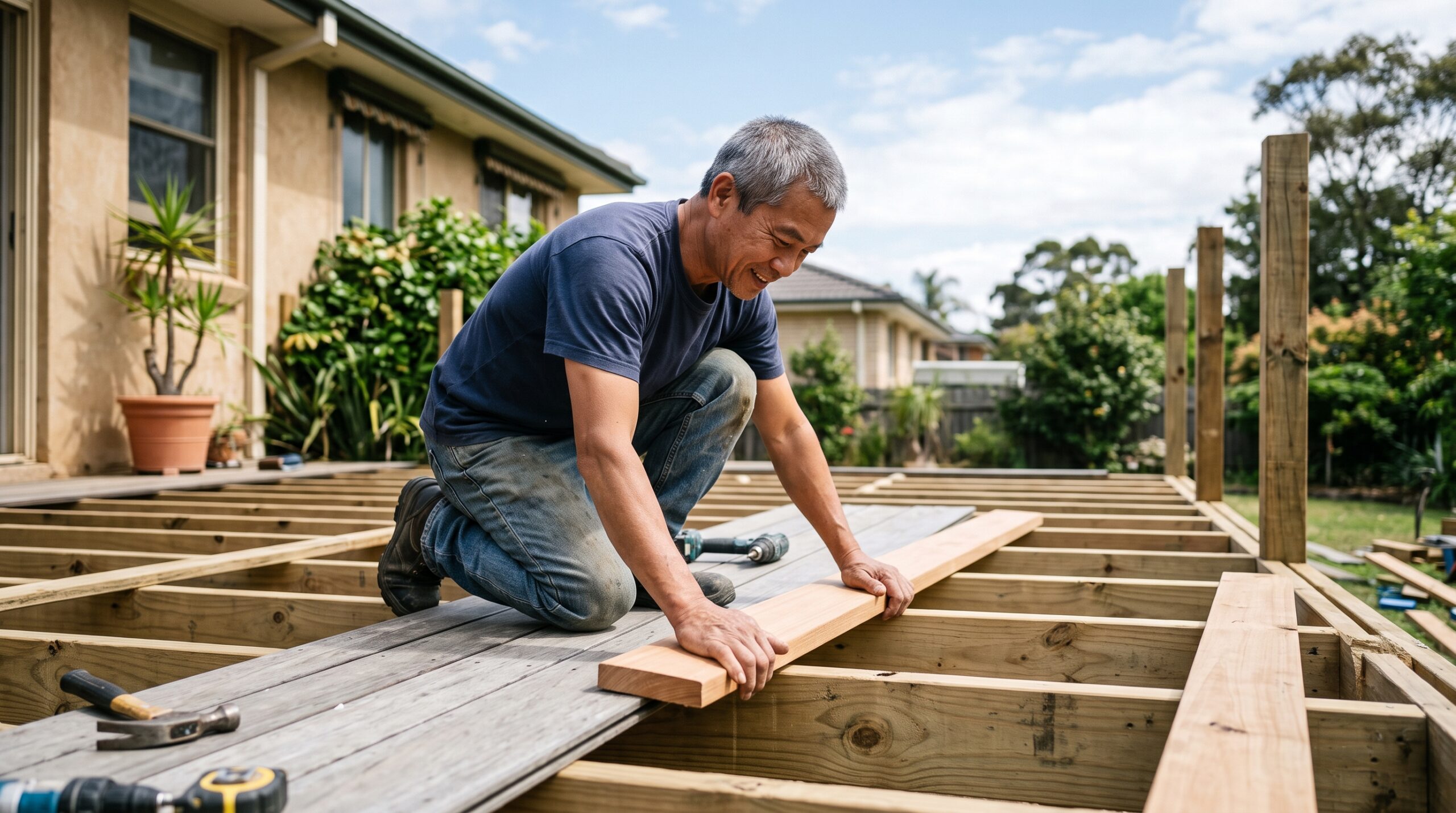
Your estimate may vary from these figures. A deck built in the Southeast typically runs 10 to 15 percent below these national numbers because of lower labor rates and a longer building season, while the same footprint in the Northeast or along the Pacific coast often runs 15 to 20 percent above them. Ground conditions matter as much as region: a sloped lot needing deeper footings, or a deck attached at a second story requiring engineered beams, both push cost up regardless of where you live.
A weekend project like restaining an existing deck is DIY-friendly for most homeowners. Building a new deck that needs footings sized for your soil, joist hangers rated for your local snow load, and a permit-inspected ledger board attached to your house is not. A failed ledger connection is the single most common cause of deck collapse, and it is exactly the connection a building inspector checks before signing off.
Reading a deck quote so you don’t get burned on the parts that aren’t decking
Ask each contractor to itemize the quote into material, labor, railing, stairs, footings, and permit, rather than accepting one lump number. A quote that comes in noticeably lower than the other two often skips the permit fee, undersizes the footings for your soil, or substitutes a lighter-gauge railing than the others specified, and none of that shows up until you compare the line items side by side. The red flags to watch for in a contractor quote apply directly here, especially a bid that is unusually low with no explanation for what it left out.
Get three written estimates before signing, and confirm the scope is identical across all three, same square footage, same railing material, same number of footings. A patio and its installation cost guide follow a similar logic if a ground-level hardscape ends up a better fit for your yard than an elevated deck, particularly on a lot where footing depth is already driving your deck quote up. If the project also touches the yard’s perimeter, our guide to hiring a fence installer covers the same estimate-comparison steps for that trade. And once you’re ready to move from cost research to hiring, our guide to hiring a deck builder near you covers the permit questions, licensing checks, and quote red flags to sort through before you sign.
Ready to compare local deck-building quotes broken into real line items? Find a vetted deck builder near you via Thumbtack and get free quotes from background-checked pros.
Frequently asked questions
What is the average cost to build a deck in 2026? A mid-size deck around 300 to 320 square feet typically runs $10,000 to $12,000 in pressure-treated pine and $18,000 to $21,000 in composite, including railing, stairs, footings, and a permit. Exact totals depend heavily on elevation, railing length, and site conditions.
Is composite decking worth the extra cost over pressure-treated pine? It depends on how long you plan to keep the deck. Composite costs roughly twice as much upfront but needs little more than occasional washing, while pressure-treated pine needs restaining or sealing every one to two years. The cost gap tends to close somewhere past the twelve-year mark once pine’s ongoing upkeep is factored in.
Do I need a permit to build a deck? Most municipalities require a permit for any deck attached to a house, typically running $150 to $500 depending on your area. A quote that skips this line item usually means the contractor is planning to build without one, which can create problems when you go to sell the house later.
How long does a pressure-treated deck last compared to composite? Pressure-treated pine typically lasts 15 to 20 years with regular sealing and maintenance. Composite decking is commonly rated for 25 to 30 years with minimal upkeep beyond periodic washing, which is the main reason its higher upfront cost narrows over time.
Should I get three quotes before hiring a deck builder? Yes, and make sure all three itemize material, labor, railing, stairs, footings, and permit separately. A lump-sum quote makes it easy to miss that one bid quietly left out the permit fee or undersized the footings for your soil, which is where an unusually low number usually comes from.