What Tree Removal Costs in 2026, by Height and by How Close It Is to Your House
7 min read · Last updated August 17, 2026
- A tree under 30 feet typically costs $150 to $450 to remove with open ground access; a tree over 80 feet runs $1,000 to $2,000, based on 2026 data from This Old House.
- Trunk diameter moves the number too: a large tree at 20 inches or wider runs $2,500 to $4,500 by itself, per a separate 2026 cost guide, even at a moderate height.
- Marcus’s oak in Charlotte got a $980 quote and a $2,750 quote for the same tree; the gap was ten hours of rope-and-lower rigging the cheaper bid never priced.
- Emergency or storm-timed removal can run as high as $5,000 for a tree that would cost a fraction of that on a scheduled basis.
In this article
- What tree removal costs by height
- What moves the price beyond height
- A real quote, and the one that missed the lean
- Your estimate may vary
- FAQ
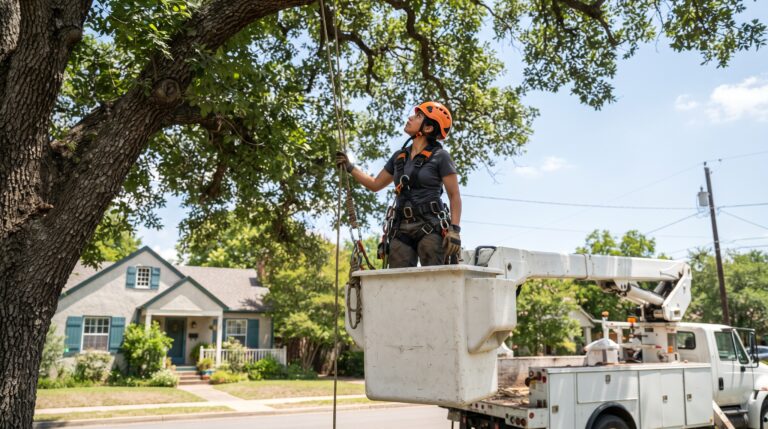
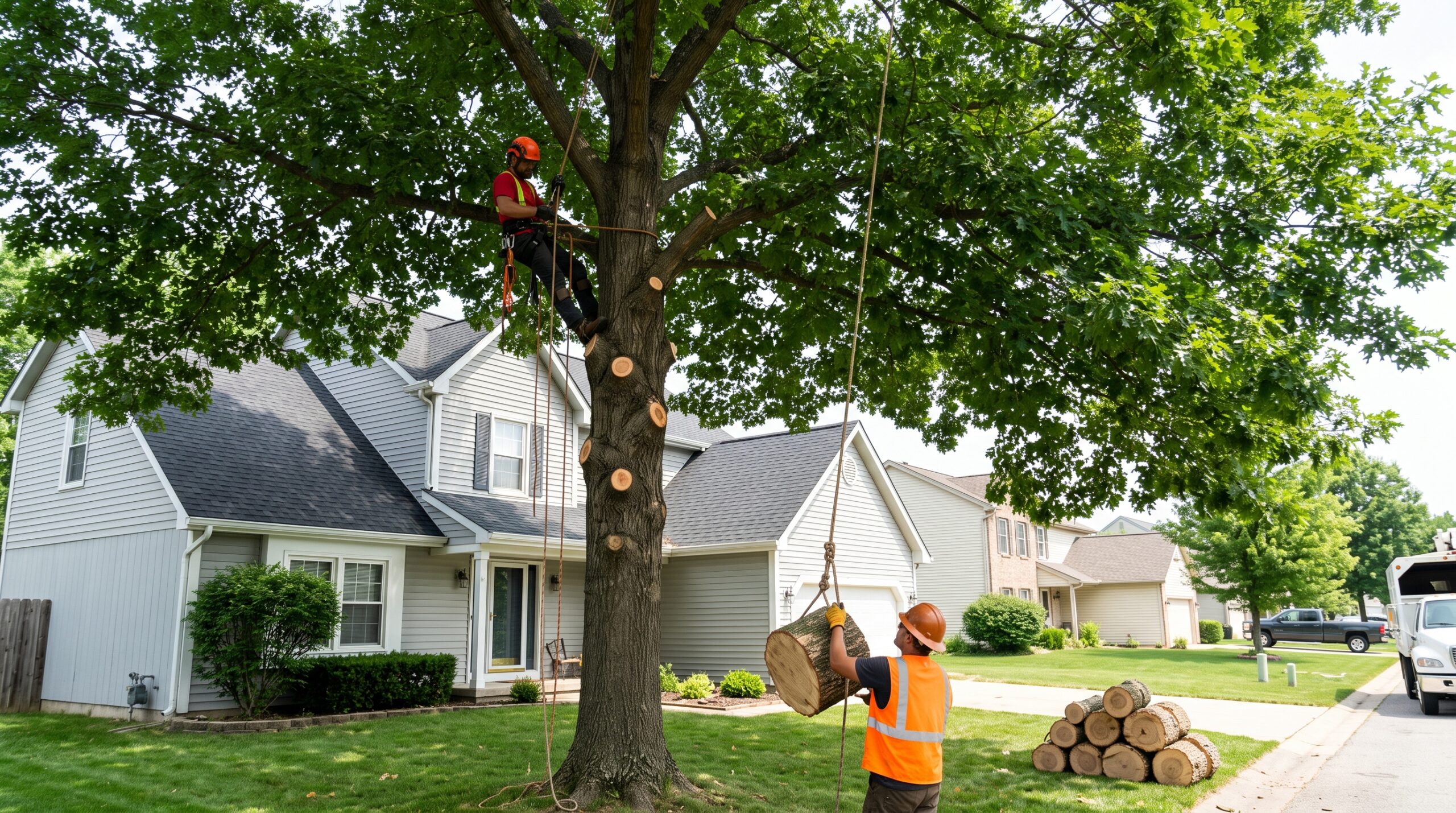
Marcus’s white oak in Charlotte stood about 65 feet with its crown hanging directly over the corner of his garage roof. The first quote came in at $980, priced like the tree could just be dropped into the yard. It couldn’t. The crown’s lean meant every section had to be roped and lowered by hand instead of felled, and the second contractor, the one who actually climbed a ladder to look at the lean before quoting, priced the same tree at $2,750.
What tree removal costs by height
| Tree height | Typical cost, open access | Notes |
|---|---|---|
| Under 30 feet | $150 to $450 | Small ornamentals and fruit trees; usually a two to three hour job |
| 30 to 60 feet | $450 to $1,200 | Common mid-size shade trees |
| 60 to 80 feet | $800 to $1,500 | Large shade trees; some crews bring a bucket truck even with clear access |
| 80 feet and over | $1,000 to $2,000 | Often requires a crane regardless of how much yard clearance exists |
These height tiers come from This Old House’s 2026 tree removal data, not a government source, since no federal agency tracks retail tree service pricing. Height is not the only variable a cost guide can price by. A separate 2026 guide bases its tiers on trunk diameter instead: a small tree at 6 to 8 inches runs $500 to $900, a medium tree at 12 to 16 inches runs $1,100 to $2,000, and a large tree at 20 inches or wider runs $2,500 to $4,500, regardless of height. The two systems measure different things, which is why a tall, slender pine and a shorter, thick-trunked oak can price very differently even when a homeowner assumes “big tree” means the same number both times.
What moves the price beyond height
| Factor | Effect on price |
|---|---|
| Proximity to a structure or power line | Forces rope-and-lower rigging instead of a free fall; commonly adds several hundred to well over a thousand dollars |
| Trunk diameter | A wide trunk takes longer to cut and haul even at a modest height; the 20-inch-plus tier runs $2,500 to $4,500 on its own |
| Stump grinding | $100 to $350 per stump on average, up to $900 for a large stump |
| Debris haul-off | Often bundled into a small job’s base price; a separate line item once the wood volume grows |
| Emergency or storm timing | The same tree removed on an emergency basis instead of scheduled can run as high as $5,000 |
A tree within striking distance of a roof, fence, or power line cannot be felled the way an open-yard tree can. OSHA’s inspection guidance for tree care and tree removal operations identifies work near energized lines and around structures as among the highest-hazard tasks in the trade, which is exactly why it takes a different crew approach, not just more caution. A two-to-three person crew billing $60 to $120 an hour adds real cost fast once a tree has to come down in roped sections rather than one cut. Ten extra hours of rigging at $100 an hour is $1,000 by itself, before a bucket truck or crane even enters the estimate.
Insurance is the check that matters most on proximity jobs specifically, because a mis-cut limb near a structure is the exact failure mode that turns a routine removal into a claim. The Tree Care Industry Association’s guide to hiring a tree care company recommends verifying both liability and workers’ compensation coverage directly with the insurer, not just accepting a certificate the crew hands over, the same verification standard that applies to any contractor working on your home.
A real quote, and the one that missed the lean
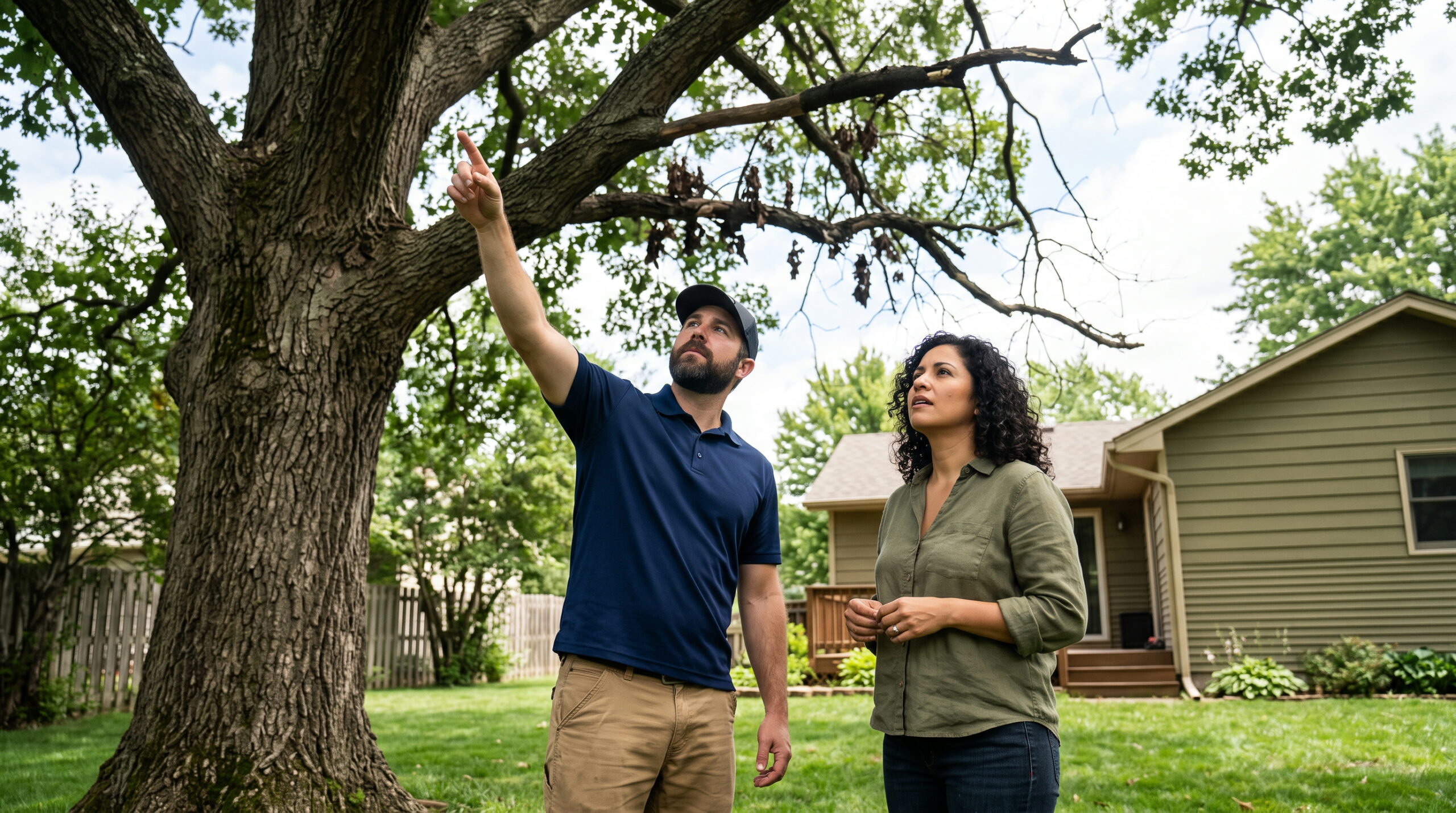
Marcus’s tree, at 65 feet with open access, would have fallen in the $800 to $1,500 tier. The accepted bid worked out like this: a $1,280 base removal, ten additional hours of rope-and-lower rigging at $100 an hour for $1,000, a $250 stump grind, and $220 to haul away wood that couldn’t be left piled against the garage. That totals $2,750.
The rejected bid, at $980, priced a base removal with no separate rigging line, no stump grinding, and no haul-off, the number you’d expect for a tree with nothing nearby to protect. Nothing about it was dishonest on its face. It described a different, easier job than the one Marcus actually had, because the estimator never looked up at where the crown actually leaned.
Ask any tree service to physically look up at the lean and the target drop zone before quoting, not just measure the trunk from the ground. That single step is what separated Marcus’s two bids, and it costs the estimator nothing but a few extra minutes on-site.
Your estimate may vary
Substitute your own numbers: height, trunk diameter, and how close the canopy sits to a roof, fence, deck, or power line. Regional labor rates alone can shift a quote 15 to 25 percent between a lower-cost region and a major metro, independent of the tree itself, so treat any national range as a starting point. Gutter and roofline work often gets scheduled around the same storm season as tree removal, so if a limb has already come down on your roof, get both estimates from crews who have actually walked the property, not phoned in a number from a satellite photo.
Get at least three written, itemized quotes, and ask each one directly whether the price assumes open access or accounts for what the tree is leaning toward. Verify license and insurance independently, and treat a bid that skips stump grinding or haul-off as a smaller job than the others, not a lower price for the same one – our guide on how to hire a tree service near you covers what else to check before signing, including how routine trimming quotes differ from a full removal. A tree with any lean toward a structure is not DIY territory at any height. Watch for the same red flags that show up in any home service quote: an unusually low bid with no explanation for what it skipped is the number to question first, not accept first.
Ready to compare quotes from tree services who actually look up before they price the job? Find a vetted tree service near you via Thumbtack and get free quotes from background-checked pros.
Frequently asked questions
How much does it cost to remove a large tree? A tree over 80 feet with open ground access typically runs $1,000 to $2,000, per 2026 data from This Old House. Trunk diameter matters too: a large tree at 20 inches or wider can run $2,500 to $4,500 on its own, even at a more moderate height, since a separate cost guide prices by width rather than height.
Why did my tree removal quote not mention rigging or a bucket truck? A quote written from ground measurements alone may not account for how the tree leans relative to your roof or fence. Ask directly whether the price assumes the tree can be felled in one piece or requires roped, section-by-section lowering, since that difference is what separated Marcus’s two bids by more than $1,500.
Does removing a tree near a power line cost more? Yes. OSHA classifies work near energized lines and around structures among the highest-hazard tasks in tree care, which requires a different crew approach and often specialized equipment. Get quotes only from services that can confirm current liability and workers’ compensation coverage.
Is stump grinding included in a tree removal quote? Not always. Stump grinding typically runs $100 to $350 per stump on average, up to $900 for a large one, and is often priced as a separate line item. Ask whether your quote includes it or treats it as an add-on.
Is emergency tree removal worth the extra cost, or should I wait? Emergency removal after a storm can run as high as $5,000 for a tree that would cost far less on a scheduled basis. If the tree is not actively threatening your home or blocking access, getting a scheduled quote instead of an emergency one is usually the cheaper path.