Hire a Plumber Near You: What to Check Before Anyone Opens a Wall
7 min read · Last updated September 28, 2026
- A journeyman plumber typically bills $45-$90 an hour and a master plumber $70-$200, with a separate service-call fee of $50-$150 for a journeyman or $150-$300 for a master added before any repair work starts, according to Fixr’s plumbing rate guide.
- After-hours and emergency calls run on a $150-an-hour standard rate plus a separate $200-$300 flat emergency callout charge, on top of the usual trip fee.
- Every state licenses plumbers through its own board, and every board publishes a free public lookup tool. Checking it takes about two minutes and costs nothing.
- Get at least three quotes, in writing, before any wall, floor, or slab gets opened. A cheaper-sounding number over the phone can hide a narrower scope of work than the quote next to it.
A journeyman plumber runs $45-$90 an hour and a master plumber $70-$200, plus a $50-$300 service-call fee depending on tier; get the license and the written scope confirmed before either number becomes a repair bill.
In this article
- What a licensed plumber handles that a handyman can’t
- How to verify a plumber’s license and insurance
- Emergency call or scheduled appointment: what changes the price
- What to ask before a plumber opens a wall
- Frequently asked questions
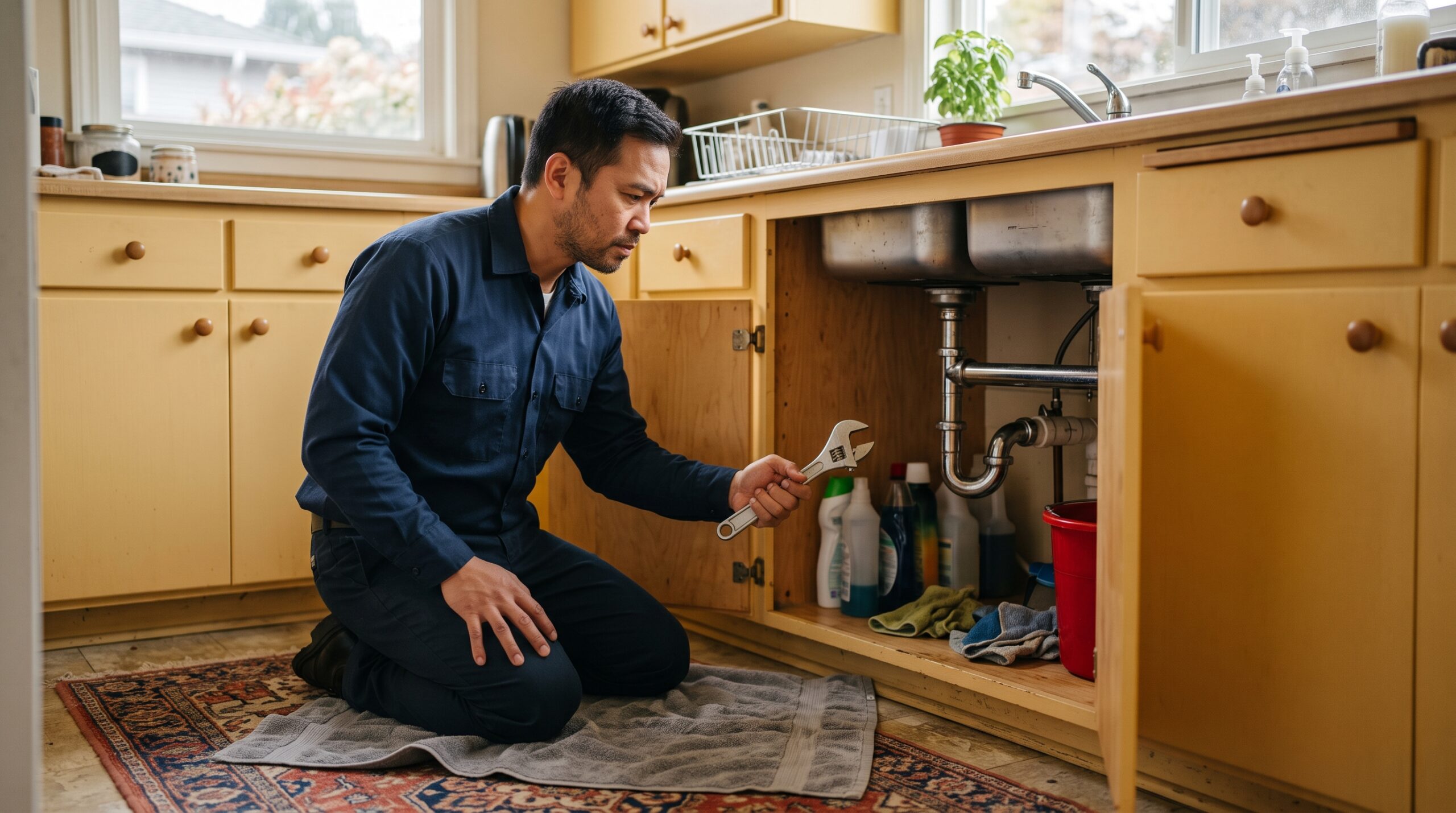
Devon Marsh found water pooling under his kitchen sink on a Tuesday night, steady enough to soak through the cabinet floor within the hour. The first plumber he called quoted a $275 flat callout fee before anyone touched a wrench, on top of whatever the repair itself cost. He hung up, called two more numbers instead of booking on the spot, and picked a licensed plumber whose written quote named the part, the labor, and a not-to-exceed total before a single tool came out of the truck.
What a licensed plumber handles that a handyman can’t
Most states license plumbing in tiers, and the tier determines what the person in your kitchen is legally allowed to do without direct supervision. Texas’s State Board of Plumbing Examiners, for example, licenses six separate classifications: Responsible Master Plumber, Master Plumber, Journeyman Plumber, Tradesman Plumber-Limited, Plumbing Inspector, and Apprentice. A handyman with no plumbing license can usually replace a washer or unclog a trap, but altering a home’s supply line, running new drain-waste-vent piping, or connecting a new water heater crosses into work that requires a licensed plumber and, in most jurisdictions, a permit and inspection. Hiring the wrong tier for the job is how a homeowner ends up paying twice: once for the unlicensed work, and again for a licensed plumber to redo it before a sale or the next repair.
Match the plumber’s credential to the size of the job. A dripping faucet does not need a Master Plumber standing in your kitchen, but rerouting a drain line or tying into a gas line for a water heater does.
How to verify a plumber’s license and insurance before they show up
Every state runs a free, public license-lookup tool, and using it takes about as long as reading this paragraph. Texas residents can search by name or license number through the Texas State Board of Plumbing Examiners’ public search tool; North Carolina runs an equivalent tool through its State Board of Examiners of Plumbing, Heating & Fire Sprinkler Contractors. Search your own state’s board by name, enter the license number the plumber gives you, and confirm the license is active, not expired or suspended, before scheduling anything more than a phone estimate.
License is only half the check. Ask for proof of liability insurance separately, since a licensed plumber can still be uninsured or underinsured for water damage to your home if a repair goes wrong. A reputable plumbing company will hand over a certificate of insurance without hesitation; reluctance to produce one is itself an answer. For general contractor licensing checks that apply to a bigger renovation involving plumbing, How to Verify a Contractor’s License in Under Ten Minutes walks through the same lookup process step by step.
Emergency call or scheduled appointment: what changes the price
Standard-hours service calls run $50 to $150 for a journeyman plumber or $150 to $300 for a master plumber, according to Fixr’s plumbing rate guide. Call after hours and the math changes: expect a $150 hourly rate as the new standard, on top of a $50-$200 transportation fee and a separate $200-$300 flat emergency callout charge before any repair work starts. That gap is real money, so it’s worth a quick gut check on whether the problem can actually wait until morning.
| Situation | Call now (emergency) | Can wait for a scheduled visit |
|---|---|---|
| Water actively flooding a floor or ceiling | Yes, shut off the main and call | – |
| Sewage backing up into a tub, sink, or floor drain | Yes | – |
| A burst supply line | Yes | – |
| Gas odor near a water heater or gas line | Yes, and call the gas utility too | – |
| No hot water, but no leak | – | Yes, next business day is fine |
| A slow drain that still drains | – | Yes |
| A dripping faucet | – | Yes |
What to ask before a plumber opens a wall
Once a repair moves past a fixture and into cutting drywall, tile, or a slab to reach a pipe, the questions change. Ask what the plumber expects to find before they cut, what happens to the price if the problem turns out to be bigger than expected, and who handles the patch-back afterward, since plumbers routinely stop at the hole they made and leave drywall and paint to someone else. Get the answer in writing as part of the estimate, not as a verbal aside. A plumber who can’t describe what they’re looking for before opening a wall is guessing at your expense, not diagnosing.
Before you sign anything, request a written estimate that itemizes parts and labor separately, and match the plumber’s stated experience to the scope of the job. A journeyman who has done exactly this repair a dozen times is a better fit for a slab leak than a master plumber whose daily work is new commercial construction. The lowest of three quotes is not automatically the right choice either, if it’s missing a line item the other two included.
Frequently asked questions
Is a plumber the same thing as a handyman? No. A plumber holds a state-issued license for water supply, drain, and gas-adjacent work, while a handyman has no plumbing-specific credential. Many jurisdictions legally require a licensed plumber for anything beyond fixture-level repair.
How much does a plumber cost per hour? Journeyman rates typically run $45-$90 an hour and master plumber rates $70-$200, per Fixr’s plumbing rate guide, plus a separate service-call fee of $50-$300 depending on the plumber’s tier. After-hours work adds an emergency callout charge on top of that.
How do I know if a plumber is actually licensed? Search your state’s plumbing board website by the plumber’s name or license number. Nearly every state, including Texas and North Carolina, runs a free public verification tool, and an active, unexpired license should come back within seconds.
Should I get more than one quote? Yes, get at least three, and get each one in writing. A phone-quoted number that sounds low can leave out permit costs, patch-back work, or a minimum billable hours clause that a competing written quote already accounts for.
Does a plumbing repair come with any kind of warranty? Warranty terms vary by company; there’s no single standard length for labor or parts coverage. Ask what’s covered on both labor and parts, and for how long, before the job starts, and get the answer written into the same estimate that lists parts and labor, rather than assuming a warranty is included.
Ready to compare local plumbers quotes? Find a vetted plumber near you via Thumbtack and get free quotes from background-checked pros.