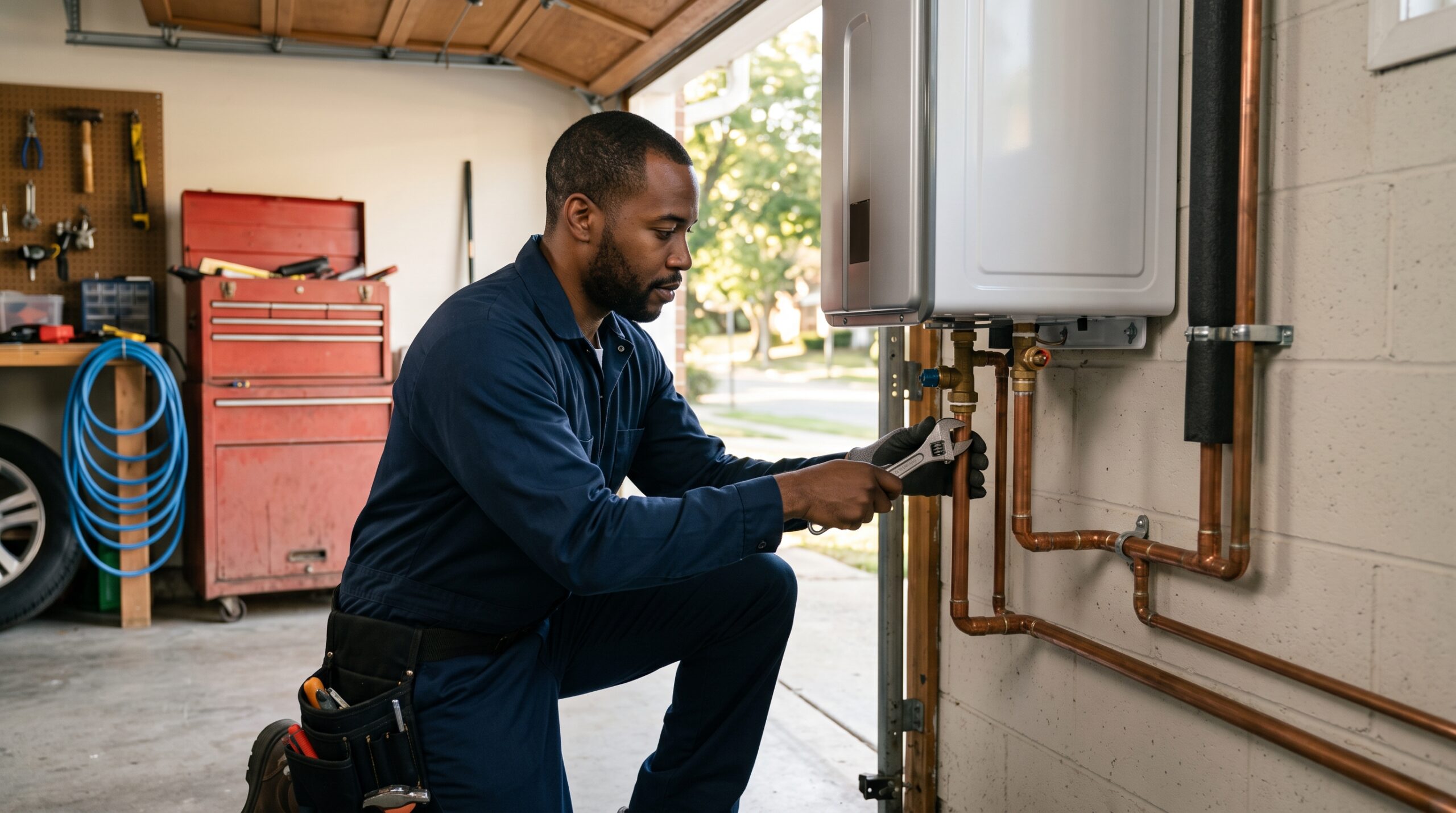
Hire a Water Heater Installer Near You
7 min read · Last updated August 24, 2026
- A tank water heater lasts 8 to 12 years on average; a tankless unit lasts 15 to 20 years with proper maintenance, according to manufacturer data from A.O. Smith.
- Converting from tank to tankless can run $1,200 to $2,800 for a direct swap with compatible venting, or $2,500 to $7,000+ when a new gas line, new venting, or an electrical panel upgrade is required.
- Gas line upgrades alone run $400 to $1,500, and venting replacement runs $300 to $800, since a tank heater’s vent cannot be reused for a tankless unit.
- Permits for a water heater installation typically run $50 to $300 and trigger an inspection. If your installer isn’t pulling one, that is a red flag, not a savings.
In this article
- Tank swap or tankless conversion: two different jobs
- The code items a licensed installer has to handle
- Questions that separate a real quote from a phone estimate
- What to have ready before you call
- Frequently asked questions
Marcus in Charlotte called three installers after his 11-year-old gas tank started leaking at the base. The quotes came back at $1,450 for a straight tank swap, $3,900 for a tankless conversion, and $6,200 for what the third company called the same tankless job. All three had looked at the same water heater. The gap was not padding. It was three different scopes of work wearing the same name.
Tank swap or tankless conversion: two different jobs
A tank-to-tank swap is close to a same-day job: disconnect the old unit, set the new one, reconnect water and gas or power, and test. A tankless conversion is a different scope entirely. A direct swap to a tankless unit with compatible venting and an adequate gas line runs $1,200 to $2,800. A full conversion that needs a new gas line, new venting, or an electrical panel upgrade for the unit’s controls runs $2,500 to $7,000 or more.
The reason for the spread is mechanical, not just size. A tank heater vents through a simple flue. A gas tankless unit needs its own dedicated vent, and the old tank’s vent almost never works for it, so venting replacement alone runs $300 to $800. If the existing gas line was sized for a tank burner, a tankless unit’s higher burner demand can require a larger-diameter line, which runs $400 to $1,500 depending on the run length and whether a wall has to be opened. A full breakdown of where a tankless conversion’s cost actually goes shows the same pattern: labor is usually the single largest line item, running higher than the unit itself, with the gas line and venting work adding further on top of both. An installer who quotes a tankless conversion at tank-swap pricing has not looked at your gas line yet, which means the real number is coming later as a change order.
| Code item | What it does | Typical added cost |
|---|---|---|
| Expansion tank | Absorbs the pressure spike from heated water that can no longer expand back into the street main | Usually bundled into installation labor |
| Drain pan and safe discharge line | Catches leaks and routes the relief valve’s discharge to a safe point instead of onto the floor | Usually bundled into installation labor |
| Updated venting (tankless only) | Vents combustion gases to the specific unit’s spec; a tank’s old vent will not work | $300 – $800 |
| Gas line upsize (if undersized) | Supplies the higher burner demand a tankless unit needs | $400 – $1,500 |
| Permit and inspection | Confirms all of the above meets code | $50 – $300 |
If your water heater sits in a basement, the venting and floor-drain questions get more specific. The basement waterproofing cost guide covers what a wet basement wall does to any mechanical equipment sitting near it, which is worth reading before you convert anything in that space.
The code items a licensed installer has to handle
A licensed installer is not just connecting pipes. The work that shows up on a permit inspection includes an expansion tank on the cold water line (required in most jurisdictions once a check valve or pressure-reducing valve is present, because it absorbs the pressure spike from heated water that can no longer expand back into the street main), a drain pan fully supporting the unit with a drain line routed to a safe discharge point, correct venting sized and routed for the specific unit installed, and the pressure relief valve’s discharge pipe terminating within a few inches of the floor or drain rather than capped or pointed somewhere it can scald someone.
Seismic strapping is a code requirement in California and other high-seismic states and is often skipped by installers working outside a permitted job. None of this is optional add-on work. It is the difference between an installation that passes inspection and one that gets flagged, and it is the same work how to hire a contractor without getting burned tells you to expect on any licensed trade job, not just this one.
Questions that separate a real quote from a phone estimate
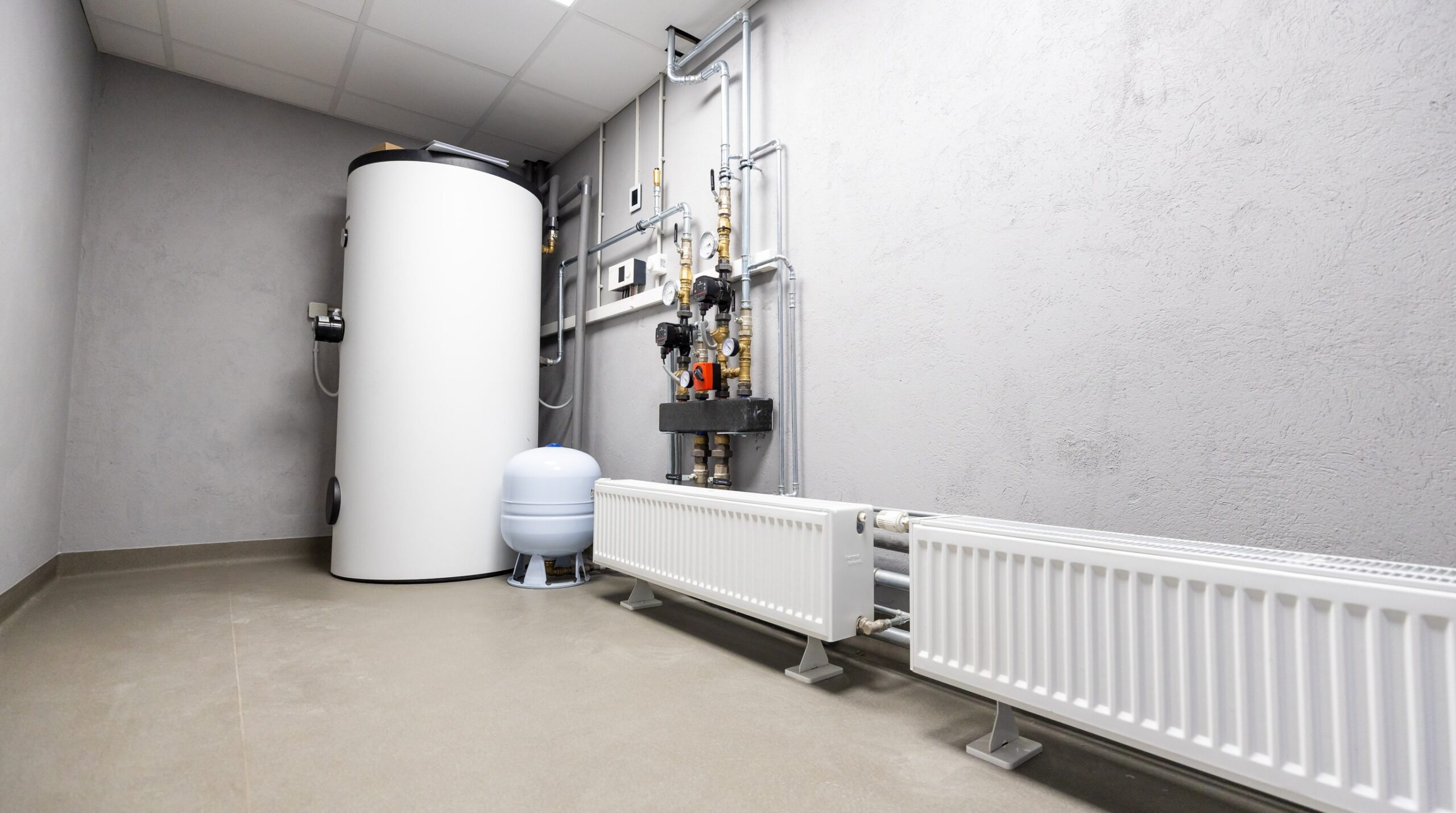
A phone estimate based on your description of the unit is not a quote. Before you sign anything, get answers to these in writing: What is the exact model and capacity being installed, and does it match your household’s hot water demand? Is the expansion tank, drain pan, and updated venting included in this number, or is that a separate line item once they are on-site? Who is pulling the permit, and is the inspection fee included? What happens to the gas line and vent if they are undersized for the new unit? What is the manufacturer’s warranty length on the heat exchanger specifically, since that is usually longer than the base parts warranty?
Get at least three quotes before you commit, and make sure each one answers the same five questions the same way. A quote that is $1,000 below the other two and silent on the expansion tank is not a better deal.
What to have ready before you call
Have the age and fuel type of your current unit (gas, electric, or propane), a photo of the data plate, and your household’s peak hot water usage in mind (number of bathrooms, whether showers and laundry run at the same time). If you are considering a tankless conversion, check whether your gas meter and existing line size can support the unit’s rated demand before an installer shows up, since that single fact determines which of the cost ranges above applies to your home. Always get a written estimate with line-item detail, not a single number, and verify the installer’s license before signing anything, the same way you would for any licensed trade, including hiring an HVAC (heating, ventilation, and air conditioning) installer for a furnace swap.
A water heater is only one piece of a home’s plumbing. For a leaking pipe, a running toilet, or a clogged drain, Hire a Plumber Near You covers the same license-and-insurance checks for the rest of the system.
Frequently asked questions
How long does a water heater installation actually take? A straight tank swap typically takes two to four hours. A tankless conversion that requires new venting or a gas line upgrade can take a full day or run into a second day if a wall has to be opened for the gas line. Ask your installer for a time estimate in writing so you know whether to expect a same-day job.
Do I need a permit for a water heater replacement? In most jurisdictions, yes. A permit costs $50 to $300 and triggers an inspection that confirms the expansion tank, venting, and relief valve discharge are installed correctly. A licensed installer pulling permits routinely is a good sign; one who says it is not necessary is a reason to get a second quote.
Is a tankless water heater worth the higher upfront cost? It depends on your household’s hot water use and how long you plan to stay in the home. Tankless units last 15 to 20 years against 8 to 12 for a tank, and manufacturers report meaningful efficiency gains for lower-demand households, but the conversion cost only pays back over years, not months. Match the decision to how long you will own the house.
What is the difference between the base warranty and the heat exchanger warranty? Most manufacturers cover component parts for 3 to 7 years but extend the heat exchanger warranty to 10 to 25 years, since it is the most expensive part to replace. Register the unit with the manufacturer within 30 days of installation, or the extended heat exchanger coverage can default to the shorter base period.
Ready to compare local water heater installation quotes? Find a vetted water heater installer near you via Thumbtack and get free quotes from background-checked pros.