
The Dollar Line Where a Handyman Has to Become a Licensed Contractor
7 min read · Last updated October 26, 2026
- California’s exemption for unlicensed work tops out at $1,000, raised from $500 on January 1, 2025, and only applies when the job needs no building permit and involves no employees.
- North Carolina’s contractor license threshold is $40,000, forty times California’s, raised from $30,000 in October 2023.
- Texas has no statewide general contractor license at all. Only specific trades, like electrical work, are licensed by the state, and cities set their own local registration rules.
- Washington skips the dollar question entirely. Every construction contractor must register with the state no matter what the job costs.
The dollar amount that legally requires a contractor’s license is set state by state, and it is not the same number anywhere. California’s line sits at $1,000. North Carolina’s sits at $40,000.
Washington has no dollar line at all. Texas has no general license to require in the first place.
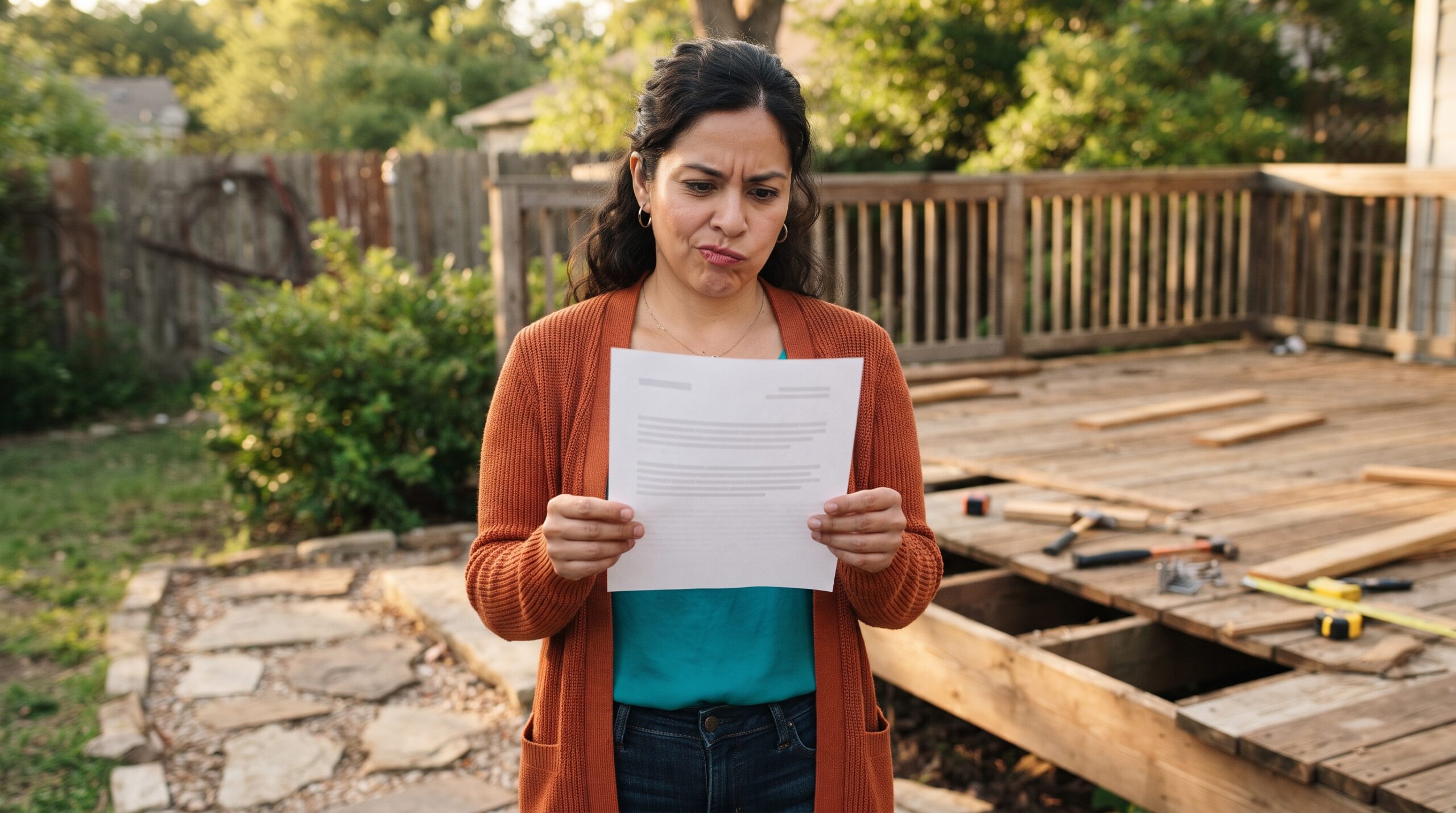
Say a homeowner named Derek Simmons gets a $1,800 quote from a handyman to replace rotted deck boards and rebuild a wobbly guardrail at his home outside Sacramento, California. Run the math before signing anything like it: California’s exemption for unlicensed work tops out at $1,000. Subtract that from Derek’s $1,800 bid and $800 worth of the job sits on the wrong side of the state’s contractor license threshold, which means the person signing that quote is legally required to hold a license from the Contractors State License Board (CSLB).
The single most useful thing you can learn here is checkable in minutes: your own state’s version of that number, and whether the job in front of you crosses it.
In this article
- What the California contractor license threshold actually requires
- Why the threshold is not the same everywhere
- Jobs that always need a license, no matter the price
- What happens if you hire unlicensed anyway
- Frequently asked questions
What the California contractor license threshold actually requires
California raised its unlicensed-work exemption from $500 to $1,000 on January 1, 2025, under Assembly Bill 2622. The Contractors State License Board’s own newsletter spells out the condition most homeowners miss: the $1,000 exemption only applies when the job does not require a building permit and no employees are involved. A deck guardrail rebuild almost always needs a permit in most California jurisdictions, which means Derek’s project could trip the licensing requirement even before the dollar figure does.
Any contractor who has employees must be licensed regardless of the project’s size or cost. That rule alone removes most small businesses from the exemption, since a two-person repair crew already counts as “employees” under CSLB’s own guidance.
Why the threshold is not the same everywhere
A contractor license threshold is a state-by-state rule, not a national one, and the differences are large enough to change how you should shop for a quote depending on where you live.
| State | Dollar threshold | What triggers licensing regardless of price |
|---|---|---|
| California | $1,000 (raised from $500, effective January 1, 2025) | Any job needing a permit, or any contractor with employees |
| North Carolina | $40,000 (raised from $30,000, effective October 2023) | General building license required above the threshold; trade licenses apply separately |
| Texas | No statewide general contractor license exists | Electrical and plumbing work, licensed separately by state agencies, plus local city or county registration |
| Washington | No dollar threshold | Every construction contractor must register with the state regardless of job price |
North Carolina’s threshold is $40,000, as the NC Licensing Board for General Contractors states directly on its own site: a project valued at $40,000 or more requires a general contractor who holds a state license. That figure was raised from $30,000 effective October 2023. A homeowner in Raleigh replacing a roof for $38,000 could legally hire someone without a general contractor’s license; the identical job at $42,000 could not.
Texas takes a different approach entirely. The state does not issue a general contractor license, a gap that has existed since the Texas Residential Construction Commission was dissolved in 2009. Licensing in Texas happens trade by trade instead, and cities and counties fill the rest of the gap with their own registration and permitting rules.
Washington removes the dollar question altogether. The state’s Department of Labor and Industries states plainly that all construction contractors must register, with no minimum job price mentioned anywhere in the requirement. Washington separately requires a written estimate on residential jobs of $1,000 or more, which is a disclosure rule, not a licensing threshold, and it is easy to confuse the two.
Jobs that always need a license, no matter the price
Some categories of work skip the dollar question entirely because the work itself triggers the requirement.
Electrical work is the clearest example. Texas has no general contractor license, but the Texas Department of Licensing and Regulation confirms that anyone performing non-exempt electrical work in the state must hold an electrical license and work through a licensed electrical contractor. There is no small-job carve-out in that rule the way California’s $1,000 exemption works for general repairs.
The same logic applies inside California’s own threshold. A permit disqualifies a job from the $1,000 exemption, and electrical and plumbing work almost always requires one. A $400 panel repair can still require a licensed electrician once a permit enters the picture, even though $400 is well under the general $1,000 line.
What happens if you hire unlicensed anyway
The consequences are not uniform, but every state that was checked here attaches a real penalty to crossing its own line.
California’s minimum civil penalty for unlicensed construction activity rises to $1,500 starting July 1, 2026, under Senate Bill 779, up from a $200 floor today. North Carolina treats unlicensed general contracting above its $40,000 threshold as a Class 2 misdemeanor, punishable by up to 60 days in jail and a fine, and the resulting contract can be unenforceable in court.
That unenforceability detail matters more than the fine itself. If an unlicensed contractor over the threshold does the work badly or walks off the job, you may have no contract to stand on in a dispute. A license is not a formality; it is often the thing that makes your agreement worth the paper it is printed on.
Unpermitted or unlicensed work can also complicate a homeowner’s insurance claim later, since insurers generally expect repairs tied to a claim to meet code and professional standards. It is worth asking how a prospective hire handles permits before work starts, not after a problem shows up.
Whether you follow how to hire a contractor without getting burned step by step or just want to sanity-check a bid against the common contractor quote red flags, the fastest way to close an $800 or $2,000 gap is a second and third quote.
Ready to compare quotes from contractors licensed for the size of job you actually have? Find a vetted contractor near you via Thumbtack and get free quotes from background-checked pros.
Frequently asked questions
What is the dollar threshold for needing a contractor’s license in California? As of January 1, 2025, California exempts unlicensed work only up to $1,000, and only when the job needs no building permit and the person doing the work has no employees. Above $1,000, or the moment a permit or employee is involved, state law requires a valid Contractors State License Board license.
Does every state use a dollar threshold like California’s? No. North Carolina’s threshold is $40,000, forty times higher than California’s. Texas has no statewide general contractor license at all, only trade-specific licenses for work like electrical. Washington skips the dollar question entirely and requires every construction contractor to register, no matter what the job costs.
What happens if I hire an unlicensed contractor for a job over the threshold? Consequences vary by state but are real. California’s minimum civil penalty for unlicensed activity rises to $1,500 starting July 1, 2026. North Carolina treats unlicensed contracting above $40,000 as a Class 2 misdemeanor, and the resulting contract can be unenforceable if the work goes wrong.
Are electrical and plumbing work always required to be licensed, even for small jobs? Generally yes. Electrical work almost always requires a permit, which disqualifies it from small-job exemptions like California’s $1,000 rule. Texas has no general contractor license, but it licenses electricians separately, and performing that work without the matching license is a misdemeanor offense.
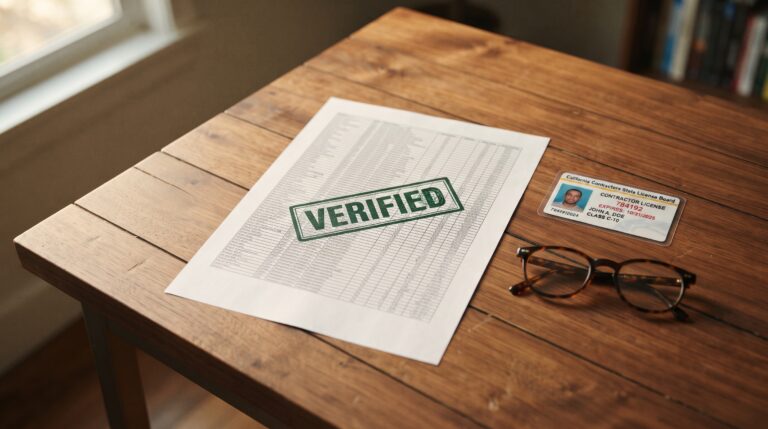
How do I check whether a contractor is actually licensed? Ask for the license number and verify it directly on your state licensing board’s own lookup tool, not a number printed on a truck door or business card. A real license is checkable in minutes, and a hesitant answer to that request is itself a red flag worth taking seriously before you sign anything.