How to Vet a Storm Chasing Roofer Before You Let Anyone on Your Roof
6 min read · Last updated October 26, 2026
- Texas law makes it illegal for a contractor to waive your insurance deductible, and the state’s insurance department tells homeowners to hire someone else the moment that offer comes up.
- Florida law has moved past the “itemized estimate” rule many homeowners have heard about: for policies issued on or after January 1, 2023, Florida Statutes section 627.7152 voids most assignment of benefits agreements outright, not just the ones missing paperwork.
- A storm chasing roofer isn’t automatically a scam. The red flags are specific behaviors: a deposit demanded before any inspection, pressure to sign the same day, and no local business address.
- Checking a license and a certificate of insurance takes about ten minutes and should happen before anyone touches a ladder, not after.
A storm chasing roofer isn’t automatically a scam. The behaviors that separate a legitimate out-of-town crew from one you should turn away are specific and checkable in under ten minutes: a current license number, a certificate of insurance naming you as the certificate holder, a local or regional business address, and no demand for money before anyone has actually inspected the damage.
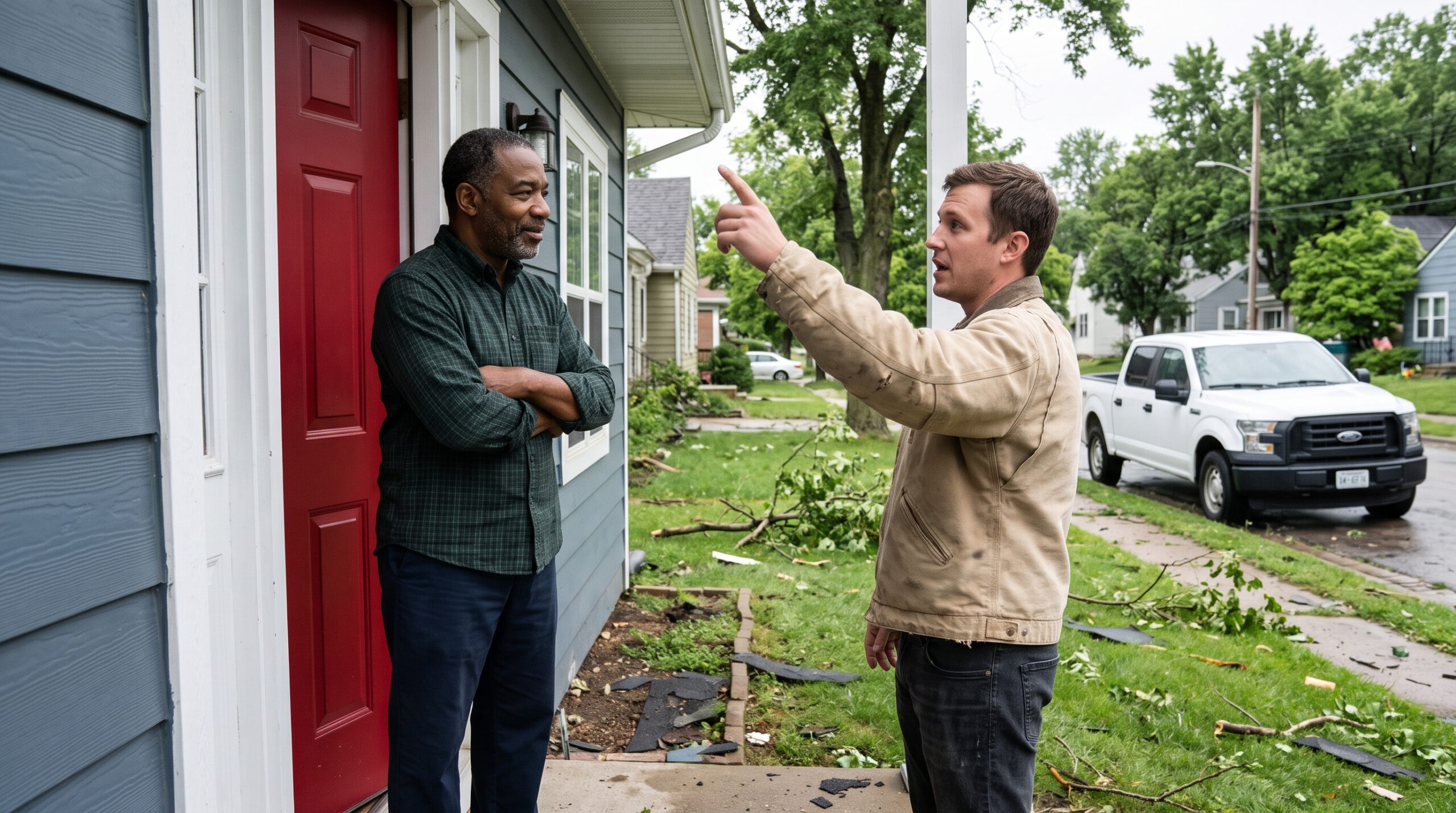
Say a homeowner named Marcus Webb has just lived through a hailstorm that tore through his Fort Worth, Texas neighborhood. Two days later, a white pickup with out-of-state plates was parked at his curb before his own insurance adjuster had even called back. The man at the door wanted a deposit before he’d climb a ladder, and he had a card instead of a local address.
In this article
- What to check before anyone climbs your roof
- The red flags that actually matter
- If you’re asked to sign an assignment of benefits
- What to have ready before you call anyone
- Frequently asked questions
What to check before a storm chasing roofer climbs your roof
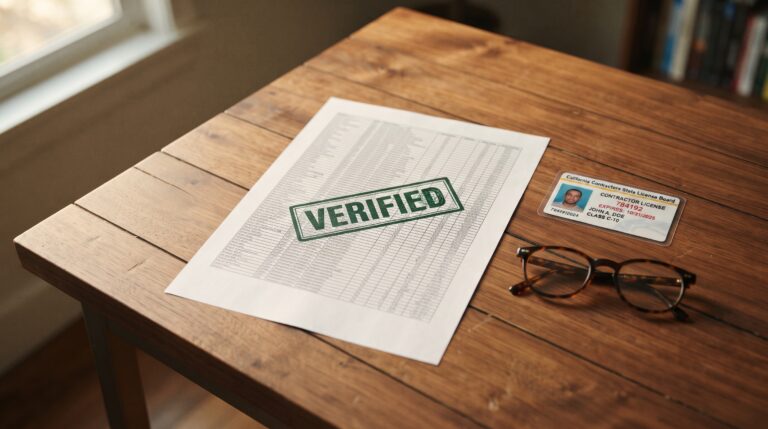
Before a roofer sets foot on your property, confirm three things: a current contractor or roofing license in your state, a certificate of insurance (COI) that lists general liability and workers’ compensation coverage with you named as the certificate holder, and a physical business address you can find independent of the business card they hand you. All three take a phone call or a website lookup, not a background check.
Most states run a free online license-lookup tool through their contractor licensing board or secretary of state, and a legitimate roofer will give you the license number without hesitation. Verifying a contractor’s license takes about the same ten minutes whether the crew is local or driving in from three states away.
The certificate of insurance step matters more than most homeowners realize: a roofer with no workers’ compensation coverage who gets hurt on your roof can leave you liable for the medical bill. Confirming a contractor’s certificate of insurance means calling the insurer listed on the certificate directly, rather than trusting the paper alone.
Thumbtack’s own vetted directory runs these checks before a pro ever shows up on a job, which is a faster starting point than vetting a stranger from a doorstep.
The red flags that actually matter
A roofer who shows up fast after a storm, even from out of state, isn’t automatically dishonest. Plenty of legitimate crews travel to hail-hit regions because that’s where the work is for a season. The Texas Department of Insurance (TDI) draws the line differently: watch the behavior, not the license plate.
TDI’s own consumer guidance is specific:
- Don’t pay up front.
- Don’t sign a contract with blanks left in it.
- Get bids in writing before you commit to anyone.
One offer should end the conversation immediately. If a contractor offers to waive your insurance deductible or “work it into the bid,” Texas state law makes that illegal, and TDI’s guidance is direct about what to do next: hire a different contractor.
That single rule generalizes well beyond Texas. A deductible is the amount your policy says you owe; a contractor who offers to eat it for you is either padding the rest of the bill to cover the difference or planning to bill your insurer for more than the work actually costs. Either way, it’s your name on the claim.

| Normal after a storm | Red flag |
|---|---|
| Crew is from out of state or a neighboring region | No local or regional business address anywhere, only a cell number |
| Written estimate after a roof inspection | Asking for a deposit before anyone has inspected the damage |
| A few days to think it over and compare bids | Pressure to sign a contract the same day, “today only” |
| Deductible stays your responsibility, as your policy states | Offer to waive or “cover” your deductible |
If you’re asked to sign an assignment of benefits
Some roofers ask homeowners to sign an assignment of benefits (AOB), a document that transfers your right to collect an insurance payout directly to the contractor, so they bill your insurer instead of you. The rules on this have changed recently, and Florida’s current law is stricter than what many homeowners have heard.
Florida Statutes section 627.7152 now blocks most of these agreements outright for current policies. For a homeowner’s policy issued on or after January 1, 2023, which covers nearly everyone insured in Florida today, the statute says a policyholder “may not assign, in whole or in part, any post-loss insurance benefit,” and that an attempt to do so is void, invalid, and unenforceable. A narrower, earlier version of the law, which required a written, itemized estimate and gave homeowners 14 days to cancel, applied only to policies issued between July 1, 2019 and December 31, 2022, a window that has closed for virtually every policy in force now.
If a roofer in any state hands you an assignment of benefits to sign, call your insurance agent before you sign anything and ask directly whether the document is even enforceable under your policy’s effective date. A roofer pushing you to sign on the spot, with no mention of your policy’s issue date, is asking you to take on legal risk they have not bothered to check themselves.
What to have ready before you call anyone
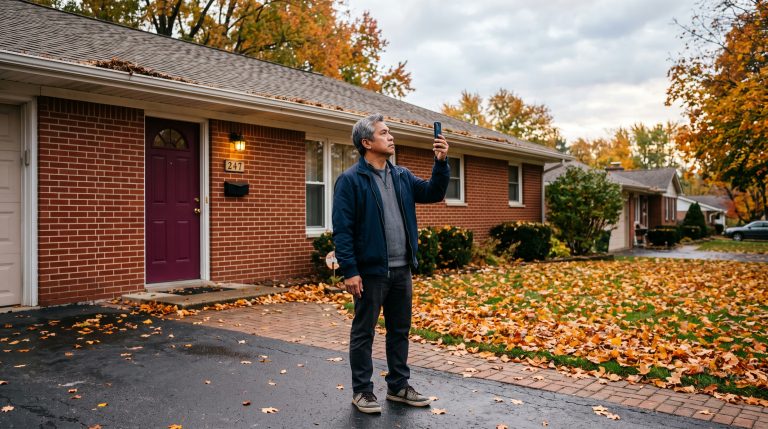
Before you contact a roofer at all, take photos of the visible damage from the ground, note your policy number and your insurance company’s claims line, and write down the date of the storm. You don’t need to get on your own roof. A roofer or your adjuster can inspect it safely; a homeowner climbing a storm-damaged roof for photos is how a second claim gets filed for a fall.
Once you have that in hand, get at least three quotes, not just the one from the truck parked outside your house. Match the quote to a license number you’ve already verified, read every line before you sign anything, and compare it against a roof replacement cost guide so you know roughly where a fair bid should land before anyone’s standing on your porch.
Ready to compare quotes from roofers you’ve actually vetted first? Compare local roofers near you via Thumbtack and get free estimates from background-checked pros who inspect before they quote.
Frequently asked questions
Is it illegal for a roofer to waive my insurance deductible? In Texas, yes. State law makes it explicitly illegal for a contractor or roofer to waive or absorb your deductible, and the Texas Department of Insurance tells homeowners to walk away from anyone who offers it. Treat the offer as a red flag regardless of which state you’re in, since it usually means the rest of the bill is being padded to cover the difference.
What is an assignment of benefits and should I sign one? An assignment of benefits (AOB) lets a contractor bill your insurer directly instead of billing you. In Florida, state law now voids most of these agreements outright for policies issued since January 1, 2023, so a roofer asking you to sign one on a current policy is handing you a document the state has already said isn’t enforceable.
How do I verify a roofer’s license and insurance quickly? Most states offer a free license-lookup tool through the state contractor licensing board, searchable by name or license number in under a minute. For insurance, ask for a certificate of insurance naming you as the certificate holder, then call the insurer listed on it directly to confirm the policy is active before any work starts.
Is a legitimate roofer allowed to come from out of state? Yes. Roofing crews routinely travel to hail-hit regions for a season of work, and that alone isn’t a red flag. What matters is whether they can produce a verifiable license, an active insurance policy, and a real business address, and whether they’re willing to let you check all three before they get on your roof.
What should I do before any roofer gets on my roof? Take ground-level photos of the visible damage, confirm your policy number and claims line, and get at least three written quotes before choosing anyone. Verify the license and certificate of insurance first, and never pay a deposit before someone has actually inspected the damage.