Interior Painting Cost Guide – What to Expect in 2026
6 min read · Last updated June 04, 2026
- Interior painting typically costs $2 to $6 per square foot in 2026, including labor and standard materials – a 1,500 sq ft home runs $3,000 to $9,000 for full interior coverage.
- Ceiling height, number of paint colors, and wall condition are the three biggest variables that most per-square-foot quotes hide from homeowners.
- Always request a line-item estimate that separates prep, priming, paint passes, cleanup, and furniture protection – a lump sum quote gives you nothing to push back on.
- Supply your own paint if you want quality control – professional painters often charge a 20-30% markup on materials.
In this article
- How interior painting is priced
- What moves the price up or down
- How to read and compare quotes
- Hire a pro vs. DIY
- FAQ
Renee got two quotes to repaint her 900-square-foot two-bedroom in Lincoln Park. The first: $1,200, verbal only, the painter said he’d use “whatever primer works.” The second: $3,800, with three coats on the accent wall, detailed prep on two damaged doors, and her textured kitchen ceiling called out as a separate $200 line item. Renee negotiated it to $3,200 by supplying her own paint. The $1,200 painter, she later learned, had walked off a neighbor’s job three days in because wall prep wasn’t complete.
How interior painting is priced
Most professional painters quote one of three ways: by square foot, by room, or by hour. Each method has different risks for homeowners.
Per square foot is the most useful for comparison – but only if you know what square footage the painter is measuring. Some quote wall surface area (the correct number), others quote floor area, which understates the real work in rooms with tall ceilings or a lot of trim. Ask which measurement they’re using.
Per room quotes are easy to compare but hide variables. A “bedroom” quote of $350 doesn’t tell you if it includes closet walls, ceiling, trim, or door painting. Get the scope in writing.
Hourly appears in small patch and touch-up work. It aligns incentives poorly for large projects – hours are hard to estimate and easy to pad.
For a full interior job, per-square-foot pricing based on wall surface area, fully scoped in writing, is the most accountable format.
What moves the price up or down
| Factor | Impact on Price | Notes |
|---|---|---|
| Ceiling height over 9 feet | High – adds 15-25% | Requires extension equipment, slower rolling, more fall risk – legitimate cost add |
| Number of paint colors | Medium – adds $150-$400 per additional color | Color changes require complete drying between applications and more masking |
| Wall condition (patching, skim coat needed) | High – adds $300-$1,000+ | Patching gouges, nail holes, and skim-coating damaged drywall is labor-intensive and often underquoted in the initial bid |
| Popcorn or textured ceilings | Medium – adds $100-$300 per room | Roller application is slower; texture holds paint differently and often needs a second coat |
| Trim, doors, and window frames | Medium – adds $30-$60 per door or window | Cutting in around trim is the most time-consuming part of interior painting; skimping here shows immediately |
| Paint brand and quality supplied by painter | Medium – adds 20-30% | Painters typically mark up materials 20-30%; supplying your own Benjamin Moore, Sherwin-Williams, or Behr Premium Plus removes that markup |
| Furniture protection and cleanup | Low – adds $50-$150 | Should be included as standard; if a quote omits it, ask who is responsible for paint on your floors |
Your estimate may vary. A 1,200 sq ft interior in the Southeast typically runs 10-15% below national average; the same job in the Northeast or Pacific Northwest runs 15-25% above. Urgency adds cost – a painter who can start next week has less reason to negotiate than one with a calendar gap.
How to read and compare quotes
Three questions to ask before accepting any interior painting quote:
Is wall prep included? Prep – filling holes, sanding rough spots, cleaning surfaces – represents 30-40% of the total labor time. A quote that says “paint two coats” without specifying prep leaves you exposed. Ask: what prep work is included, and what triggers an additional charge?
How many coats are you quoting? Most professional interior jobs require two coats over one coat of primer (three applications total) for true coverage. A one-coat job shows through on darker colors or over repairs. If the quote says “two-coat” without specifying primer, clarify.
What paint brand and sheen are you using? Eggshell is the standard for walls; semi-gloss for trim and bathrooms. The difference between $30/gallon contractor-grade and $70/gallon premium (Benjamin Moore Aura, Sherwin Emerald) shows in sheen depth and washability. If you care about the finish, specify the paint or supply it yourself.
Hire a pro vs. DIY
Rolling a bedroom or bathroom is within reach for most homeowners. The break-even point is roughly two rooms – beyond that, the time cost of proper prep, tape, and cleanup starts to favor a pro.
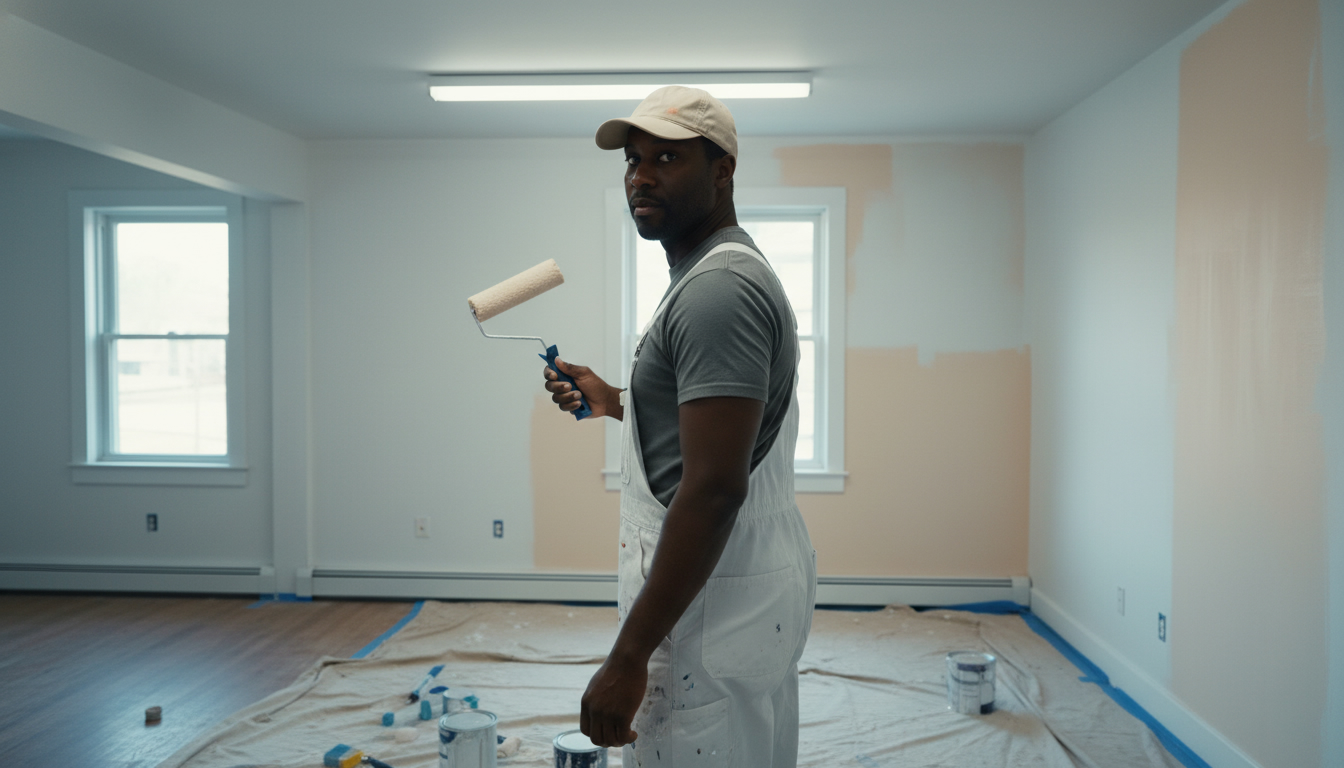
A pro is clearly worth it for rooms with intricate trim, ceilings above 9 feet, walls needing significant patching, or spaces where a multi-day disruption is costly – our guide on how to hire interior painters near you covers what to check before signing a quote.
| Scope | Typical Range | Notes |
|---|---|---|
| Single room (250-400 sq ft) | $500 – $1,200 | Includes prep, prime, two-coat finish on walls; add $75-$150 per door or window |
| Full apartment (800-1,200 sq ft) | $1,800 – $4,500 | Most variable category – ceiling height, trim complexity, and wall condition drive the spread |
| Full home interior (1,500-2,500 sq ft) | $3,500 – $9,000 | Multi-story homes cost more per sq ft due to stairwell access; budget separately for garage or unfinished spaces |
| Accent wall only | $200 – $600 | Often quoted flat rate; color change adds masking time |
| Ceilings only | $1 – $2.50/sq ft | Flat paint standard; popcorn or textured surfaces add to rate |
Ready to compare local interior painting quotes? Find a vetted interior painter near you via Thumbtack and get free quotes from background-checked pros.
FAQ
What does interior painting cost per square foot in 2026?
The national average runs $2 to $6 per square foot including labor and standard materials. A 1,500 sq ft home runs $3,000 to $9,000. The range is wide because ceiling height, wall condition, and color count add costs a flat per-square-foot rate doesn’t reflect.
Should I supply my own paint?
Yes, if you have a preference on brand or finish. Painters mark up materials 20-30%. Buying your own Benjamin Moore, Sherwin-Williams, or PPG removes that markup and gives you control over color accuracy. Give the store your square footage – they’ll calculate gallons.
How long does interior painting take?
A single room takes one to two days including prep, prime, and two coats. A full home interior takes three to five days depending on crew size and trim complexity. Drying time between coats – two to four hours for latex – is the main schedule constraint.
Is interior painting a DIY job?
For one or two straightforward rooms, yes. For a full interior, most homeowners underestimate prep time. Taping, protecting floors, filling holes, and sanding is 30-40% of the job – and the part that determines whether it looks professional.
What is the best type of paint for interior walls?
Eggshell is the standard – washable, hides imperfections better than flat, and looks clean under any lighting. Satin for high-traffic areas and hallways. Flat for ceilings. Semi-gloss for trim and doors.