Electrical Repair Cost Guide 2026
7 min read · Last updated August 31, 2026
- A single new outlet or switch typically runs $297 to $360 installed, and a new circuit run up to 40 feet runs $302 to $365, per Homewyse’s May 2026 cost estimator.
- A new 100-amp, 20-circuit service panel runs $1,325 to $1,606 in labor and materials alone, before permit fees or any utility-side work, and most homeowners upgrading an older panel step up to that size or higher.
- Home electrical fires cause an estimated 527 civilian deaths, 1,580 injuries, and $2.4 billion in direct property damage every year, according to the National Fire Protection Association (NFPA). This is not a job to shop purely on price.
- Producer prices for electrical contractors doing nonresidential building work rose 5.3% year over year through July 2026, per the Bureau of Labor Statistics (BLS), a general signal that labor and material costs are climbing across the trade, not just on the residential side.
In this article
- What electrical repairs actually cost
- What moves the price up or down
- Reading two quotes for the same job
- Hire a pro or handle it yourself
- Frequently asked questions
David in Nashville needed a panel upgrade from 100 amps to 200 amps, plus two new circuits for a garage workshop. Two licensed electricians quoted the same scope of work. One came back at $3,100. The other came back at $4,850, a $1,750 gap. Here is what an electrical repair actually costs in 2026, and where a spread like that usually comes from.
What electrical repairs actually cost
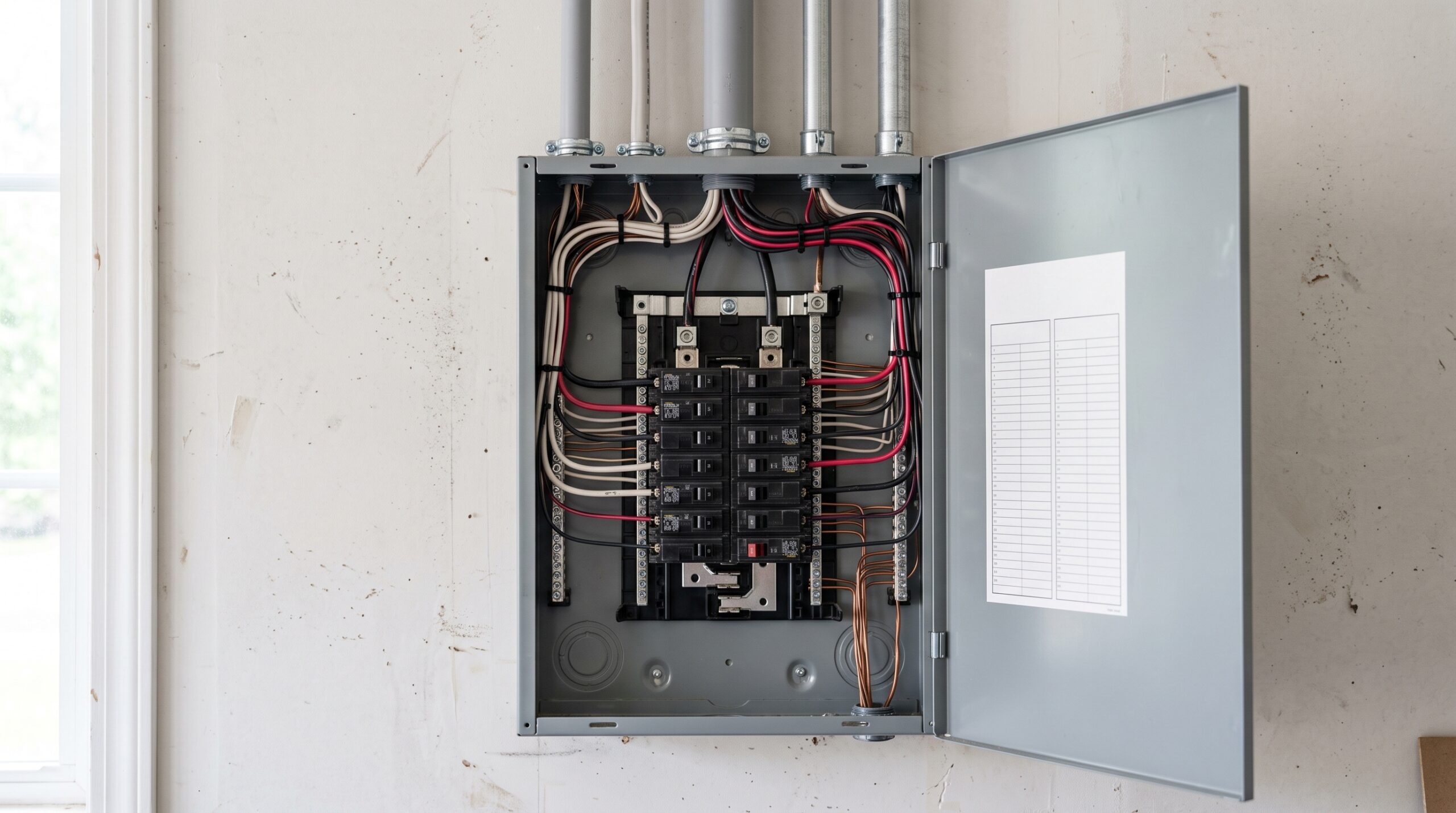
Electrical work is priced by scope, not by the hour a homeowner assumes it will take. Homewyse’s May 2026 residential cost estimator breaks out installed pricing separately for the jobs that come up most often, including labor, standard materials, and basic site conditions: a new outlet or switch, a new wiring run, a sub-panel, and a full service panel each have their own estimate:
| Scope | Typical installed range | Notes |
|---|---|---|
| New outlet or switch | $297 – $360 | Wired from an existing junction box within 15 ft |
| New circuit / wiring run | $302 – $365 | Per run, up to 40 ft, one receptacle or fixture |
| Electrical sub-panel | $924 – $1,119 | 100-amp, up to 5 circuits wired |
| Full service panel (100-amp, 20 circuits) | $1,325 – $1,606 | Most upgrades from an older panel land in or above this range |
| Panel upgrade with utility-side work | Priced individually | Meter base, mast, or service entrance also needs to move |
Producer prices for electrical contractors doing nonresidential building work rose 5.3% year over year through July 2026, per the Bureau of Labor Statistics (BLS), the federal agency that tracks wholesale price trends across the construction industry. That series tracks commercial contracting specifically, but it is the clearest available signal that labor and material costs are climbing across the electrical trade generally, so a quote that runs higher than one you saw last year is not automatically a sign of padding.
What moves the price up or down
| Factor | Impact on price |
|---|---|
| Amperage jump (100A to 200A vs. a smaller step) | A bigger jump needs a larger panel and a heavier feeder cable |
| Number of new circuits bundled into the job | Each additional run adds roughly $300 to $365 in materials and labor |
| Utility-side work required (meter base, mast, weatherhead) | Can add well over $1,000, and requires coordinating a disconnect and reconnect with the utility company |
| Access difficulty (finished basement, exterior stucco, multi-story run) | Adds labor hours to open and patch walls |
| Permit and inspection | Set locally by your building department; varies by jurisdiction and scope |
Your own number will move against this table based on your home’s age, your panel’s location, and your local permit structure. Permit fees are set by your city or county, not nationally: Portland, Oregon’s 2026 electrical fee schedule, for example, adds a 12% state surcharge on top of the base permit fee, and your jurisdiction’s structure will differ from that. Ask your electrician to quote the permit as its own line item rather than folding it into the total, so you can see what portion is labor and what portion is a fee you’d pay no matter who does the work.
Reading two quotes for the same job
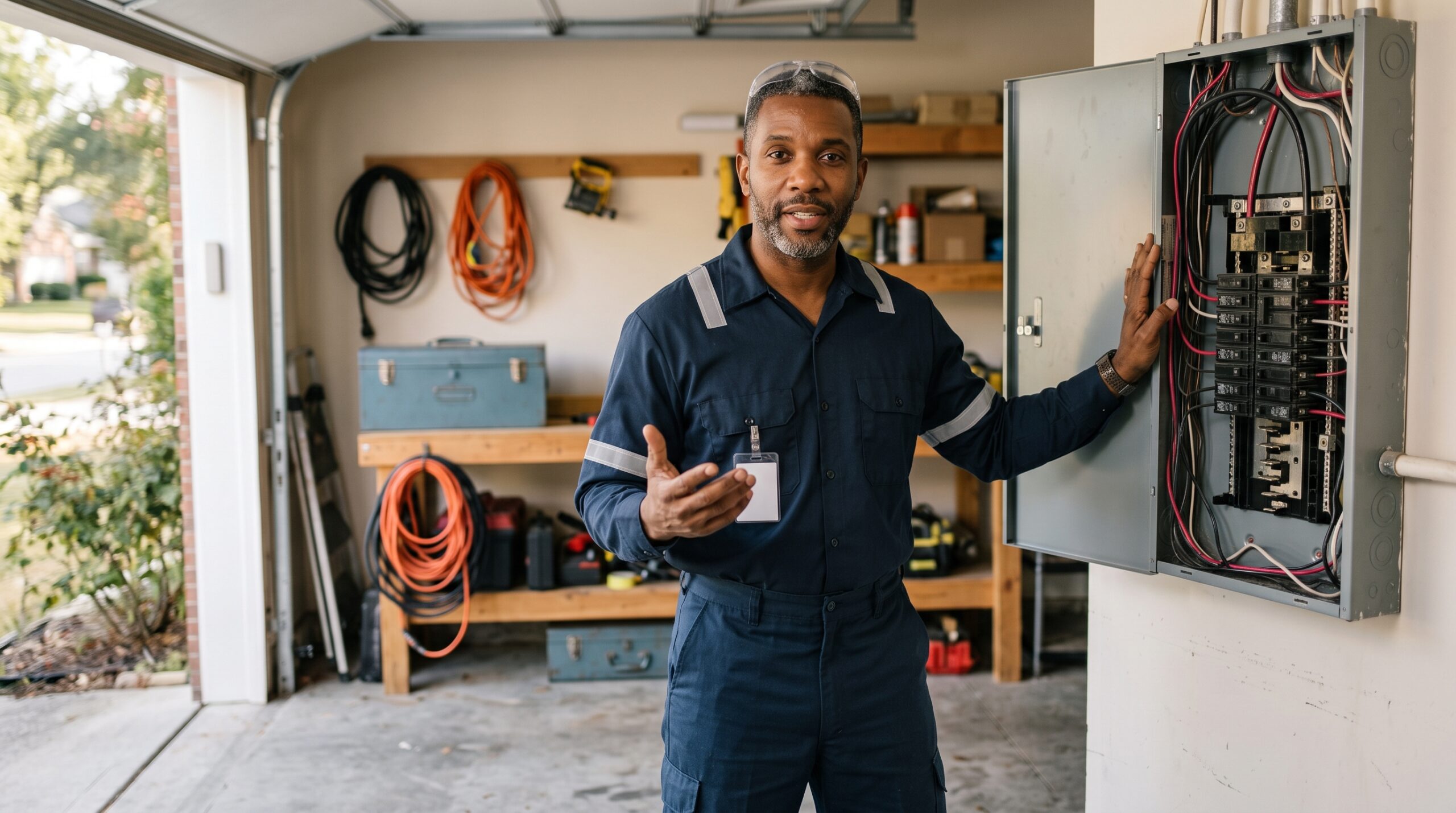
Here is how David’s two panel-upgrade quotes actually broke down. Quote A: panel and up to 20 circuits $1,550, two new workshop circuits $650, permit $200, general labor and site prep $700. That totals $3,100. Quote B: panel and circuits $1,550, two new circuits $650, permit $200, plus $2,450 to relocate the meter base and service mast, which the second electrician measured and found too close to a window to meet current clearance code. That totals $4,850.
The entire $1,750 gap is the meter base and mast relocation, a real code item the first electrician either missed or chose not to mention. Quote B’s electrician walked the exterior of the house and checked clearances before quoting. Quote A’s electrician quoted the panel alone. If that clearance issue is real, it does not go away by hiring the cheaper electrician. It shows up later, either as a change order mid-job or as a failed inspection.
Get at least three quotes before you commit, verify each electrician’s license before signing anything, and ask every bidder to walk the full path from your meter to your panel, not just look at the panel itself. A quote that is hundreds of dollars below the others and silent on the exterior service equipment is worth a direct follow-up question, not an automatic yes. How to hire a contractor without getting burned covers the broader pattern behind quotes like this, and what to ask before you sign a contractor’s contract covers the paperwork side once you have picked someone, and both apply to licensed trades generally, not just general contractors.
Hire a pro or handle it yourself
Under Section R105.2 of the International Residential Code (IRC), the main electrical exemption homeowners run into is minor repair work, like replacing a lamp or connecting an approved portable appliance to an existing outlet. The code’s other electrical exemptions are narrow (low-voltage equipment, decorative lighting, same-capacity breaker swaps) and rarely cover an actual repair job. A new circuit, a panel upgrade, or any rewiring is not exempt in most jurisdictions, and it should not be DIY work regardless of the permit question. Home electrical fires cause an estimated annual average of 527 deaths, 1,580 injuries, and $2.4 billion in property damage nationwide, according to NFPA Research, and electrical failure or malfunction is a factor in roughly 13% of all home structure fires. Swapping a light fixture on a circuit that is already off is reasonable for a comfortable homeowner. Anything that touches the panel, adds a circuit, or changes how power enters the house is licensed-trade work, both for safety and because an unpermitted panel becomes a problem at resale, refinance, or insurance-claim time, not just a paperwork gap today.
Frequently asked questions
How much does it cost to add a new electrical circuit? A single new circuit, wired up to 40 feet from an existing junction box, typically runs $302 to $365 installed. Bundling several circuits into one visit, like David did with his workshop, usually costs less per circuit than scheduling separate trips for each one.
Do I need a permit for an electrical panel upgrade? In most jurisdictions, yes. A panel upgrade is not on the IRC’s short list of permit-exempt minor repairs, so it requires a permit and a follow-up inspection. Permit fees are set locally and vary by city and county, so ask your electrician to quote it as a separate line item.
How do I know if I need 100-amp or 200-amp service? It depends on your home’s total electrical load: central air conditioning, an electric range, a workshop, and future additions like an electric vehicle charger all push demand higher. A licensed electrician can calculate your home’s actual load before recommending an amperage, rather than defaulting to the biggest panel available.
Why did my two electrical quotes come in so far apart for the same job? The equipment itself is usually priced close to identically across licensed electricians. The spread almost always comes from whether utility-side work, extra circuits, or difficult access were priced into the number. Ask each electrician to itemize labor, materials, permit, and any exterior service work separately before comparing totals.
Ready to compare local electrical repair quotes? Find a vetted electrician near you via Thumbtack and get free quotes from background-checked pros.