
Who to Tip and How Much: Home Service Pros, Service by Service
8 min read · Last updated August 3, 2026
- Movers: tip $4 to $15 per mover per hour, or $20 to $50 per mover per day, paid at the end of each day on multi-day moves so every crew gets paid.
- Tip employees who show up in someone else’s truck. Skip the cash tip for a one-person owner-operator business; a review naming them does more for their next job.
- Recurring crews like lawn care and house cleaning typically get a once-a-year holiday tip rather than a tip at every visit.
- Plumbers, electricians, and painters are licensed trades usually paid well enough that etiquette guidance treats tipping them like tipping a doctor: skip it, send a gift instead if you want to do something.
In this article
- The number that actually matters: employee or owner
- What’s customary, service by service
- Recurring service versus one-time job changes the timing
- What pros value more than cash
- FAQ
Marcus in Tampa paid a two-person crew $340 to move his one-bedroom apartment across town in an afternoon. He tipped $15 each in cash before they drove off. Three weeks later, a solo handyman who owns his one-truck operation finished a $300 fence repair at the same address, and Marcus tipped him nothing, then left a five-star review naming him specifically. Both pros did good work. Only one of them was in a position to actually pocket a tip.
The number that actually matters: employee or owner
Before reaching for cash, answer one question: does this person set their own price, or does someone else? Bankrate’s guidance, syndicated through Yahoo Finance, puts it plainly: tipping a general contractor who employs a crew is “like tipping the owner of a proprietorship or store,” and handing cash to their crew instead “could cause tension with the boss.” The same logic runs through etiquette consultant Jodi R.R. Smith’s guidance in Money.com’s home-maintenance tipping guide: tip recurring crews like lawn care and snowplowing “only if they’re employees, not business owners.” An Angi survey cited in that Bankrate piece found 6 percent of remodeling companies and 7 percent of handyman and painting businesses expect a tip at all, whether the invoice was for a furnace installation or a one-day repair, which tells you how rare a tip is on the ownership side of the trade. None of this is obvious by instinct. Pew Research Center’s 2023 survey on tipping culture found only about a third of U.S. adults say it’s easy to know whether or how much to tip, and whatever cash you hand over counts as taxable income for the worker who receives it, according to the IRS, the same as their regular pay.
The distinction holds up because of how the money actually moves. An employee’s tip goes straight into their pocket on top of whatever hourly rate their employer already pays them. An owner-operator’s “tip” just becomes more revenue for a business already priced to cover its own margin, which is why etiquette guidance treats it as redundant rather than generous. Ask directly if you are not sure. Most owner-operators will tell you outright that a tip is not expected, and most employees will not volunteer that they would appreciate one even when they would.
What’s customary, service by service
| Service | Typical tip | Employee or owner-operator norm | When to tip |
|---|---|---|---|
| Movers | $4 to $15 per mover per hour, or $20 to $50 per mover per day | Tip the crew; the moving company, not the crew, usually keeps the job fee | End of each day worked |
| House cleaners | Up to the cost of one visit | Tip an employee of a cleaning company; optional for a sole owner-operator | Around the holidays, or after a one-time deep clean |
| HVAC and appliance techs | Around 20 percent, or $20 to $30 per technician, after checking company policy | Company employees, not the business owner | At completion of the job |
| Landscapers and lawn crews | $20 to $50 per worker | Employees of a landscaping company | Once a year, typically at the holidays |
| Plumbers, electricians, painters | Skip the cash tip | Licensed trades are treated like other well-paid professionals | A holiday gift instead, if anything |
Two figures above are worth noting. Emily Post’s holiday tipping guide sets yard and garden crew tips at $20 to $50 per worker and pool service at up to the cost of one cleaning split among the crew, both an annual holiday gesture, not a per-visit habit. No etiquette source or credible survey sets a customary tip for pest control technicians at all. If a service isn’t in the table, that’s usually because no real norm exists yet.
For a multi-person crew, split the total rather than handing the whole amount to whoever seems to be in charge. A two-person team getting $30 total works out to $15 each, not $30 to one mover who may or may not share it with a partner who did the same work. If the crew includes a lead installer alongside a helper, it is reasonable to give the lead slightly more, but the gap should stay small, not a multiple.
Cash remains the default for a reason: it reaches the actual worker immediately and in full, with nothing withheld before it gets to them. A digital tip sent through an app to the company’s account can take longer to reach the crew, or may not reach individual workers at all, depending on how that business splits electronic payments internally. If you want to tip digitally, ask the crew directly whether that method actually gets to them.
Recurring service versus one-time job changes the timing

A one-time repair gets tipped once, at completion, if it gets tipped at all. A recurring service works differently. Money.com’s guidance recommends tipping lawn crews and snowplow drivers once a year, typically near the holidays, rather than after every visit, whether that’s a crew wrapping up a siding job in a single afternoon or one that returns weekly. Movers are the exception to the “tip once” pattern: on a move that runs more than a day, NerdWallet’s guidance says to tip at the end of each work day, so the crew that shows up on day two gets paid too, not just whoever happens to finish the job. A seasonal contract muddies this further. A landscaper who mows weekly from April through October is functionally recurring even though each visit is billed separately, so the once-a-year holiday tip still applies rather than a tip at each of the roughly twenty-five visits in a season. The test is whether the same person or crew keeps coming back, not how the invoice happens to be itemized.
What pros value more than cash
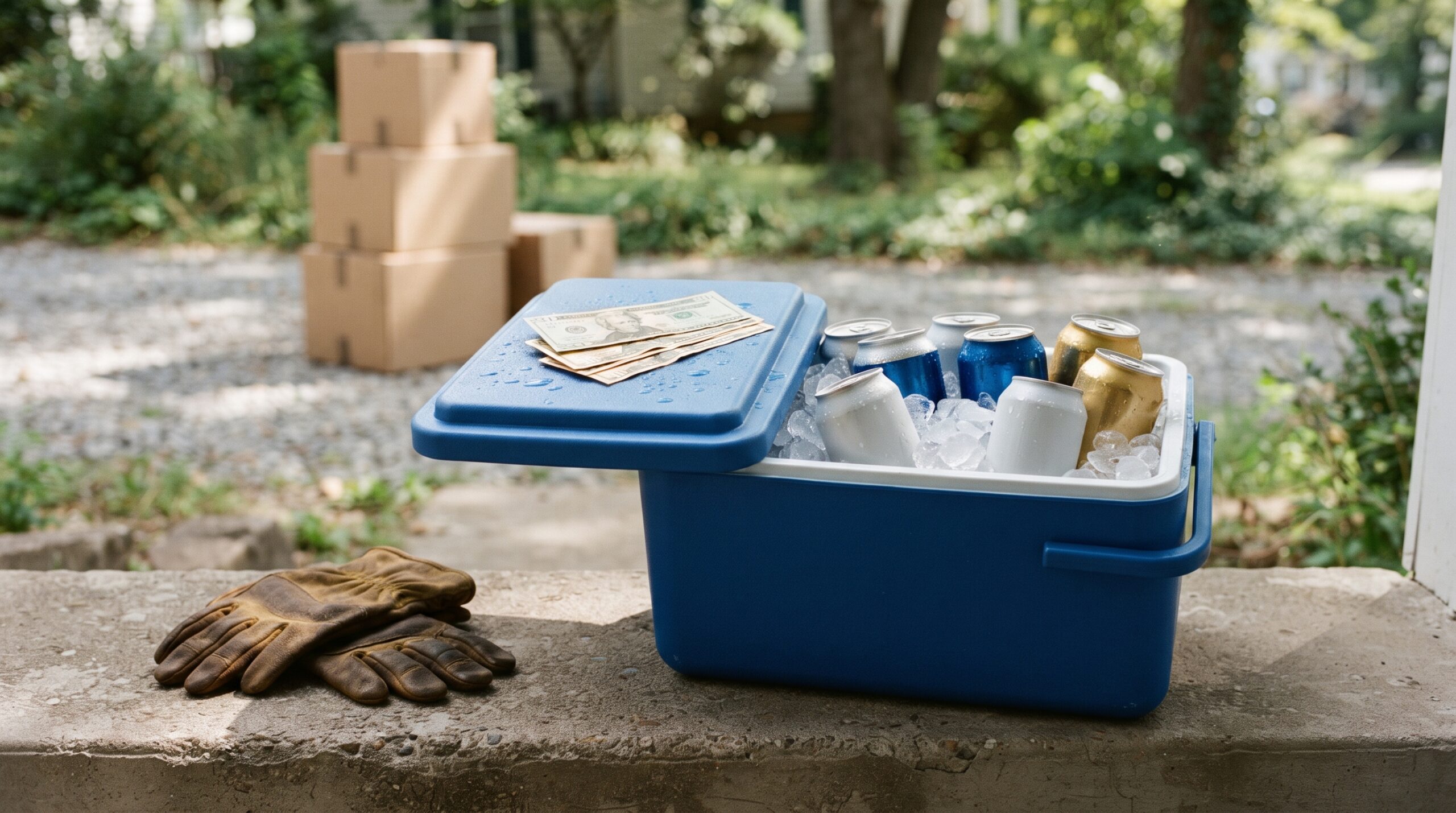
Money.com’s Smith points to something simpler than a bigger tip: cold drinks or coffee during the job, and bathroom access on a hot day, register as real hospitality to a crew working outside, the kind a mold remediation crew working in full protective gear on a hot attic job would notice too. For skilled trades she’d otherwise skip the tip for entirely, a small holiday gift, wine or a box of good cookies, lands better than cash and skips the “am I overpaying or underpaying” math. And for a one-person operation, a specific, named review, or a direct referral to a neighbor, does more for that business than a folded bill ever would, since word of mouth is how an owner-operator actually grows. A referral compounds in a way a tip never does. One good review or one introduction to a neighbor considering the same project can be worth several jobs over time to a business that depends entirely on word of mouth, while a cash tip ends the moment the crew drives away.
None of this replaces the basics that come before any tip. Get three written, line-item estimates before you hire, verify the company’s license and insurance independently of anything printed on the invoice, and remember the lowest of three bids is not automatically the right call. Tipping is the smallest decision in the hiring process, not a substitute for the vetting that happens before it.
Ready to hire movers you can tip with confidence? Find movers near you via Thumbtack and get free quotes from background-checked pros.
Frequently asked questions
Do I tip the owner of a home service business? Generally no. Etiquette guidance treats tipping a business owner like tipping the owner of a store, unnecessary since they already set the price and keep the full fee. Tip the employees who actually show up and do the work instead, especially if the same crew returns for a recurring job.
How much should I tip movers? $4 to $15 per mover per hour, or $20 to $50 per mover per day, is the typical range cited across moving-industry guidance. On multi-day moves, tip at the end of each day so every crew that works gets paid, not just whichever crew happens to finish the job on the final day.
Should I tip my house cleaner every visit or just at the holidays? For a recurring cleaner, a once-a-year holiday tip, often equal to the value of one visit, is the customary pattern rather than a tip at every appointment. A one-time deep clean is more like a repair job: tip at completion if you tip at all, and skip it for future recurring visits.
Is it rude to skip tipping a plumber or electrician? No. These licensed trades are typically compensated well enough that etiquette guidance treats tipping them the way you would treat tipping a doctor, an occasional exception rather than a habit. A modest holiday gift is a reasonable substitute if you want to do something.
What can I do instead of tipping if I don’t have cash on hand? Offer a cold drink or bathroom access during the job itself, then leave a specific, named online review or refer the business directly to a neighbor considering the same work. For a one-person operation especially, that referral is worth more over time than a small cash tip would have been.