The Furnace Tune-Up Checklist That Tells a Real Inspection From an Upsell
8 min read · Last updated October 26, 2026
- A real furnace tune-up checklist covers eight specific items: combustion analysis, heat-exchanger inspection, filter replacement, thermostat calibration, blower inspection, electrical-connection check, gas-pressure check, and a safety-control test.
- The Environmental Protection Agency’s Section 608 refrigerant certification applies to equipment that could release refrigerant. A furnace-only tune-up does not require it; only ask for it if the visit also touches a heat pump or air conditioning coil.
- North American Technician Excellence (NATE) certification requires passing a core exam plus a specialty exam, and technicians must recertify every two years with 16 hours of continuing education or a retest.
- DTE Energy, a Michigan utility, currently offers a rebate of up to $150 for a furnace tune-up that specifically includes a combustion analysis, which is the one line item worth confirming before you book.
A real furnace tune-up checklist runs eight specific checks in 45 to 90 minutes: a combustion analysis, a heat-exchanger inspection, filter replacement, thermostat calibration, blower inspection, electrical-connection check, gas-pressure check, and a test of the safety shutoff controls. Skip more than one or two of those and the visit was a filter change with an invoice attached, not an inspection.
In this article
- The eight-point checklist a real tune-up actually covers
- How to tell an inspection from an upsell pitch
- The certifications worth asking about, and the one that usually doesn’t apply
- What to have ready before the technician arrives
- Frequently asked questions
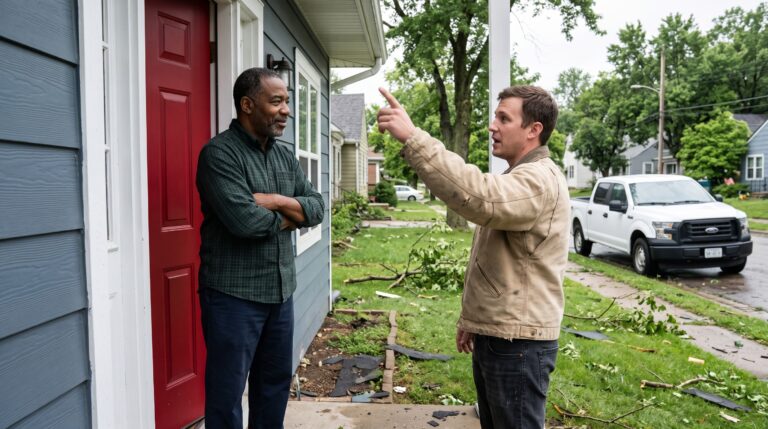
Say a homeowner named Dale Whitfield booked an $89 furnace tune-up in Grand Rapids, Michigan, the week before Thanksgiving. The technician was in and out in eighteen minutes: a filter swap, a visual glance at the furnace, and a verbal recommendation for a $340 igniter replacement “before it fails in January.” No combustion analyzer ever came out of the truck.
The eight-point checklist a real tune-up actually covers
According to the maintenance checklist published by ENERGY STAR, the joint U.S. Environmental Protection Agency (EPA) and Department of Energy program, a heating system check-up should include reviewing thermostat settings, tightening electrical connections, measuring motor voltage and current, and lubricating moving parts. For gas-fired equipment specifically, ENERGY STAR’s checklist adds checking all gas connections, gas pressure, burner combustion, and the heat exchanger, noting that a dirty burner or a cracked heat exchanger causes the equipment to run less safely and less efficiently.
A furnace that has not been inspected in several years, or one old enough that parts are getting harder to source, changes this math. If your furnace is pushing 15 to 20 years old, it is worth reading what a heating and cooling system replacement actually costs in 2026 before paying for a fourth consecutive tune-up on a unit near the end of its life.
Put together, a real furnace tune-up checklist looks like this:
| Check | What it actually catches |
|---|---|
| Combustion analysis | Incomplete combustion and elevated carbon monoxide (CO) output |
| Heat-exchanger inspection | Cracks, corrosion, or soot that can let exhaust gas leak into the air supply |
| Filter replacement | Restricted airflow that strains the blower and raises energy use |
| Thermostat calibration | A thermostat reading several degrees off from the room’s actual temperature |
| Blower inspection | A dirty or unbalanced blower wheel that cuts airflow and shortens motor life |
| Electrical-connection check | Loose connections that cause intermittent shutdowns or a fire risk |
| Gas-pressure check | Pressure outside the manufacturer’s spec, which affects both safety and efficiency |
| Safety-control test | A limit switch or flame sensor that fails to shut the system down when it should |
If a technician’s invoice or verbal summary covers fewer than six of these eight, ask directly which ones were skipped and why.
How to tell an inspection from an upsell pitch
A tune-up visit is also the moment a technician has the most leverage to sell a repair, because the furnace is already open and the homeowner has no competing quote in hand. That does not make every recommendation dishonest.
A cracked heat exchanger is a real safety issue and a legitimate same-visit repair. The difference is whether the technician shows you the problem.
A reasonable upsell comes with evidence: a photo of the cracked heat exchanger, the combustion analyzer’s actual carbon monoxide reading, or a gas-pressure number that is visibly outside the manufacturer’s range printed on the furnace’s data plate. A red-flag upsell comes with urgency and nothing else: a part recommended “before it fails,” a number quoted with no reading behind it, or a repair pitched in the same breath as a same-day discount that expires when the technician leaves.
Dale’s $340 igniter recommendation had no reading attached to it at all. When he called the company back and asked for the combustion analyzer’s carbon monoxide number from the visit, the office had no record that the test was ever run.
Any same-visit repair recommendation deserves the same habits you’d apply to a bigger job: ask for a written estimate with the part and labor broken out line by line before you approve it, and get a second opinion before paying for anything over a couple hundred dollars. A technician who did find a real problem will have no issue waiting a day for you to get that second number.
The certifications worth asking about, and the one that usually doesn’t apply
Two certifications come up in furnace hiring, and homeowners often ask about the wrong one. The Environmental Protection Agency’s Section 608 certification, required under federal refrigerant-handling rules, applies to technicians whose work could release refrigerant from a sealed system. A furnace that only burns gas or oil to produce heat has no refrigerant circuit, so a furnace-only tune-up does not require it.
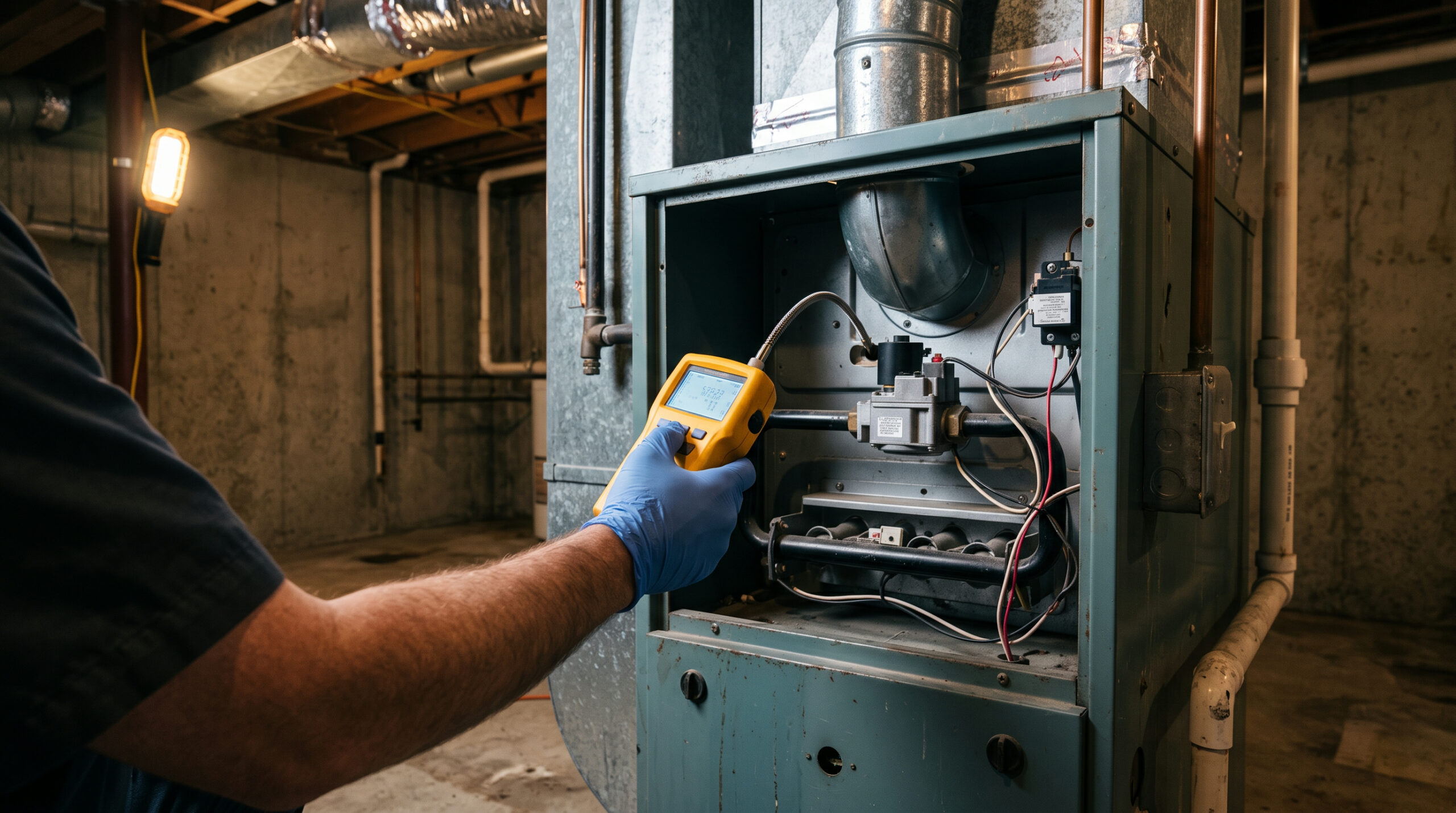
Section 608 becomes relevant only when the same visit also services a heat pump or an air conditioning coil that shares the furnace’s air handler, which many heating, ventilation, and air conditioning (HVAC) tune-up packages do.
North American Technician Excellence (NATE) certification is the one worth asking about for the furnace itself. NATE administers a core knowledge exam plus at least one specialty exam, such as gas heating or air distribution, and certification lasts two years before the technician must either retest or complete 16 hours of continuing education to renew. A NATE card is not a license, but it is a direct, checkable signal that the person working on your furnace passed an independent knowledge test rather than only a company’s own onboarding.
Ask for the technician’s NATE card or certificate number before the visit, confirm their state contractor’s license the same way you would for any other hire (see how to verify a contractor’s license in under ten minutes), and ask whether Section 608 applies at all if the job is furnace-only. A contractor who can’t answer either question clearly is worth a second quote.
What to have ready before the technician arrives
A few minutes of preparation changes what the visit can actually accomplish. Pull the furnace’s model and serial number off the data plate so the technician can check your gas-pressure and amperage readings against the manufacturer’s actual spec, not a generic range. Know the furnace’s age and the date of its last service, since a furnace older than 15 years changes which repairs are worth making at all.
If the unit is getting close to that age, it may be time to hire an HVAC installer instead of booking another tune-up. Clear a path to the unit and its filter access panel before the appointment window starts, since a crowded utility closet is the fastest way to turn a thorough 60-minute visit into a rushed 20-minute one.
Some utilities pay part of the bill for a documented tune-up. DTE Energy, a Michigan gas utility, currently advertises a rebate of up to $150 for a furnace tune-up that specifically includes a combustion analysis, booked through one of its participating contractors.
Check your own utility’s website before scheduling. A rebate that requires a combustion analysis as a condition of payment is also a built-in check that the visit covered the one step a filter-and-glance visit skips.
Ready to book a furnace tune-up with a technician who actually runs the combustion test? Compare quotes from background-checked HVAC pros near you via Thumbtack and ask for the eight-point checklist before anyone opens the panel.
Frequently asked questions
What should a furnace tune-up checklist actually include? A real checklist covers eight items: combustion analysis, heat-exchanger inspection, filter replacement, thermostat calibration, blower inspection, electrical-connection check, gas-pressure check, and a safety-control test. A visit that only swaps the filter and glances at the unit has skipped most of what the checklist is for.
Do I need to ask for EPA Section 608 certification for a furnace-only tune-up? No. Section 608 certification covers technicians who work on sealed refrigerant systems, and a gas or oil furnace has no refrigerant circuit. It only applies if the same visit also services a heat pump or an air conditioner coil attached to the same system.
What does NATE certification actually test? North American Technician Excellence (NATE) certification requires passing a core knowledge exam plus a specialty exam in an area like gas heating. It is not a license, but it is an independent, checkable signal of technical knowledge, and it expires every two years without renewal.
How long should a real furnace tune-up take? Most legitimate visits run 45 to 90 minutes, long enough to complete all eight checklist items and run a combustion analysis. A visit that wraps up in under 20 minutes has almost certainly skipped the combustion test, the heat-exchanger inspection, or both.
What’s a reasonable red flag during a tune-up visit? Any repair recommendation made without a reading, photo, or measurement to back it up is worth questioning, especially if it comes with urgency or a same-day discount. A technician who found a real problem can show you the number or the photo that proves it.