How to Hire an Epoxy Flooring Installer Without Getting a Floor That Peels
6 min read · Last updated October 12, 2026
- National average cost to epoxy-coat a garage floor runs $7.78 to $12.71 per square foot as of May 2026, before any crack repair or moisture mitigation.
- Epoxy coating material costs rose roughly 5.6% year over year through August 2026, so a quote that looks identical to last year’s is already behind.
- The single most common cause of epoxy failure is trapped moisture in the slab, measured with a relative-humidity probe under test method F2170 from ASTM International (ASTM), a test a surprising number of quotes never mention.
- Get at least three quotes, and the cheapest one is the one most likely to have skipped a step.
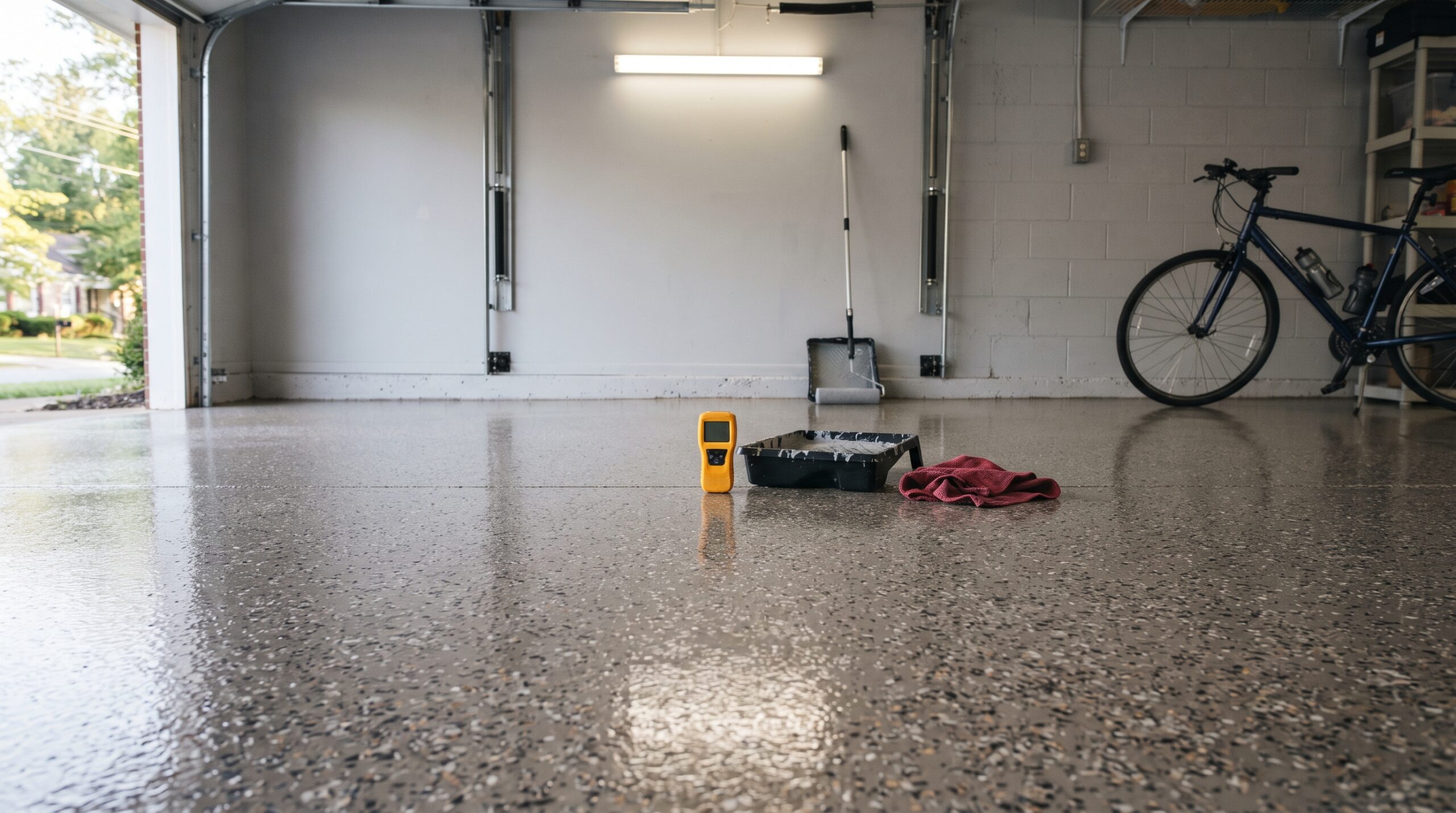
A relative-humidity test, run before anything touches the concrete, decides whether an epoxy coating lasts five years or five months. Three quotes on Tomás Reyes’s attached two-car garage in Boise, Idaho came back $2,400, $3,100, and $4,300 for the same 440 square feet, and the cheapest one never mentioned testing the slab at all.
In this article
- What to ask before you hire an epoxy flooring installer
- Prep method: grinding, etching, and why it matters more than the topcoat
- Red flags during the quote
- What to have ready before you call a pro
- Frequently asked questions
That spread is normal. National average cost to epoxy-coat a garage floor runs $7.78 to $12.71 per square foot as of May 2026, and epoxy and coating material prices have risen roughly 5.6% year over year through August 2026, per the Bureau of Labor Statistics’ producer price index for paint and coating manufacturing. The sections below cover how to hire an epoxy flooring installer who gets the floor right the first time, instead of one who’s counting on you not knowing what to ask.
What to ask before you hire an epoxy flooring installer
Ask every installer whether they test the slab for moisture before coating it, and how. Concrete releases water vapor for years after it’s poured, and when a coating seals the surface, that vapor has nowhere to go. ASTM International’s F2170 standard explains the stakes directly: “Excessive moisture in floor slabs after floor covering has been installed can cause floor covering system failures such as debonding, peaking and deterioration of finish flooring and coatings and microbial growth.”
A relative-humidity probe, drilled into the slab and left to equilibrate, is the test method the standard describes. A calcium-chloride test is the cheaper, less precise alternative. Ask which one is included, and whether the result gets written into your estimate or just mentioned verbally.
Also ask how many coats are planned, what mil thickness each one targets, and whether the quote includes a full-coverage moisture mitigation primer if the test comes back marginal. A one-coat “same day” quote usually means a thinner system with a shorter service life.
Prep method: grinding, etching, and why it matters more than the topcoat
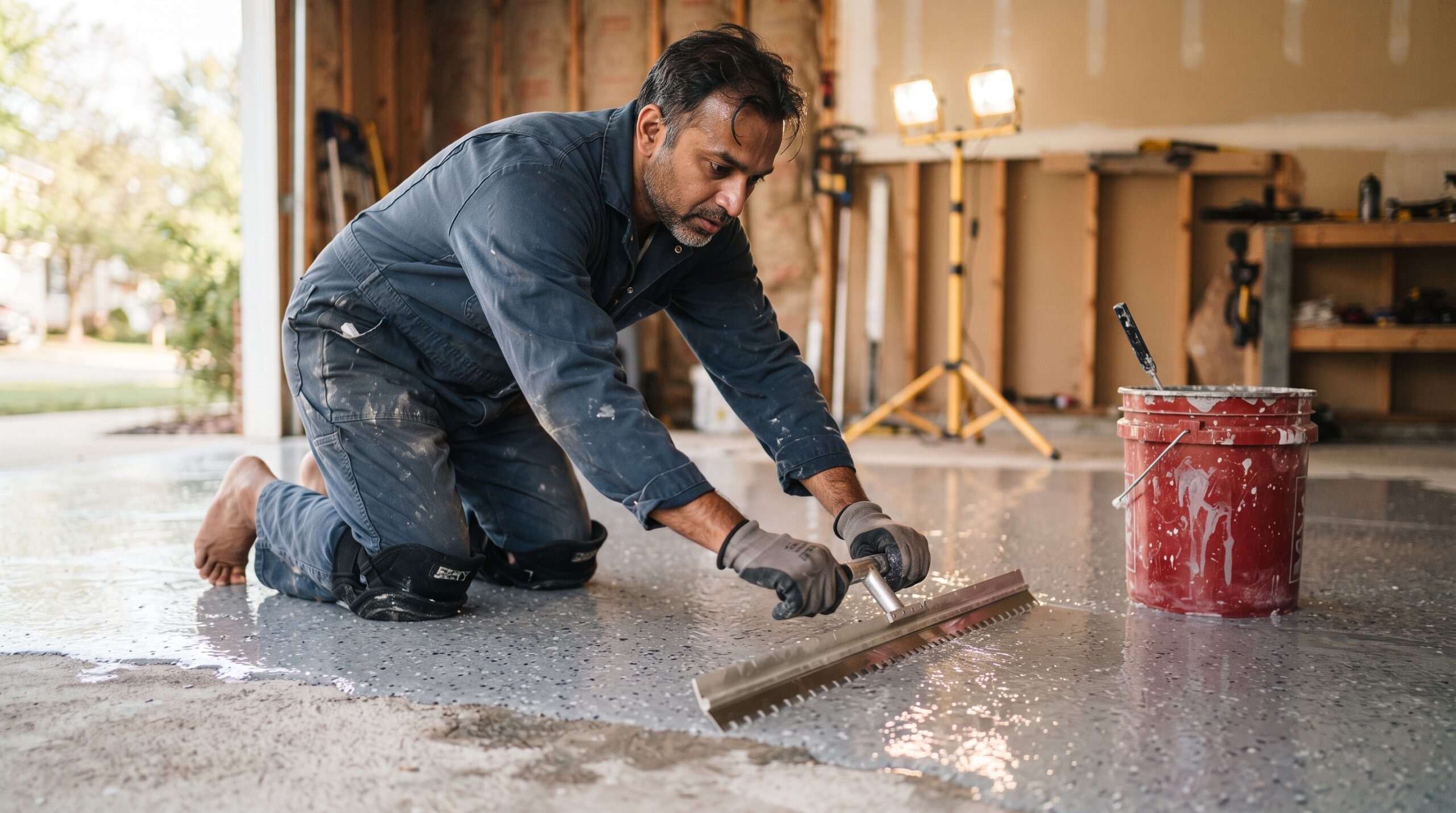
Ask whether the crew plans to diamond-grind the surface or acid-etch it. Grinding opens the concrete’s pores mechanically and is the more consistent method on a garage floor with oil stains, old paint, or a slick trowel finish. Acid etching is faster and cheaper but less reliable on a floor that’s been sealed or stained before.
A crew that can’t explain which method they’ll use and why hasn’t thought through your specific slab.
Get the service-qualification basics in writing too: a written estimate with line-item detail for prep, primer, coating, and any flake or chip broadcast; proof of license and general liability insurance, checked against your state’s contractor licensing lookup; and a warranty term, in years, not just “satisfaction guaranteed.” Match the installer’s crew size and experience to the size of the job, and ask how many garage epoxy jobs they’ve done in the last year.
Red flags during the quote
At the national range of $7.78 to $12.71 per square foot, a full two-coat system on Tomás’s 440-square-foot garage should land between 440 × $7.78 = $3,423 and 440 × $12.71 = $5,592, before any crack repair or moisture mitigation. Two of his three quotes, $2,400 and $3,100, undercut even the low end of that range; only the $4,300 quote actually falls inside it.
That’s the real flag, not just the $1,900 spread between the quotes. A bid that comes in meaningfully under the national range for your square footage is a bid that’s planned to skip something, and the moisture test is usually the first thing to go. The lowest bid isn’t automatically the worst one, but it’s the most likely to have skipped a step that shows up as lifting within a couple of years.
Also watch for a contract with no written warranty period, a request for full payment before the work starts, or an installer who can’t produce a certificate of insurance when asked directly.
What to have ready before you call a pro
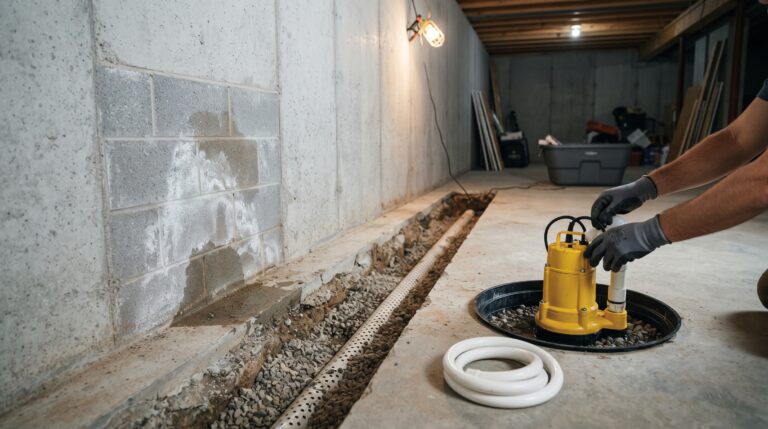
Measure the square footage of the space, note any existing cracks, oil staining, or previous coatings, and take a few photos in daylight. If the garage floods, has a sump pump, or sits below grade, mention it up front, since standing water history changes the moisture-mitigation plan. This keeps every installer quoting the same job, so the three quotes are actually comparable.
Garage floor epoxy coating pairs with garage floor costs in our cost guide, and the same licensing checks apply to any home-services hire: see how to verify a contractor’s license in under ten minutes.
Ready to compare local epoxy flooring quotes? Find a vetted epoxy flooring installer near you via Thumbtack and get free quotes from background-checked pros who can walk you through their moisture-testing and prep process before you commit.
Frequently asked questions
Does every epoxy installer need to run a moisture test? Any installer coating a concrete slab should test for moisture before applying a coating, since trapped vapor is the leading cause of epoxy failure. Ask which test method they use, relative-humidity probes under ASTM F2170 or a calcium-chloride test, and ask for the result in writing as part of your estimate.
Is diamond grinding always better than acid etching? Grinding is generally more reliable on floors with oil staining, old paint, or a slick trowel finish, since it mechanically opens the surface. Acid etching can work on a clean, never-coated slab, but a good installer should be able to explain which method fits your specific floor and why.
How long should a professional epoxy garage floor coating last? A properly prepped and coated floor with a documented moisture test commonly carries a multi-year warranty from the installer. A floor that skipped the moisture test or used a single thin coat is the one most likely to show peeling or bubbling well before any warranty period would end.
What’s a reasonable number of quotes to collect? Three is the standard baseline for any home-services hire. It’s enough to catch a wildly low outlier bid and still see where the market actually sits for your square footage and prep requirements.
Does a general contractor need to be involved for a garage floor coating? Not usually. A specialized flooring or coatings installer is the standard hire for this job. Adding a general contractor as a project manager on top of that can add 13% to 22% to the total cost, which only makes sense if the coating is one piece of a larger garage renovation.