How to Hire a Waterproofing Contractor Without Paying for the Wrong Fix
8 min read · Last updated October 19, 2026
- Interior drain tile with a sump pump typically runs $3,000 to $10,000, most commonly $4,000 to $8,000; exterior excavation with a membrane runs $7,000 to $18,000, most commonly $10,000 to $15,000.
- Wisconsin’s Agriculture, Trade and Consumer Protection (ATCP) administrative code, section 110.09, requires every basement waterproofing seller in the state to hand over a written analysis of your specific water problem and the proposed method before you sign. Ask for the same thing no matter where you live.
- The Bureau of Labor Statistics’ producer price index for ready-mix concrete rose about 2.3 percent year over year through September 2026, a real cost pressure on any exterior job needing new concrete.
- Lena’s two drain tile quotes on the same 48-foot wall in Omaha landed $3,460 apart, $2,400 versus $5,860, because the cheaper one left out the sump pump the drain tile needs to actually work.
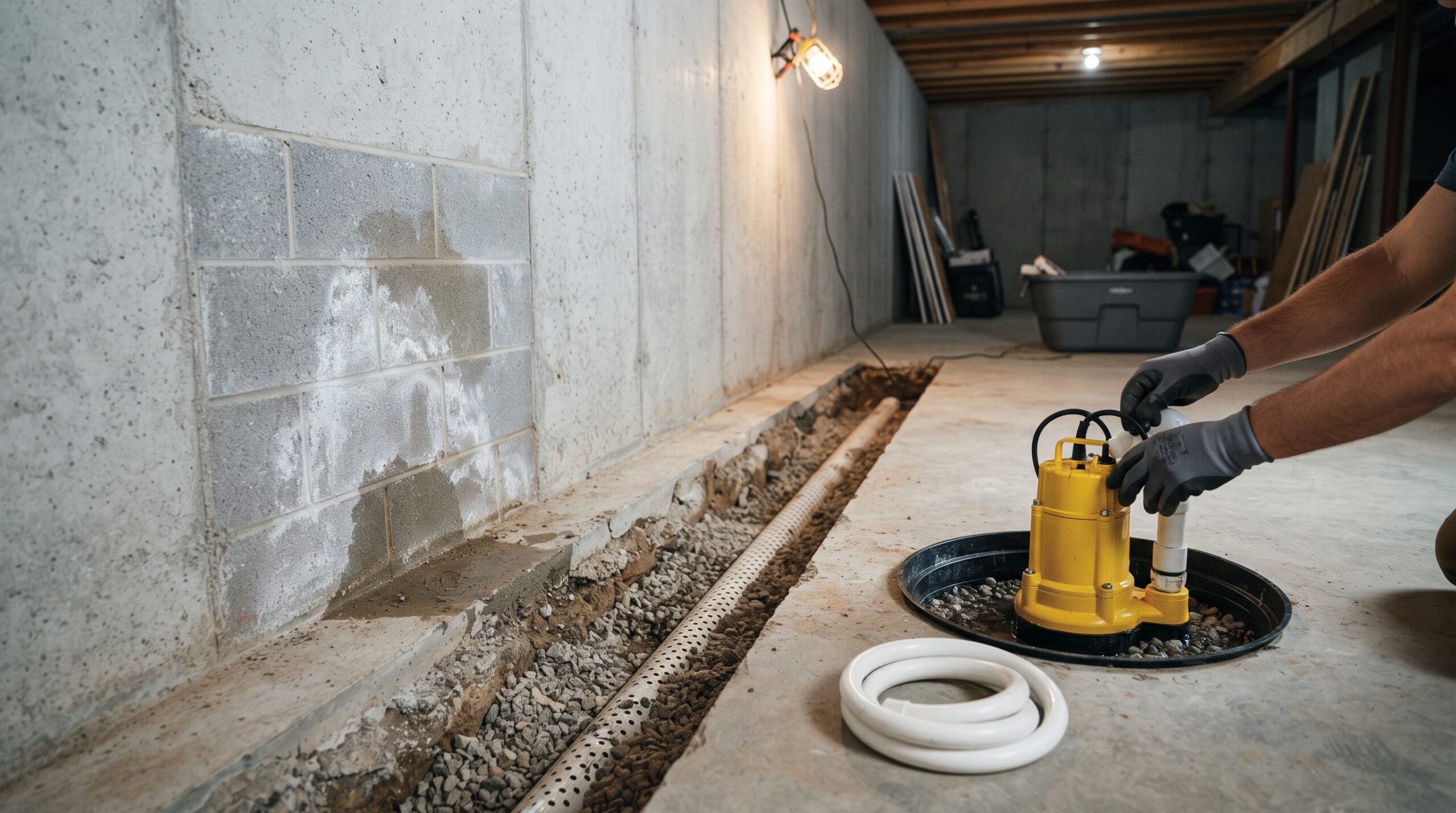
Interior drain tile with a sump pump typically costs $3,000 to $10,000, and exterior excavation with a membrane typically costs $7,000 to $18,000. The number that matters more than either price is whether the contractor can show you, in writing, why your water is entering the way it is.
In this article
- What a waterproofing contractor should diagnose first
- Questions to ask before you hire a waterproofing contractor
- Red flags that should make you refuse a quote
- What to have ready before you call
- Frequently asked questions
Hire a waterproofing contractor who can explain the diagnosis, not just the price: interior drain tile with a sump pump typically runs $3,000 to $10,000, and exterior excavation with a membrane runs $7,000 to $18,000, for what can look like the exact same wet wall.
Say a homeowner named Lena Brandt in Omaha, Nebraska called two waterproofing contractors about a damp stretch of her foundation wall. The first quoted $2,400 and never asked why the wall was leaking in the first place. The second asked enough questions to diagnose the actual problem, then quoted $5,860 for the drain tile system that problem actually needed.
What a waterproofing contractor should diagnose first
Water gets into a basement two ways: running across the surface toward the foundation during a storm, or pushing through the wall itself once the soil around the footing holds enough water to create pressure. Those are different problems with different fixes, and a contractor who proposes a method before diagnosing which one you have is skipping the step that actually matters.
| What you’re seeing | What’s actually happening | Method it usually calls for |
|---|---|---|
| Damp wall only during a storm, dry within a day | Surface water running toward the foundation | Grading and downspout correction, outside a waterproofing contractor’s main scope |
| White chalky residue, no standing water | Mild moisture moving through porous concrete | Sealant or masonry coating on the interior wall face |
| Seepage along the wall-floor joint, worse a day after rain stops | Hydrostatic pressure pushing water in at the footing | Interior drain tile with a sump pump |
| Water entering through one visible crack only | An isolated crack, not whole-wall pressure | Crack injection, epoxy or polyurethane |
| Chronic wet basement, musty smell, any season | A failed or missing footing drain under sustained pressure | Exterior excavation and a membrane |
These dollar ranges, and a full cost breakdown by method, are in this site’s basement waterproofing cost guide.
Wisconsin treats the diagnosis itself as a legal requirement, not a courtesy. Under section 110.09 of the state’s Agriculture, Trade and Consumer Protection (ATCP) administrative code, every basement waterproofing seller in Wisconsin must hand over a written analysis naming your specific water problem and the specific method and materials proposed to fix it, before you sign a contract. Few states put that obligation into statute, but ask for the same written analysis everywhere you live, and refuse a quote that shows up without one.
Questions to ask before you hire a waterproofing contractor
Ask which symptom in the table above matches your wall, and which method that calls for. A contractor who answers with the method first and the symptom second has the order backward.
Ask how long the company has worked with the specific method it’s proposing, especially crack injection or pressure pumping. Wisconsin’s own rule requires a seller to have real experience with a method before advertising it, and to back up a pressure pumping proposal with an engineer’s analysis, not just a sales pitch.
Ask for proof of license and insurance you can verify independently, the same ten-minute check that applies to any contractor, not just a certificate handed across the kitchen table.
If exterior excavation is on the table, ask what portion of the quote is new concrete for backfill and patching. The Bureau of Labor Statistics’ producer price index for ready-mix concrete rose from 386.267 in September 2025 to 395.319 in September 2026, about 2.3 percent, so that line item is getting more expensive on its own schedule, independent of any one contractor’s markup. A quote that won’t separate labor from material on an exterior job is harder to compare against a competing bid.
Red flags that should make you refuse a quote
Lena’s cheapest quote, at $2,400, covered 48 linear feet of drain tile at $50 a foot and nothing else: no sump pump, no discharge line, and no written analysis of why interior drain tile, instead of exterior excavation or a sealant coating, was the right call for her wall.
The properly scoped version of the same job: 48 feet at $70 a foot for $3,360, plus a sump pump with battery backup at $2,500, for a total of $5,860. The $3,460 gap between the two quotes is not profit margin. It’s the part of the system that actually moves water instead of just collecting it next to the wall.
The lowest bid is not automatically the worse one, and it is not automatically the better one either. It’s a bid for a specific, named scope, and your job is confirming that scope matches your wall before you compare it to anything else on price.
Refuse a quote that skips any of the following:
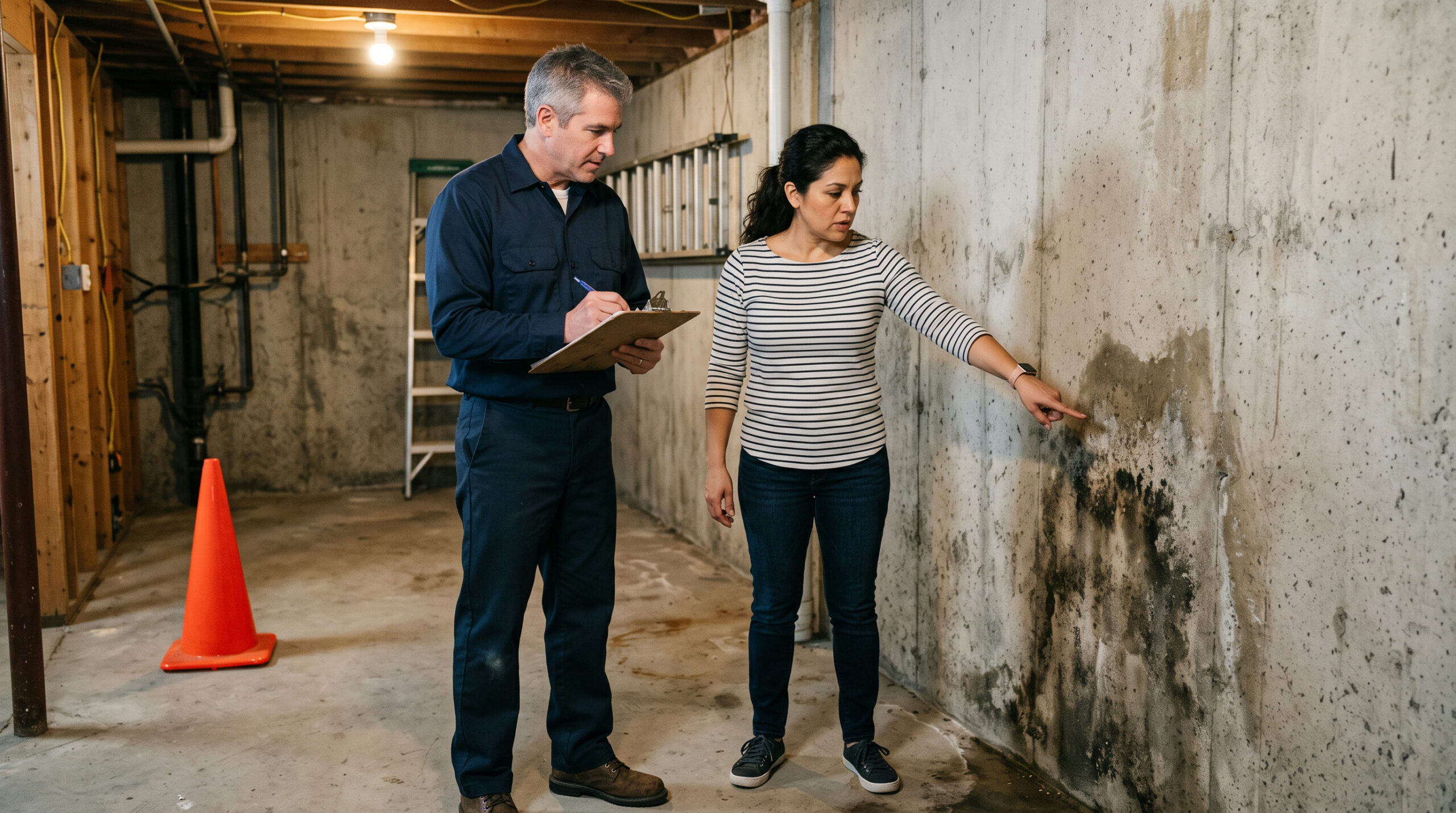
- A written analysis naming your specific water problem, not just the proposed fix
- A sump pump and discharge line on any interior drain tile proposal
- A specific brand and model for the pump and membrane, not just “a waterproofing system”
- Proof of license and insurance you can verify independently
- A written guarantee with its exclusions spelled out, not a verbal promise
A guarantee is also only as good as the company standing behind it years from now. Ask how long the company has operated under its current name. A 10-year warranty from a business formed eight months ago is a promise with nothing behind it once that business closes.
What to have ready before you call
Measure the affected wall in linear feet before anyone arrives. That single number is what turns a per-foot estimate into an actual figure instead of a guess, the same way Lena’s 48 feet turned $50 or $70 a foot into a real dollar amount.
Photograph the damp area over two or three days, including at least one photo more than 24 hours after the last rain. That timing is exactly what separates surface runoff from hydrostatic pressure in the table above, and a contractor who never asks about it is skipping the diagnosis.
If you’re already seeing mold rather than just dampness or staining, that’s a separate hire with its own written scope, covered in this site’s mold remediation cost guide. If you’re planning to finish the space into living area once the water problem is solved, water control has to happen first. Hiring a basement remodeler before the wall is actually dry is how a finished room gets torn out again six months later.
Ready to compare quotes from waterproofing contractors who diagnose before they quote? Find a vetted waterproofing contractor near you via Thumbtack and get free quotes from background-checked pros.
Frequently asked questions
How much does it cost to hire a waterproofing contractor? Interior drain tile with a sump pump typically runs $3,000 to $10,000, most commonly $4,000 to $8,000. Exterior excavation with a membrane runs $7,000 to $18,000, most commonly $10,000 to $15,000. The right number depends on which problem you actually have, not which contractor calls back first. See this site’s basement waterproofing cost guide for the full breakdown by method.
How do I know if I need interior drain tile or exterior excavation? Interior drain tile manages water once it reaches the footing. Exterior excavation intercepts water before it reaches the wall at all, which makes it the more complete fix and the more disruptive one to install. Seepage along the wall-floor joint that worsens a day after rain stops usually points toward drain tile; a basement that stays wet in any season points toward excavation.
What should a waterproofing quote include in writing? A legitimate quote names your specific water problem, not just the proposed fix, along with the exact method, materials, and brand being installed. Wisconsin law requires this written analysis from every basement waterproofing seller in the state. Ask for the same thing wherever you live, and refuse any quote missing a written guarantee with its exclusions spelled out.
Is a waterproofing warranty worth relying on? Only if the company writing it is likely to still exist when you need it. A 10-year warranty from a company formed eight months ago is a promise with nothing behind it if that business closes first. Ask how long the company has operated under its current name, and get every exclusion in writing before you sign anything.
Should I get more than one quote for basement waterproofing? Get at least three. A wide spread between quotes usually means contractors are diagnosing different problems, not competing on price for the same job. Confirm what each quote actually includes, such as a sump pump and discharge line on any drain tile proposal, before deciding the lowest number is the better deal.