Hire a Patio Contractor Near You
6 min read · Last updated June 29, 2026
- A paver or concrete patio runs roughly $10 to $25 per square foot installed, so a typical 300 square foot patio lands between $3,000 and $7,500 depending on material and base prep.
- The single largest difference between a patio that lasts 25 years and one that heaves in three winters is the base: ask every contractor how deep the gravel base is and whether they compact in lifts.
- Verify general liability insurance and your state contractor license before any digging, because patio work involves excavation, grading, and sometimes utility lines.
- Get at least three written, line-item bids; a bid more than 25% below the others almost always skips base depth, drainage, or edge restraint.
In this article
- What to figure out before you call a contractor
- The questions that actually separate the bids
- Red flags in a patio bid
- What a fair patio should cost
- FAQ
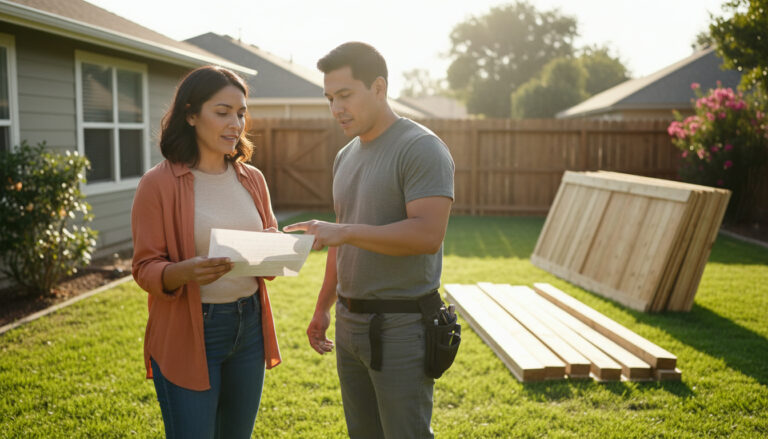
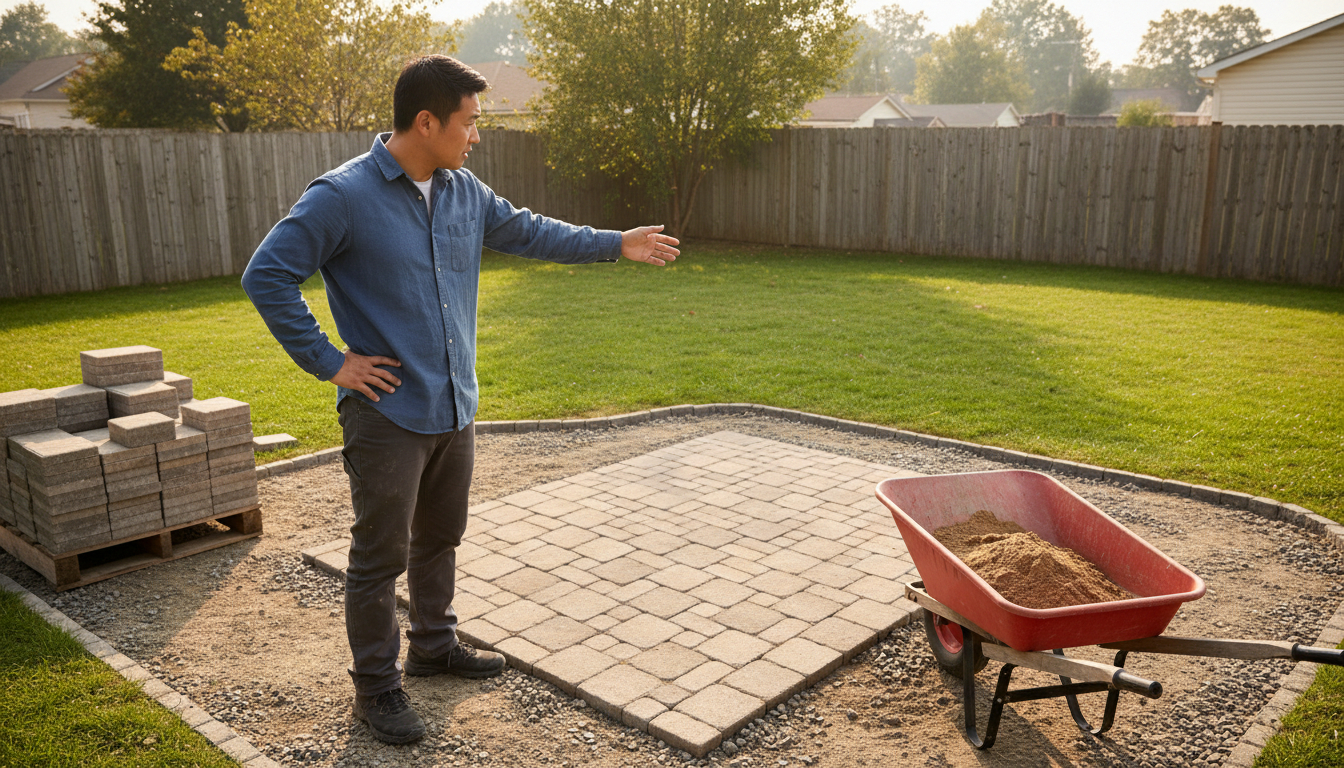
Daniel got three bids to build a 16-by-20-foot paver patio behind his ranch in Sacramento. The numbers came back at $6,400, $9,200, and $12,800 for what looked, on the surface, like the same job. The spread was not markup. The cheapest bid laid pavers on a two-inch sand bed with no compacted gravel base and no drainage plan. The middle bid specified a six-inch compacted gravel base, polymeric sand, and a slope away from the house. The expensive bid added a sitting wall. Once Daniel understood what was missing from the low bid, the $2,800 gap between the two real options made sense, and the cheap one stopped looking like a deal.
What to figure out before you call a contractor
Spend an afternoon on the basics before you dial anyone. Measure the footprint you want and write down the square footage, because every bid is priced per square foot and you cannot compare numbers without it. Decide roughly what material you are after: poured concrete, stamped concrete, concrete pavers, brick, or natural flagstone each price out differently and not every contractor does all of them well.
Walk the area and look at where water goes. A patio has to slope away from your foundation, usually about a quarter-inch of drop per foot. If your yard already pools water near the house, say so on the first call, because that changes the grading work and the bid.
Check two things that stop projects cold: local permit rules and your property setbacks. Many municipalities require a permit for a patio above a certain size, and HOA communities often have material and setback restrictions. Call 811 a few days before any digging so utility lines get marked for free. A contractor who shrugs off permits or utility marking is telling you how they operate.
The questions that actually separate the bids
Ask every contractor the same questions and compare the answers side by side, not just the bottom-line price.
Are you licensed and insured in this state? Ask for the license number and check it on your state contractor board’s site. General liability should be at least $500,000 for excavation work, and you want a certificate of insurance naming you as certificate holder. Confirm workers’ compensation if a crew is involved. The FTC’s guidance on avoiding home improvement scams is blunt about verifying a contractor’s license with your state or county and never paying the full price up front.
How deep is the base, and do you compact in lifts? This is the question that exposes the cheap bid. A proper paver base is four to six inches of compacted crushed gravel, laid and compacted in two-inch lifts with a plate compactor, then a thin setting bed. “We level the dirt and lay sand” is the answer that produces a patio that heaves.
What is your drainage and slope plan? A real answer names the slope and where water will run. Silence here means future water against your foundation. If your lot already sheds water toward the house, the EPA’s overview of permeable pavement explains how porous surfaces move stormwater away from the foundation instead of toward it.
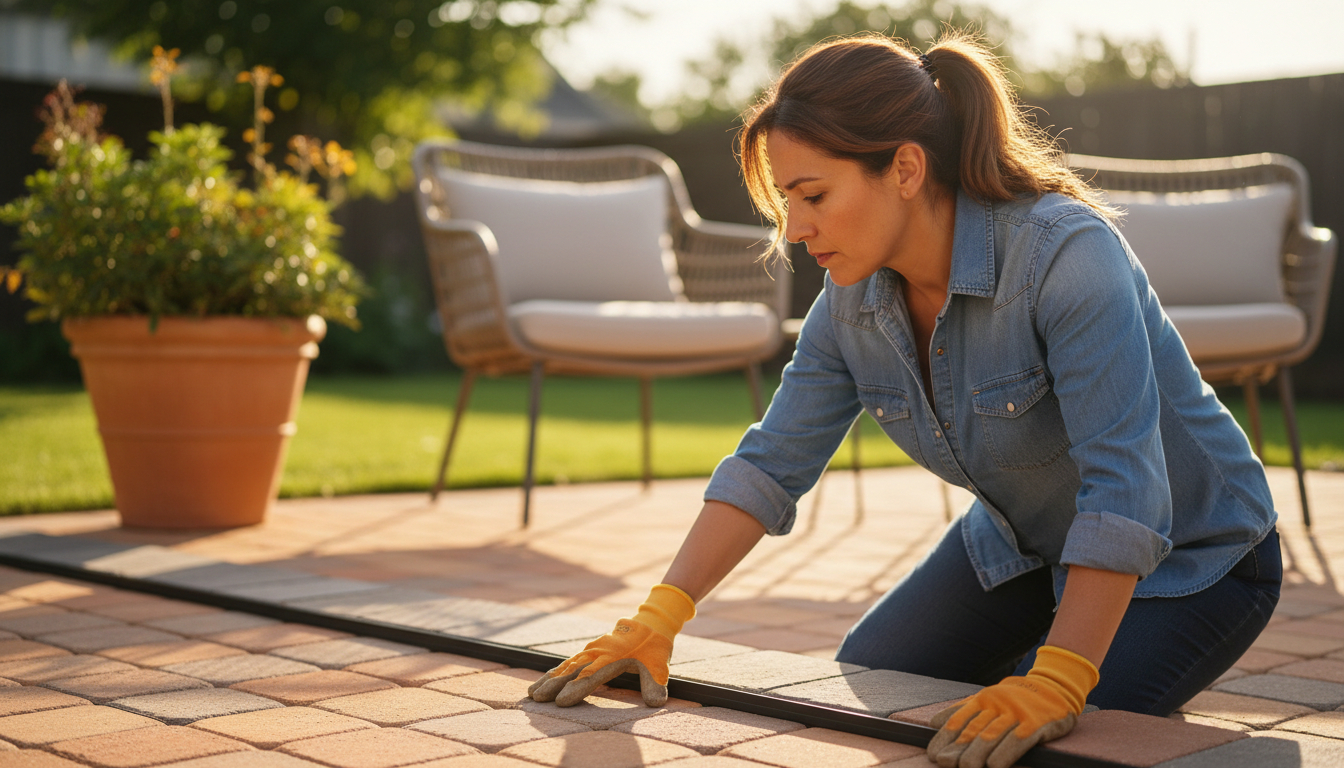
What edge restraint and joint material do you use? Pavers without edge restraint spread and shift. Polymeric sand in the joints resists weeds and washout better than plain sand. These are small line items that determine whether the patio looks the same in year five.
What does the warranty cover, and who actually does the work? A workmanship warranty of two to five years is reasonable. Ask whether the crew is employees or subcontractors, and if subs, whether they are covered under the company’s policy.
Always insist on a written estimate with line-item detail: square footage, material and quantity, base depth, drainage work, edge restraint, and labor. A bid that reads “320 sq ft paver patio – $7,000” cannot be compared to anything.
Red flags in a patio bid
A firm price quoted over the phone before anyone has seen your yard is not a real estimate. Patio pricing depends on access, grading, and soil, none of which a contractor can judge sight unseen.
A bid that lands the same afternoon, often within an hour of the salesperson leaving, is a pressure tactic built to close you before you call anyone else. Legitimate estimates take a day or two to put together.
Watch any bid that is silent on base depth and drainage. Those are not details a professional forgets; they are the line items a low bidder leaves out to win on price. If two of your three bids specify a six-inch compacted base and one says nothing, you have found the difference.
Never agree to pay more than 30 to 40 percent upfront. Standard practice is a deposit on signing and the balance on completion. Full payment in advance, cash-only demands, or a contractor without a verifiable physical address are all warning signs. Finally, match the crew and equipment to the scope: a large patio with a retaining wall or significant grade change needs more than two people and a wheelbarrow.
What a fair patio should cost
You do not need a precise number to spot an outlier, just the right range. Most installed patios fall between $10 and $25 per square foot, and the material drives most of that spread.
| Material | Typical Range (installed) | Notes |
|---|---|---|
| Poured concrete slab | $8 – $15 per sq ft | Lowest cost; can crack without control joints |
| Stamped concrete | $12 – $20 per sq ft | Decorative finish; sealing adds upkeep |
| Concrete pavers | $14 – $24 per sq ft | Individual units flex with frost; easy to repair |
| Brick | $15 – $25 per sq ft | Classic look; labor-intensive install |
| Natural flagstone | $20 – $35 per sq ft | Premium; irregular pieces raise labor cost |
If you want the full breakdown of what drives these numbers up or down and how to read a quote line by line, our patio cost guide goes deeper. For now, the rule of thumb holds: a bid well below $10 per square foot for pavers is almost certainly cutting the base, the drainage, or both.
Once your yard is cleared and graded, hardscaping pairs naturally with other outdoor work. If you are squaring away the whole yard, our guides to hiring a fence installer and a tree service walk through the same vetting steps for those trades. If a raised structure fits your yard better than a ground-level patio, our deck construction cost guide walks through the same material and footing math for that option.
Ready to compare local patio contractor quotes? Find a vetted patio contractor near you via Thumbtack and get free quotes from background-checked pros.
FAQ
How long does it take to build a patio?
A standard paver or concrete patio takes two to four days for an experienced crew once excavation starts. Poured concrete needs additional curing time before you can use it, usually several days. Larger projects with walls, steps, or significant grading can run a week or more. Ask for a start date and an expected completion date, not just a range.
Do I need a permit to build a patio?
Often, yes. Many municipalities require a permit for patios above a certain size or any patio attached to the house, and some have rules about how close to the property line you can build. A licensed contractor should know your local requirements and include permit costs in the bid. If they tell you to skip the permit, treat that as a red flag.
Should I choose pavers or poured concrete?
Pavers cost more upfront but flex with frost heave and let you replace a single damaged unit without redoing the slab. Poured concrete is cheaper and faster but cracks over time and is harder to repair invisibly. In freeze-thaw climates, many contractors favor pavers for exactly that reason. Ask each bidder which they recommend for your soil and climate, and why.
How many quotes should I get for a patio?
Three is the right floor. Three line-item bids let you spot the contractor who skipped the base or the drainage, which is the most common and most expensive corner cut in hardscaping. For a large patio with a retaining wall or major grade change, a fourth bid gives you a better price anchor.