How to Hire a Cabinet Installer Who Gets It Plumb the First Time
6 min read · Last updated October 12, 2026
- The national average cost to install kitchen cabinets, cabinets and labor together, runs $486 to $736 per cabinet as of May 2026.
- Cabinet material costs rose roughly 4.3% year over year through August 2026, so this year’s bids run higher than last year’s even before labor.
- A certification seal from the Kitchen Cabinet Manufacturers Association (KCMA), inside a cabinet door or on a drawer edge, confirms the cabinet itself passed structural and finish testing, but it says nothing about the installer who hangs it.
- Two full quotes for the identical cabinets can differ by hundreds of dollars once you ask what each one actually includes.
The national average cost to install kitchen cabinets, cabinets and labor together, runs $486 to $736 per cabinet as of May 2026. The cabinets were the same model number on both full quotes Aisha Bennett collected, remodeling a 2005-built kitchen in Richmond, Virginia: 9 cabinets, one bid at $6,650, the other at $7,550, a $900 gap for the identical boxes.
Run the range against her job. At $486 to $736 per cabinet, 9 cabinets should price between 9 × $486 = $4,374 and 9 × $736 = $6,624. Her $6,650 bid landed within $30 of the top of that range; her $7,550 bid landed $926 above it, which tracks for a kitchen with more cutouts, an angled run, or crown molding than the baseline estimate assumes, and is exactly the kind of detail worth asking each installer to itemize.
In this article
- What to ask before you hire a cabinet installer
- Stock, semi-custom, or custom changes the install, too
- Red flags during the quote
- What to have ready before you call a pro
- Frequently asked questions
Material costs are baked into that figure already, but they’re also climbing on their own: wood cabinet and countertop prices are up roughly 4.3% year over year through August 2026, per Bureau of Labor Statistics producer price data, which is one reason this year’s bids run ahead of last year’s. The sections below cover how to hire a cabinet installer who levels every box correctly the first time, instead of one who’s banking on your kitchen having perfectly square walls.
What to ask before you hire a cabinet installer
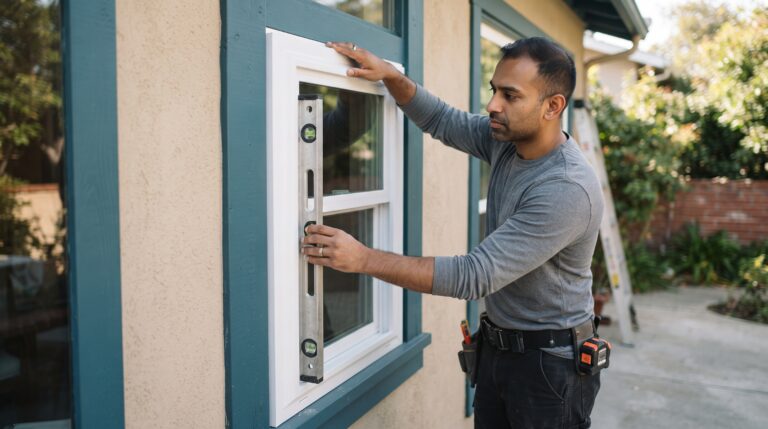
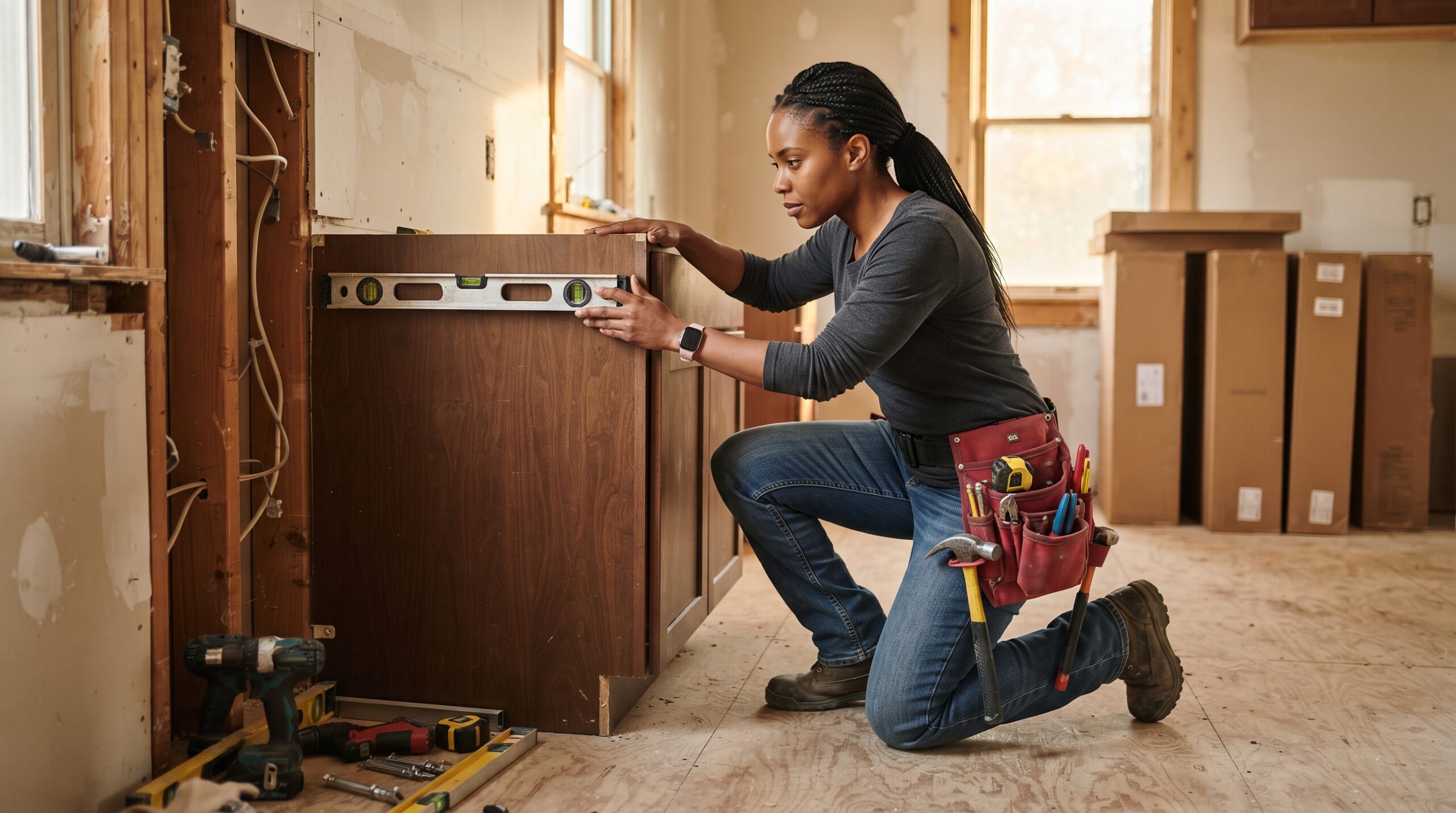
Ask whether the quote covers only hanging the cabinets you’ve already bought, or also scribing, shimming, and trimming to fit your actual walls. No kitchen wall is perfectly plumb, and an installer who doesn’t budget time for scribing exposed panel edges to the wall surface is planning to force square boxes into a room that isn’t. Ask specifically how they handle an out-of-level floor or wall, since that’s the detail a rushed bid leaves out.
Ask whether your cabinets carry a KCMA A161.1 certification seal, typically printed inside a door or on a drawer edge. The seal means the cabinet “structure, drawers, doors and finish are tested to simulate a lifetime of use.” It’s a manufacturing credential, not an installer credential, but it tells you whether the boxes you’re paying to have hung were built to a real standard in the first place.
Stock, semi-custom, or custom changes the install, too
Ask which category your cabinets fall into, since it changes what the installer needs to plan for. Stock cabinets come in fixed sizes and need the most on-site adjustment to fill a run exactly. Semi-custom cabinets offer more width and height options, which reduces filler-panel work.
Fully custom cabinets are built to your exact measurements and should need the least field modification, but they also take the longest lead time before installation day even starts.
Confirm the service-qualification basics the same way you would for any contractor hire: get at least three quotes, verify license and general liability insurance before anyone starts work, and get a written estimate that itemizes hanging, leveling, scribing, hardware installation, and cleanup separately rather than as one lump figure.
Red flags during the quote
Be cautious of a bid that doesn’t mention leveling or scribing at all, since that’s usually a sign the installer plans to hang cabinets straight off the truck and let gaps show. A legitimate installer should be willing to walk your specific layout in person before quoting, not price it off a photo. The lowest bid is not automatically the wrong one, but if it’s dramatically below the others and can’t explain why, ask directly what’s different.
Watch for a contract with no punch-list or callback language for a cabinet that’s discovered out of level after the countertop goes on top of it. That’s a common point of dispute, and it should be addressed in writing before the job starts, not negotiated after.
What to have ready before you call a pro
Have your cabinet layout, linear footage, and appliance locations measured and written down, along with photos of the current kitchen from a few angles. If you’ve already ordered cabinets, have the order confirmation and any assembly requirements on hand, since flat-packed cabinets that need assembly before installation are a different labor line item than pre-assembled boxes.
This pairs with our cabinet refacing and replacement cost guide if you’re still deciding between refacing and full replacement, and with our kitchen remodel cost guide if cabinets are one piece of a larger project.
Ready to compare local cabinet installation quotes? Find a vetted cabinet installer near you via Thumbtack and get free quotes from background-checked pros who will walk your kitchen before they price it.
Frequently asked questions
What does a KCMA certification seal actually tell me? It confirms the cabinet itself passed structural, drawer, door, and finish testing under the KCMA A161.1 standard. It’s a manufacturing credential for the cabinet, not a license or certification for the person installing it, so ask about both separately.
Does the national average installation cost include the cabinets themselves? It depends on the quote. Homewyse’s national average of $486 to $736 per cabinet bundles the cabinets and the basic installation labor together, since that’s how most full-service installers price a job. If you’ve already bought your cabinets and only need labor, ask the installer to break out a labor-only number so you’re not paying for materials twice.
Should I hire the same person who sold me the cabinets to install them? Not automatically. Some cabinet dealers include installation, and some don’t offer it at all. Either way, vet the installer specifically, confirm their insurance, and ask how they handle an out-of-level wall, the same as you would for any other contractor.
What’s the difference between stock, semi-custom, and custom cabinets for installation purposes? Stock cabinets need the most on-site fitting since they come in fixed sizes. Semi-custom cabinets reduce that work with more size options. Custom cabinets are built to your exact measurements and typically need the least field modification, but carry a longer lead time before an installer can even start.
How many quotes should I get for cabinet installation? Three is a reasonable baseline. It’s enough to catch an outlier bid in either direction and see what installers in your area actually charge for the leveling and scribing work a straightforward hanging price can hide.