Hire a Siding Installer Near You
6 min read · Last updated July 13, 2026
- Vinyl siding commonly runs $4 to $9 per square foot installed, while fiber cement runs $8 to $15, putting a typical 1,500-square-foot install between $8,000 and $25,000 depending on material.
- The moisture barrier and flashing behind the panels decide whether the wall stays dry, and it is exactly what a cut-rate bid leaves vague.
- If your home was built before 1978, the installer must be EPA Lead-Safe certified because removing old siding can disturb lead paint.
- Verify the state license, general liability insurance, and workers’ compensation before work starts, and get at least three written, line-item bids.
In this article
– What to sort out before you call – The questions that separate siding bids – Red flags in a siding quote – What new siding should cost – FAQ
When Fatima priced new siding for her 1972 two-story in suburban Chicago, two contractors quoted the same 1,600-square-foot job at $11,000 and $19,000. The lower bid quoted a mid-grade vinyl, said nothing about the house wrap or the flashing around the windows, and did not mention that her home’s age meant the crew would be disturbing old paint. The higher bid specified a new moisture barrier, new window and door flashing, fiber cement panels, and an EPA Lead-Safe certified crew for the tear-off. Once Fatima saw that the cheap bid was skipping the weatherproofing and ignoring a federal safety rule, the $8,000 gap was no longer a mystery.
What to sort out before you call
Decide on material and scope before you dial, because the two biggest price drivers are the panel you choose and how much prep the walls need. Vinyl is the budget standard and easy to maintain. Fiber cement costs more but resists fire and impact and holds up in harsh climates. Engineered wood and real wood sit in between and above. Knowing which one you want lets you compare bids on the same footing instead of guessing why one is higher.
Check your home’s age. If it was built before 1978, tearing off old siding can release lead paint dust, and federal law requires the contractor to be certified under the EPA’s Renovation, Repair and Painting rule. This is not optional and it is a fast way to separate a professional outfit from a fly-by-night one; ask for the certification on the first call.
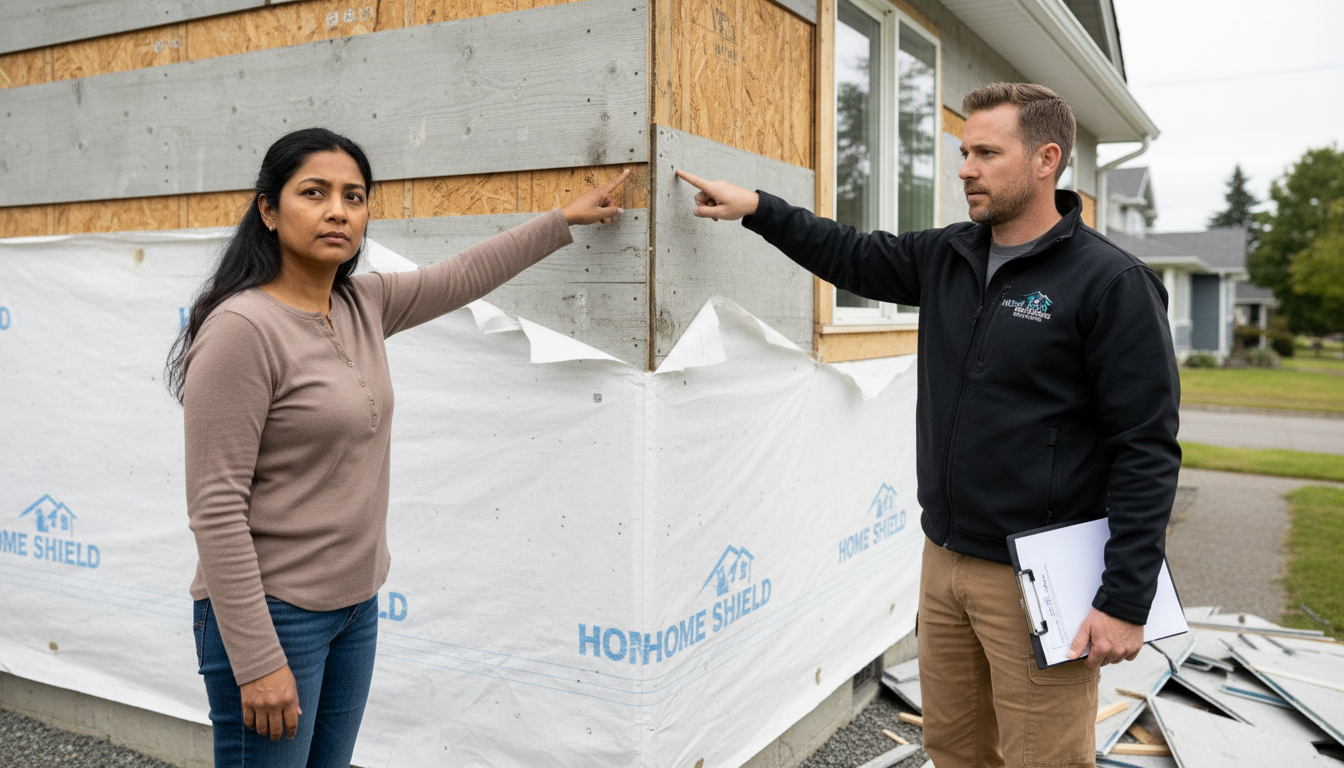
Walk the exterior and note anything that hints at hidden trouble: soft spots on the wall, peeling paint, water stains inside near exterior walls, or gaps around windows. Old siding often hides rotted sheathing, and flagging your concerns up front gets you bids that account for repairs instead of ones that pretend the wall underneath is perfect.
The questions that separate siding bids
Ask every contractor the same questions and compare the answers, not just the totals.
Are you licensed and insured in this state? Get the license number and verify it with your state or county, exactly as the FTC’s home improvement scam guidance recommends. You want general liability of at least $500,000 and current workers’ compensation, since siding means crews on ladders and scaffolding all day.
Are you EPA Lead-Safe certified? For any home built before 1978, this is a requirement, not a nicety. A contractor who does not know what you are asking about should not be tearing siding off your house.
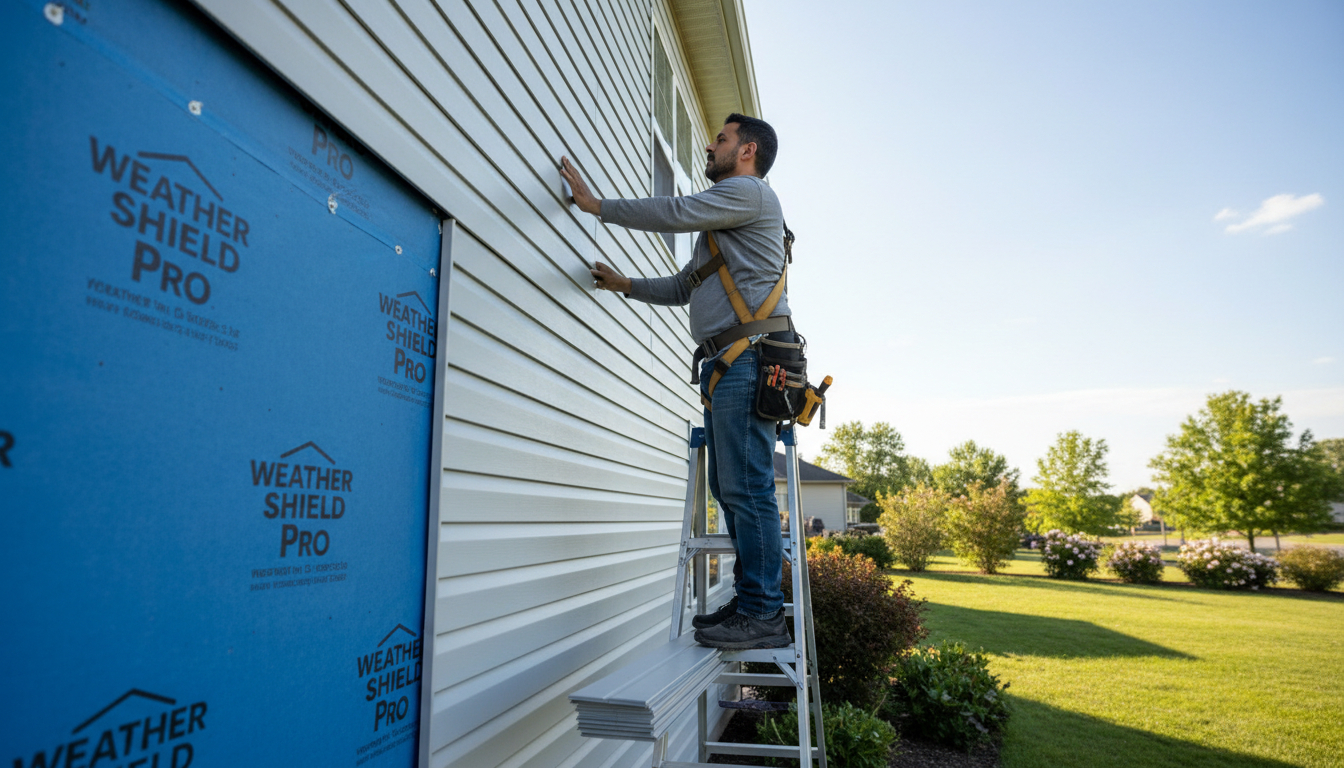
What goes on behind the panels? This is the question that exposes the weatherproofing shortcut. A good answer names a house wrap or building-paper moisture barrier and new flashing around every window, door, and penetration. “We just put the new siding over the old” is the answer that traps moisture and rots the wall.
How do you handle rotted sheathing if you find it? Once the old siding comes off, hidden rot is common. Ask for a per-sheet or per-square-foot repair rate in writing so a discovery does not become an open-ended charge mid-project.
What is the manufacturer warranty, and what is your workmanship warranty? Panels carry a manufacturer warranty, but the install is on the contractor. A workmanship warranty of at least two to five years, in writing, is reasonable and tells you they stand behind the labor.
Insist on a written, line-item estimate: tear-off and disposal, moisture barrier, flashing, insulation if any, the specific panel product, trim, labor, permit, and any sheathing repair rate. A bid that reads “new siding – $14,000” tells you nothing about whether the wall will stay dry.
Red flags in a siding quote
A bid that is silent on the moisture barrier and flashing is the biggest one. Installing new siding over old, or over bare sheathing with no house wrap, is the most common corner cut, and it is invisible until water finds its way in behind the panels.
For a pre-1978 home, a contractor who has never heard of Lead-Safe certification is telling you they cut regulatory corners, and probably others too. A firm price quoted before anyone looked at the wall condition is a guess, not an estimate, especially on an older home where hidden rot is likely.
Watch the money terms. A deposit of 10 to 30 percent with milestone or completion payments is standard; a large upfront demand, cash-only pricing, or a contractor with no verifiable address are all reasons to walk. Match the crew and timeline to the scope, and never let work begin before the contract names the material, the moisture barrier, the flashing, the scope, the total, and the dates.
What new siding should cost
You do not need an exact figure to catch an outlier, just the right range. Material is the biggest driver, followed by prep and home height.
| Material | Typical Range (installed) | Notes |
|---|---|---|
| Vinyl siding | $4 – $9 per sq ft | Budget standard, low maintenance |
| Engineered wood | $6 – $12 per sq ft | Wood look, lighter than fiber cement |
| Fiber cement | $8 – $15 per sq ft | Fire and impact resistant, long lasting |
| Natural wood | $8 – $16 per sq ft | Premium look, needs regular upkeep |
| Sheathing / rot repair | $3 – $10 per sq ft affected | Only where damage is found at tear-off |
Your estimate may vary with your region, home height, and what the crew finds behind the old panels. The same vinyl job runs 15 to 20 percent below the national average in lower-cost markets and 10 to 25 percent above in high-cost metros. If a bid lands well below the others, ask the contractor to walk you through the moisture barrier, the flashing, and the sheathing repair rate before you assume it is a bargain.
Siding and gutters are almost always touched in the same project, since the gutters have to come off and go back on. Coordinating the timing saves you from paying twice, so our guide to hiring a gutter installer walks through the same vetting steps for that half of the job.
Ready to compare local siding installer quotes? Find a vetted siding installer near you via Thumbtack and get free, itemized quotes from background-checked pros.
FAQ
How much does it cost to replace siding on a house in 2026?
Vinyl siding runs $4 to $9 per square foot installed, engineered wood $6 to $12, and fiber cement $8 to $15, so a typical 1,500-square-foot install lands between $8,000 and $25,000 depending on material. Home height, access, and any sheathing repair found at tear-off move the number. Material choice is the biggest single driver, so compare bids that quote the same product.
Do I need a special contractor if my house was built before 1978?
Yes. Removing old siding on a pre-1978 home can disturb lead paint, and federal law requires the contractor to be certified under the EPA’s Renovation, Repair and Painting rule. Ask for the Lead-Safe certification before hiring. A contractor who has never heard of it is cutting a regulatory corner, which is a reliable sign they cut others.
What should go on behind new siding?
A moisture barrier, meaning house wrap or building paper, and new flashing around windows, doors, and any wall penetrations. Tile, panels, and paint are not waterproof on their own; the barrier and flashing behind them are what actually keep the wall dry. A bid that installs new siding over old, or skips the house wrap, is setting up a moisture problem you will not see until it is expensive.
How many siding quotes should I get?
Three is the right floor. Three line-item bids that quote the same material let you spot the contractor skipping the moisture barrier or ignoring rot repair, the most common ways a siding bid comes in low. If one bid is far below the others, ask specifically about the house wrap, the flashing, and the sheathing repair rate.