What Does Tree Trimming Cost in 2026?
7 min read · Last updated September 21, 2026
- Professional tree trimming averages $430 to $640 per tree in 2026, ranging from $85 for a small tree under 30 feet to $1,835 for a tree over 60 feet (LawnStarter, updated December 2025).
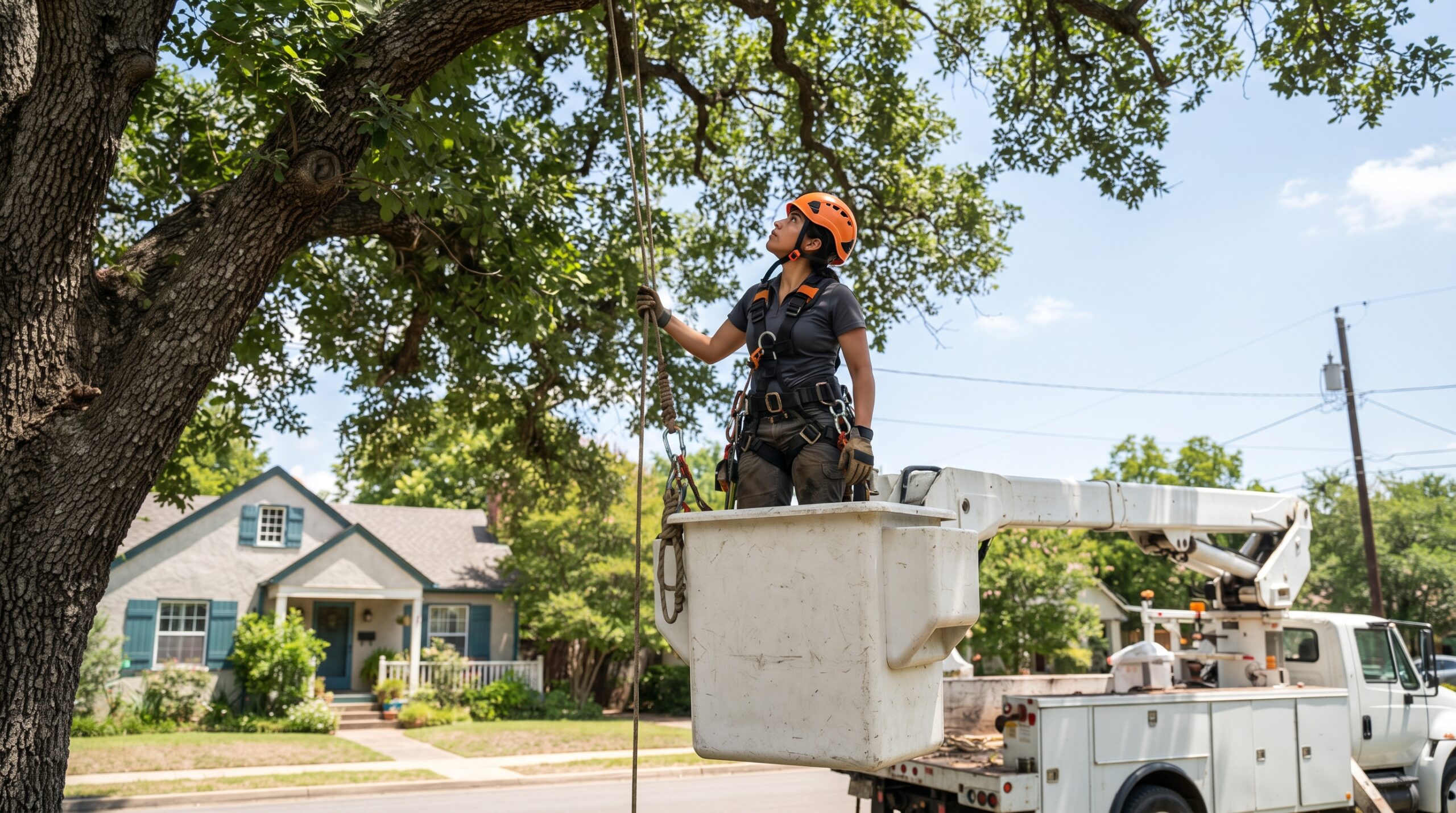
- Access, not just height, drives the price: a tree a bucket truck can reach from the driveway costs less than the same tree with no truck access, which has to be climbed.
- A tree trimmed near a power line may qualify for a free trim from your utility company instead of a paid contractor visit.
- Tree trimming (canopy shaping, pruning, deadwood removal) is a different job than tree removal, and this guide only covers trimming; see our separate tree removal cost guide if the tree is coming down.
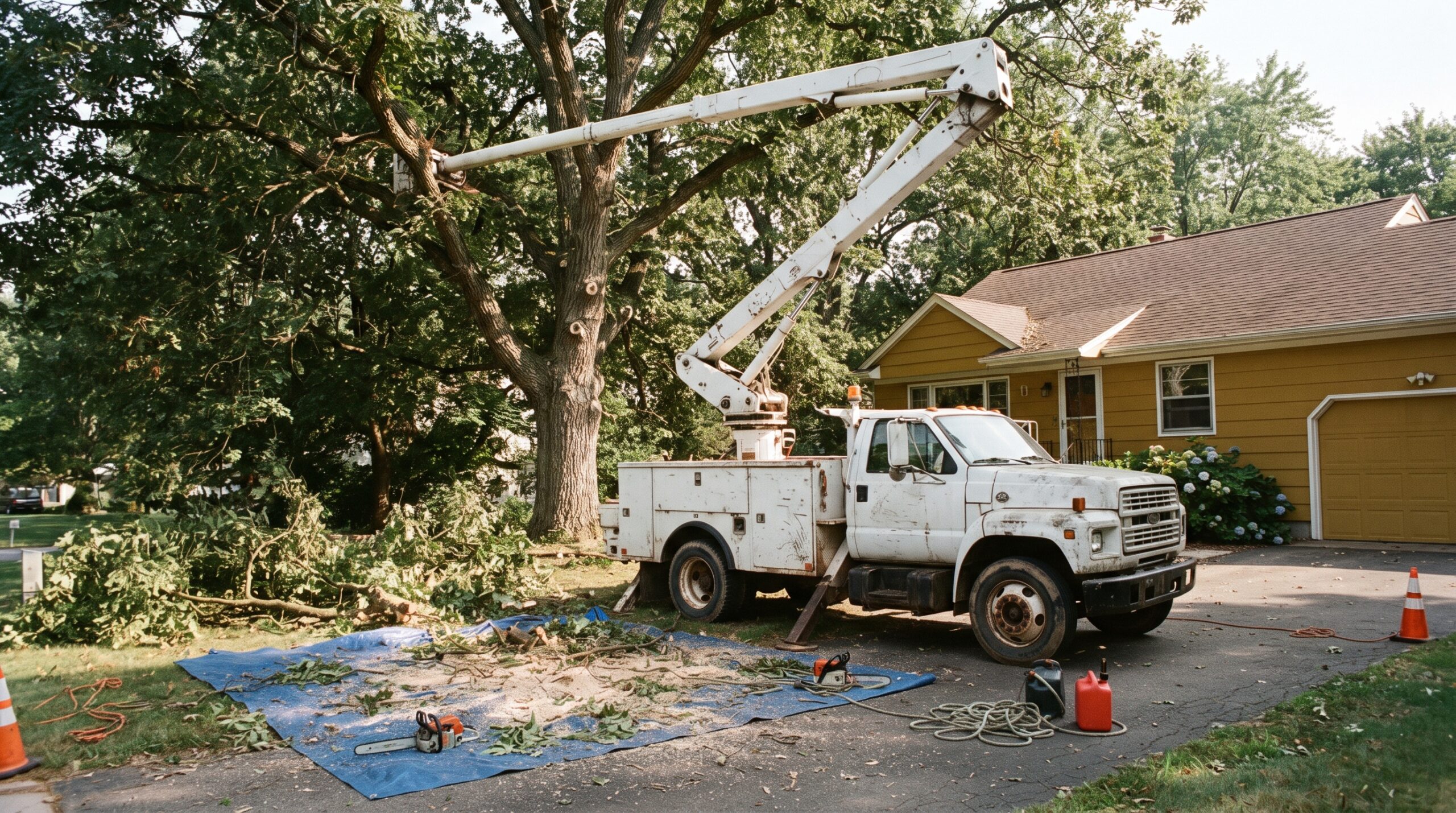
Professional tree trimming costs $430 to $640 per tree on average in 2026, and a tree a bucket truck can reach from the driveway will almost always come in cheaper than the identical tree with no truck access, which has to be climbed by hand.
In this article
- What tree trimming costs, by height
- What actually moves the price
- Reading a tree-trimming quote
- What to check before you hire
- Frequently asked questions
Marcus Webb called three tree services to trim the 45-foot oak hanging over his roof in Charlotte, North Carolina. All three companies described the same job: shape the canopy, clear the branches over the roofline, remove the deadwood. The quotes came back at $380, $650, and $1,140.
What tree trimming costs, by height
Get at least three quotes before you commit, and read each one against the height tier below rather than against whichever number came in lowest.
| Tree Height | Typical Cost Per Tree | Notes |
|---|---|---|
| Under 30 feet | $85 – $415 | Small ornamental or young trees, usually ground-accessible |
| 30 – 60 feet | $215 – $790 | Most mature residential shade trees fall in this tier |
| Over 60 feet | $475 – $1,835 | Mature oaks, pines, and similar large canopy trees |
National average cost per tree, across all heights, runs $430 to $640 (LawnStarter). Tree type matters too: a crepe myrtle typically runs $78 to $350, while a mature oak can run $230 to $1,480 and a pine can run $210 to $1,630, because thicker, taller-growing species need more time and heavier equipment to trim safely.
What actually moves the price
| Factor | Impact on price |
|---|---|
| Truck access | A bucket truck that can reach the canopy from the driveway is the cheapest way to trim a tall tree; if there’s no room for the truck, a climber has to go up by rope, which adds labor and risk |
| Proximity to power lines | Extra precautions and often a certified line-clearance crew are required; call your utility company first, since many will trim for free if the tree is near their lines |
| Tree health | Storm damage, disease, or deadwood raises the risk to the climber and the price of the job |
| Number of trees | Most companies discount per tree when trimming several on the same property in one visit |
Here’s the arithmetic behind Marcus’s spread. His oak sat at 45 feet, squarely in the $215-$790 tier. The $380 quote and the $650 quote were both a standard canopy trim from a bucket truck parked in the driveway, no power lines nearby, priced near the low and middle of the tier. The $1,140 quote covered the same canopy work but also included clearing a branch that had grown into the utility line running to the house, work that calls for a certified line-clearance crew rather than a general tree trimmer. Marcus hadn’t realized that branch needed separate handling until the third company pointed it out, and a call to his utility company got that specific branch trimmed for free, which brought his actual out-of-pocket cost down to the $650 quote for everything else.
Your own estimate will move with local labor costs as much as with the tree itself. LawnStarter’s city-by-city data shows the same trim running $588 to $870 in New York City against $373 to $555 in Houston, a gap driven entirely by regional labor rates, not tree size. A homeowner in a high-cost metro should expect quotes nearer the top of the height-tier ranges above even for a routine trim; a homeowner in a lower-cost market can reasonably expect the bottom of the range.
Trimming a tree yourself is not the same risk as most home-service do-it-yourself work. Any cut that requires a chainsaw above head height, a ladder, or proximity to a power line belongs to a licensed, insured crew, not a homeowner with a pole saw. The Occupational Safety and Health Administration (OSHA) lists overhead power lines, falling branches, and faulty safety equipment among the potentially fatal hazards in tree care work, and a professional crew carries the liability insurance that covers a mistake; a homeowner on a ladder does not.
Reading a tree-trimming quote
A trim and a removal are not the same service, and a quote should say clearly which one you’re getting. Ask whether the work is canopy shaping (thinning and shaping live growth for health and appearance), crown reduction (cutting back the overall height and spread, often to relieve weight or clear a structure), or hazardous-limb removal (taking out specific dead or damaged branches that pose a real risk). A quote that just says “tree trimming” without naming which of these it covers is a quote you should ask more questions about before you sign.
What to check before you hire
Verify the company’s license and liability insurance before any equipment shows up on your property, and get at least three quotes before you commit to one. A written estimate should specify the exact scope (which branches, which technique), confirm whether debris removal and stump grinding are included or billed separately, and name who is responsible if a falling limb damages your roof, fence, or a neighbor’s property during the job. The lowest bid is not automatically the best one, especially if it’s the only one missing a debris-removal line item you’ll otherwise have to handle yourself. For the fundamentals that apply to vetting any home-service pro, not just a tree company, see how to hire a contractor without getting burned, and for step-by-step license verification, see how to verify a contractor’s license in under ten minutes.
Ready to compare local tree trimming quotes? Find a vetted tree service near you via Thumbtack and get free quotes from background-checked pros.
Frequently asked questions
How much does it cost to trim a large tree? A tree over 60 feet tall typically costs $475 to $1,835 to trim, compared to $85 to $415 for a tree under 30 feet. The exact number depends heavily on whether the crew can reach the canopy with a bucket truck or has to climb the tree by rope.
Is tree trimming cheaper than tree removal? Usually, yes, for a comparable tree. Trimming works on the existing tree’s canopy and typically runs less than a full removal of the same tree, which involves felling the trunk, grinding the stump, and hauling away far more material. See our separate tree removal cost guide for full removal pricing.
Will my utility company trim a tree near power lines for free? Often, yes, for the specific limbs growing into or near their lines. Call your utility company before paying a contractor to handle that portion of the job. Your contractor should still trim everything else that isn’t near the line.
How often should mature trees be professionally trimmed? Most mature shade trees benefit from a trim every 3 to 5 years for health and shape. Trees with storm damage, disease, or limbs overhanging a roof or driveway should be inspected sooner, regardless of when the last trim happened.
Does tree trimming require a permit? Usually not on your own property, but some cities regulate trimming of protected or heritage tree species, and trimming near a power line may require utility coordination rather than a permit. Ask your contractor if your city has any tree ordinances before work begins.